Rainmaking Department Deploys Aircraft to Disperse Toxic Dust Across Bangkok, North, and Northeast
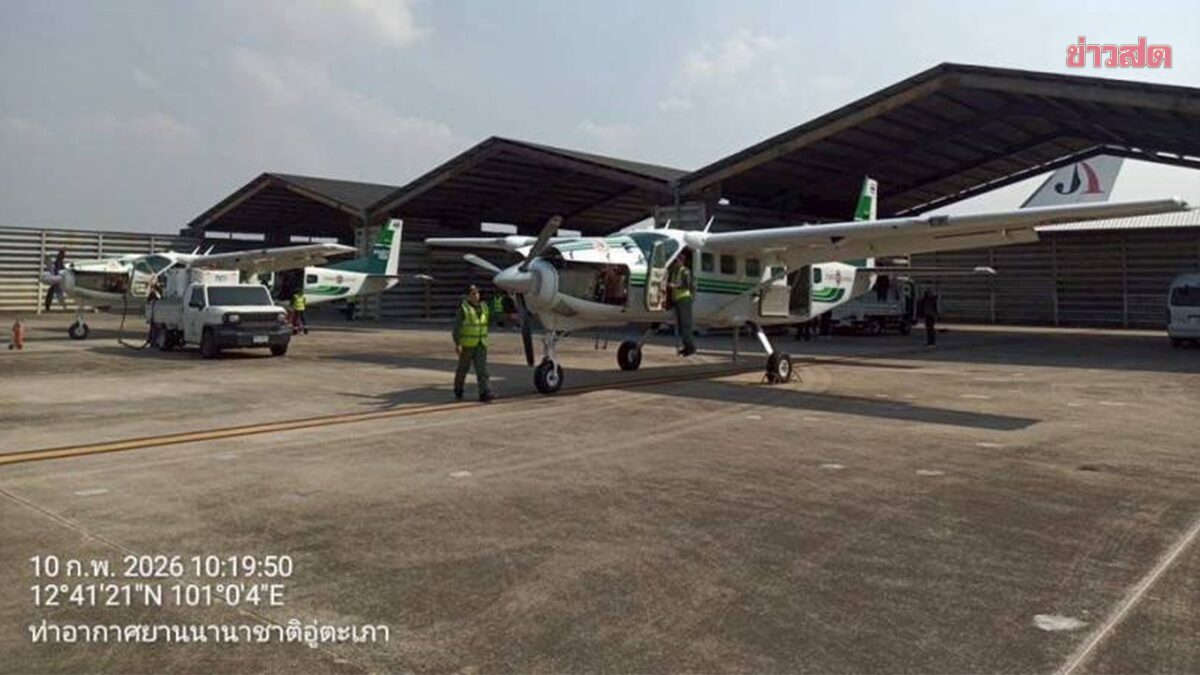
Chiang Mai is beginning to experience health impacts as the Rainmaking Department has ordered toxic dust dispersion in Bangkok, Northern, and Northeastern regions by sending aircraft to spray dry ice and modify atmospheric conditions to reduce PM2.5 levels.
Rachen Silparaya, Director-General of the Rainmaking and Agricultural Aviation Department, revealed that the department continues to conduct atmospheric modification missions to help disperse small particulate matter (PM2.5) that exceeds standard levels in Bangkok, its metropolitan area, Northern, and Northeastern regions.
Currently, there are 4 atmospheric modification units located in Hua Hin, Rayong, Tak, and Khon Kaen provinces. Monitoring of PM2.5 situations in these areas shows that from February 12-16, 2025, particulate levels will be moderate to beginning to impact health (yellow to orange levels).
The air dispersion rate is weak to moderate, and with light winds, dust may tend to accumulate. Northern areas are expected to have increased dust accumulation due to basin-like geographical characteristics, increasing heat points from western neighboring countries, and winds blowing from the northwest.
The department plans to continue daily atmospheric modification operations to disperse particulate matter before it accumulates and impacts public health. From February 16, 2026, they will adjust their atmospheric modification unit deployments, using various aircraft across different provinces.
The mission draws from royal rainmaking techniques originally developed by the late King Bhumibol Adulyadej, including cloud seeding to absorb and disperse particles, cloud maintenance, and dry ice spraying to reduce atmospheric temperature.
Previous operations have shown significant success, with Bangkok and metropolitan areas conducting 398 flights over 66 days, reducing PM2.5 levels in 53 days (80% effectiveness). Northeastern and Northern regions also reported 100% effectiveness in reducing air pollution during their respective operational periods.