120-Million-Year-Old Theropod Tracks Found in Udon Thani
The user wants a 1-2 sentence summary of the Thai article about dinosaur footprints found in Udon Thani. The summary must be in English, 120-220 characters, max 240 characters. No filler, no quotes, no markdown. Key facts from article: - De
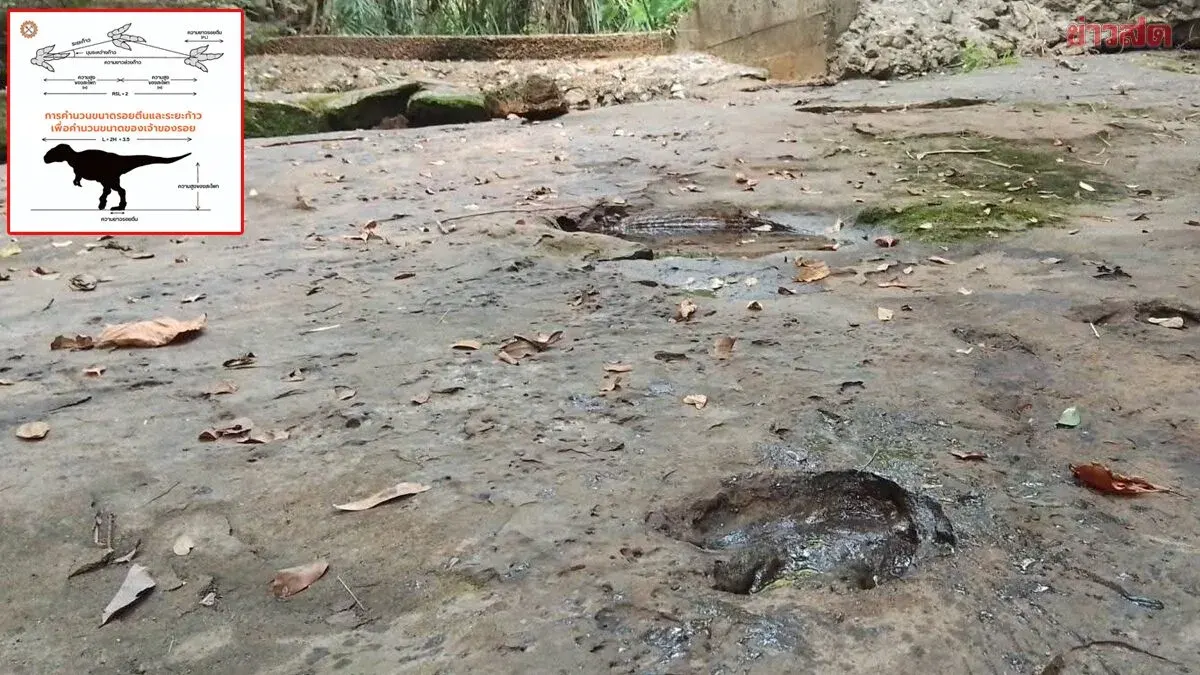
The Department of Mineral Resources confirmed that the footprints belong to a carnivorous theropod dinosaur, marking the first discovery of its kind in Udon Thani province. Dating back over 120 million years, the site contains six footprints in a single trackway. Officials plan to develop the location into a geological and fossil tourism attraction.
On October 20, 2026, Nipon Chamnongsirisak, Deputy Permanent Secretary of the Ministry of Natural Resources and Environment, acting as Director-General of the Department of Mineral Resources, assigned the Fossil Protection Division and the Mineral Resources Office Region 2, together with Phu Hin Chom That-Phu Phra Bat National Park (in preparation), Fine Arts Department officials, and related agencies to inspect the dinosaur footprint fossils. These were discovered by Mr. Pichai Prathesena at Guard Unit PhTh.3 (Phu Phra Bat) in Moo Pan Subdistrict, Ban Phue District, Udon Thani.
The inspection revealed theropod dinosaur footprint fossils — bipedal carnivorous dinosaurs — consisting of one trackway with six footprints on the Phu Phan Formation sandstone from the Early Cretaceous period (approximately 120 million years ago). The footprints feature three distinct toes with pointed tips, each measuring 29 centimeters long and 26 centimeters wide.
Body size analysis estimates the dinosaur stood about 1.42 meters tall at the hip and measured approximately 6.30 meters in length, closely resembling "Siamotyrannus isanensis," a theropod dinosaur from the same era previously discovered in Thailand.
The Department of Mineral Resources has proposed that the Department of National Parks, Wildlife and Plant Conservation and the Fine Arts Department designate a protected zone around the discovery site to prevent damage from tourist interference. Measures to prevent water erosion are also being planned, along with development of the site as an important educational, research, and geological and fossil tourism destination for the country.
Actions will proceed under Section 25 of the Fossil Protection Act B.E. 2551 to prevent damage from tourist disturbance, establish erosion prevention measures, and consider development as a significant educational, research, and geological and fossil tourism site for the future.