Activists Submit Social Security Reform Bill with 10,000 Signatures
A civic group called the Forward Social Security Team submitted a draft Social Security Act amendment to Parliament backed by 10,000 signatures. The bill proposes direct election of board members, a professional CEO, and removal from the civil service to ensure transparency for the 3-trillion-baht fund and expand universal coverage to over 40 million Thais.

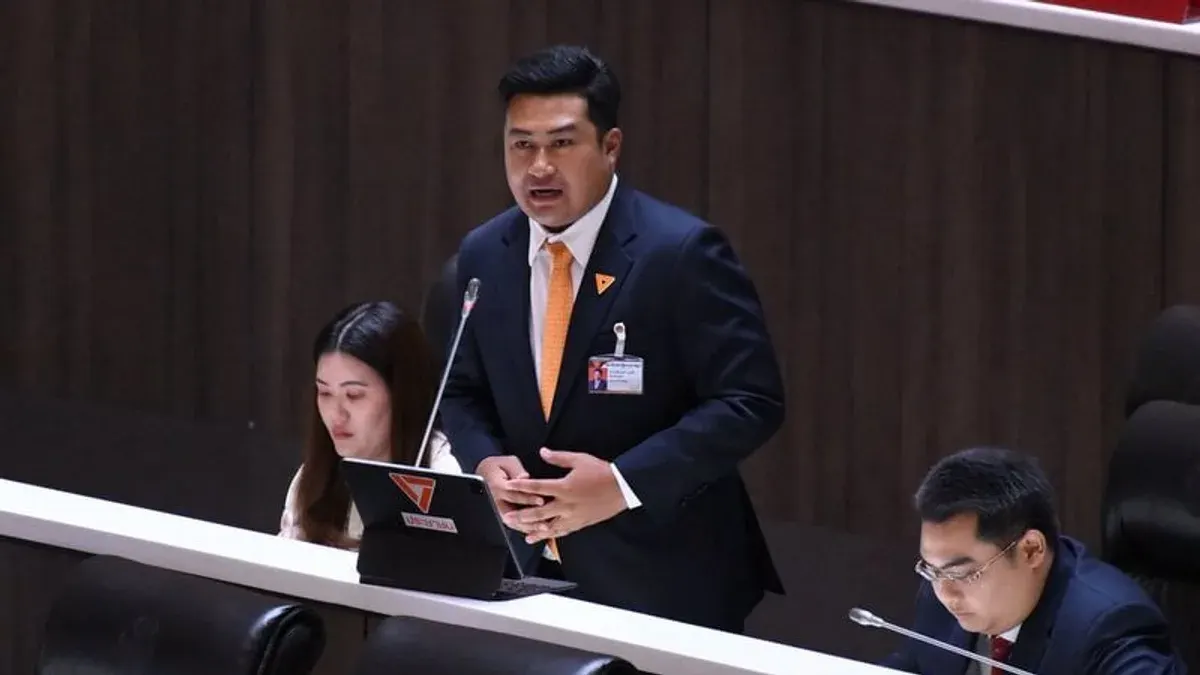
At 10:00 a.m. on November 17, 2026, at Parliament, Sathit Thambutdee, acting Social Security Board member representing insured persons, along with 23 representatives of voters wishing to be petitioners, submitted a petition to initiate a draft Social Security Act amendment to House Speaker So Phan Saran. Deputy Spokesperson San Piya, head of the political coordination and complaint reception group, received the petition on his behalf for parliamentary consideration under the 2017 Constitution.
Sathit said the draft aims to reform social security, noting the fund has faced numerous problems over the past 30 years: management not fully aligned with insured persons and employers, lack of transparent central budget management, and benefits increasing too slowly to keep pace with an aging society, low birth rates, unemployment, and public health challenges.
He added that while annual fund management reaches up to 3 trillion baht, questions remain about transparency in decision-making, risk management processes, and how much investment returns actually translate into public benefits.
The Forward Social Security Team today initiated this new draft Social Security Act, or the Progressive Social Security Act, aiming to gather more than 10,000 signatures to create verifiable transparency in the use of administrative and investment budgets.
"This draft increases effectiveness with oversight of both the board and the office. It provides for appointing a Secretary-General as a professional CEO accountable to insured persons and board policy, and clearly specifies that board members must come from direct elections without exception," Sathit said.
He emphasized the core goal is expanding social security rights so that over 40 million insured persons have universal coverage, similar to Thailand's successful universal health coverage, without limiting rights of those already entitled to medical care.
The draft's principle is returning social security to ordinary people — both employers and insured — removing it from a civil service system whose lack of understanding has led to underdeveloped benefits, investment management, and office administration that have long been slow and inefficient.
In recent months, social security problems have seen interference from the civil service and state power, preventing independent management. These issues cannot be resolved because board certification from elections remains delayed, benefit development still takes 18 months even after board approval, and enforcement is lacking.
Sathit also noted investments showing interference, lacking risk management and transparency. These cannot be fixed by technical expertise alone but require root-and-branch reform.
Therefore, the Forward Social Security Team seeks to be one representative voice, a starting point to gather 10,000 signatures and pressure the legislative side to recognize the importance of structural reform.