Ayutthaya Pushes Upgrades to Sala Loi Port for Larger Vessels
Ayutthaya is upgrading Sala Loi Port and dredging the Pasak River to accommodate larger cargo vessels and reduce logistics costs by shifting transport from roads to waterways, with completion targeted for late 2027.
The government is upgrading water transport in Ayutthaya by removing restrictions at Sala Loi Port and developing the Pasak River channel to maintain water levels suitable for navigation and boost the country's competitive capacity.
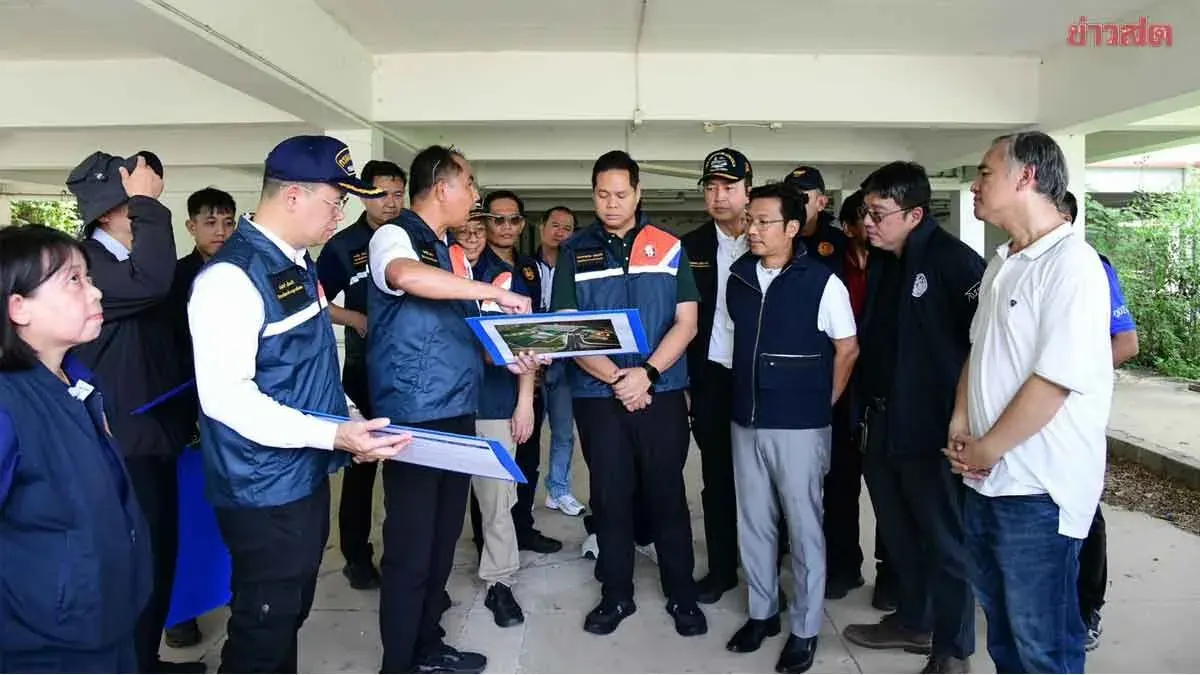
Deputy Transport Minister Sarapetch Bunyamani visited Ayutthaya province to monitor progress on an energy-efficient water cargo transfer station at Sala Loi Port in Tha Ruea District and a riverbank erosion-control project along the Pasak River.
The 56-rai cargo station project faces constraints including high rental and mooring fees, and insufficient water levels in the Pasak River during the dry season to handle large vessels. The current port can only accommodate ships of up to 500 gross tons. The port deck sits 6–7 meters above water level, hindering cargo unloading—particularly for bulk goods—while office buildings, warehouses, and dock areas have deteriorated after more than 13 years of operation. An urgent survey and renovation are needed.
Sarapetch said the Transport Ministry will coordinate with the Irrigation Department on water management from Rama VI Dam to maintain optimal levels of approximately 4.5 meters to support vessels drawing 4 meters of water. The ministry will also consult the Treasury Department to find ways to reduce rental and fee burdens, and will consider leasing portions of the facility to private operators. Sala Loi Port can be developed for port operations, port-related businesses, or other suitable uses.
The riverbank protection project aims to improve channel efficiency and navigation, support water-borne cargo transport, and encourage modal shift from land and rail transport to water. This will connect goods from the North and Northeast regions to the Pasak River port, reduce logistics costs, enhance national competitiveness, and decrease traffic congestion and greenhouse gas emissions.
The 52-kilometer project runs from the area in front of Phananchoeng Temple to Rama VI Dam and is divided into two phases. Phase 1 spans from kilometer 0+000 at Phananchoeng Temple to kilometer 23+000 at Phra Non Temple, dredging a channel 6.6 meters deep and 30–44 meters wide to accommodate vessels up to 2,500 tons. Phase 2 runs from kilometer 23+000 at Phra Non Temple to kilometer 52+000 at Rama VI Dam, dredging a 4.4-meter-deep and 24–35-meter-wide channel for vessels up to 1,000 tons. The project is expected to complete by late 2027.
Sarapetch also inspected riverbank erosion problems near Khlong Nam Cha Temple and Aranykik Village, where residents have repeatedly raised concerns. He instructed the Port Authority to conduct surveys and prepare budget proposals, and asked the Public Works and Urban Planning Department to prepare for project implementation to resolve residents' problems as quickly as possible.
Sarapetch concluded by directing relevant agencies to accelerate progress and coordinate to overcome obstacles and ensure the project meets its targets.