Cyanide in Sai River Hits 17x Limit, Ecosystem Near Collapse
Cyanide contamination in the Sai River, Chiang Rai, remains at 17 times the safety standard, prompting warnings of imminent ecosystem collapse from environmental advocate Niwat Roi-kaew. The crisis, ongoing for over three years, has disrupted tap water supply and agriculture for local communities. Critics accuse the government of slow action despite long-standing data, while cross-border talks with Myanmar have stalled. Additional threats include widespread small-scale gold mining on the Mekong and the planned Pak Beng Dam in Laos, which could flood contaminated mining sites.
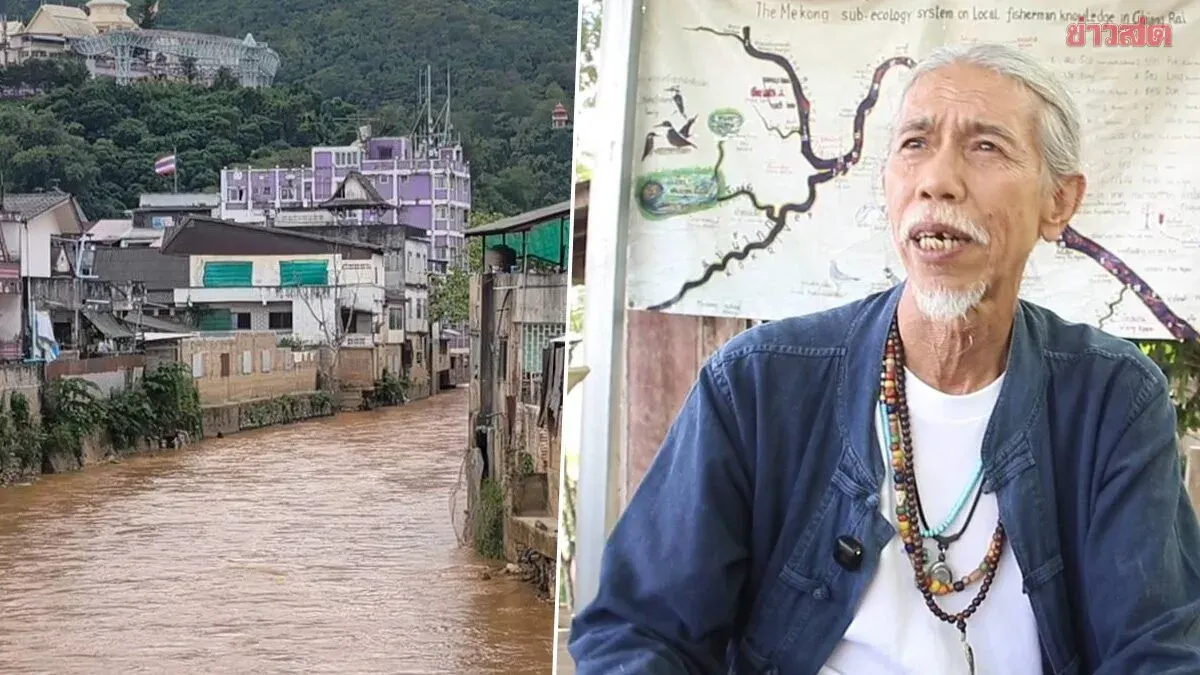
The toxic contamination crisis in the Sai River, Mae Sai District, Chiang Rai, continues to affect residents and the environment. Recent measurements show cyanide levels have dropped from a peak of 28 times the standard to approximately 17 times, allowing raw water to be used for tap water production again. However, the situation remains unresolved as cyanide still exceeds safety thresholds. Water passing through Ko Sai and Mae Sai communities remains cloudy red and murky, obscuring the riverbed.
Niwat Roi-kaew states the toxic pollution has reached a critical stage, nearing ecological collapse for the river, its ecosystem, and local ways of life. Extreme turbidity previously halted tap water production. Multiple other chemicals and heavy metals also contaminate the river. Impacts extend beyond the environment, directly affecting residents who rely on the Sai River for consumption and agriculture, especially the tap water crisis — a basic survival issue for Mae Sai locals.
Niwat emphasizes this is not a new problem but has persisted for over three years since floods and mudslides. The government has had continuous data on chemical contamination but responded slowly, allowing the situation to worsen until raw water could not be treated for drinking.
Coordination with Myanmar to address pollution sources and mining has been discussed for a long time but produced no tangible results, particularly measures to stop or control toxic discharges promptly. The Sai River's status as a border river involving two countries complicates management further.
Another concern is small-scale gold mining in the Mekong River, ongoing for about 3–4 years across more than 10 sites from Chiang Khong District to near the Pak Beng Dam project in Laos. These in-river mining operations use ore processing and chemicals, risking continuous chemical and heavy metal leakage. While large mines discharging toxins have drawn attention, small in-river mining has been overlooked despite potentially broad impacts on aquatic ecosystems.
The Pak Beng Dam project raises further alarm. If construction raises water levels, former mining areas with accumulated waste — including cyanide-laden rock and sand piles — could be submerged. Erosion or leaching could then release stored pollutants into the water system.