Energy Absolute to Deliver 1,520 Electric Buses to Bangkok by Mid-Year
Energy Absolute's subsidiary Absolute Assembly has begun producing 1,520 electric buses for the Bangkok Mass Transit Authority, with about 200 units already completed. The factory in Chachoengsao aims to finish delivery by the end of the second quarter, ramping up to 10-12 buses per day. The company also plans to expand its showroom and service network and is negotiating exports to neighboring countries.
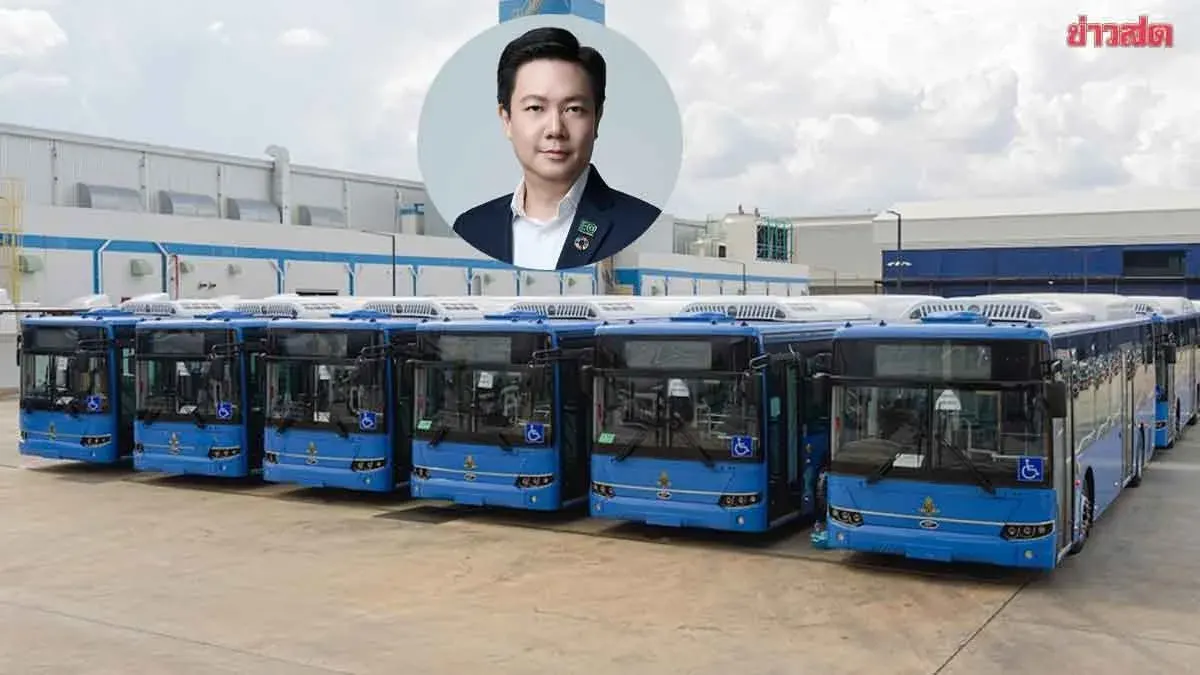
EA, the largest commercial EV manufacturing plant in ASEAN, is ready to serve customers comprehensively. It believes the timing is right due to high oil prices, suitable technology, and rising taxes. Chatphol Sripratum, CEO of Energy Absolute Public Company Limited (EA), revealed that after the company secured the clean-energy air-conditioned passenger bus project from the Bangkok Mass Transit Authority (BMTA) for 1,520 units, its subsidiary Absolute Assembly Co., Ltd. (AAB), the Thai commercial EV manufacturing and assembly plant in the EA group, has completed the production line for about 200 buses. With a production capacity of 10-12 units per day, the company is confident it can complete production and deliver on schedule by the end of Q1 and Q2.
The factory is located in Ban Pho District, Chachoengsao Province, on 80 rai of land with 65,000 sqm of factory and office space, employing 800 people. Maximum production capacity is 6,000 units per year, making it one of the most modern and comprehensive commercial EV factories in Thailand, producing buses, coaches, truck tractors, and trucks. The production process runs on an assembly line from body framing, welding, anti-corrosion dipping, and painting to installation of electric drivetrains and interior equipment. It features a large dipping tank that can accommodate an entire bus for anti-corrosion treatment — the first in Thailand and the largest in ASEAN, with 12 tanks. Testing facilities include a water tunnel, hill-climb, and charging stations before delivery to customers.
For commercial vehicle demand, the bus and coach segment is around 2,500 units per year, truck tractors 4,000 units, and trucks over 15,000 units annually. Customers are increasingly interested in EVs because the time is right: prices are nearing parity with internal combustion vehicles, technology meets operational needs, fuel prices are high, air pollution is a concern, and tax rates are trending upward.
The company also has an advantage as the producer of more than 2,000 electric buses for Thai Smile Bus, which have been in service for a considerable time, proving performance and durability. The company plans to expand its commercial EV market presence, targeting at least 10 additional showrooms and service centers from the current 10, along with comprehensive solution packages including after-sales service, charging stations with special electricity rates for fleet customers, and carbon credit sales. It is also negotiating to produce commercial EVs for export to neighboring countries, with a conclusion expected early next year, which would significantly boost sales.