Fisheries Department Warns Against Releasing Non-Native Fish Species
The Department of Fisheries warns against releasing non-native aquatic species into natural waters, citing ecosystem damage and legal penalties of up to 2 years imprisonment or 2 million baht in fines. The public should instead release nati
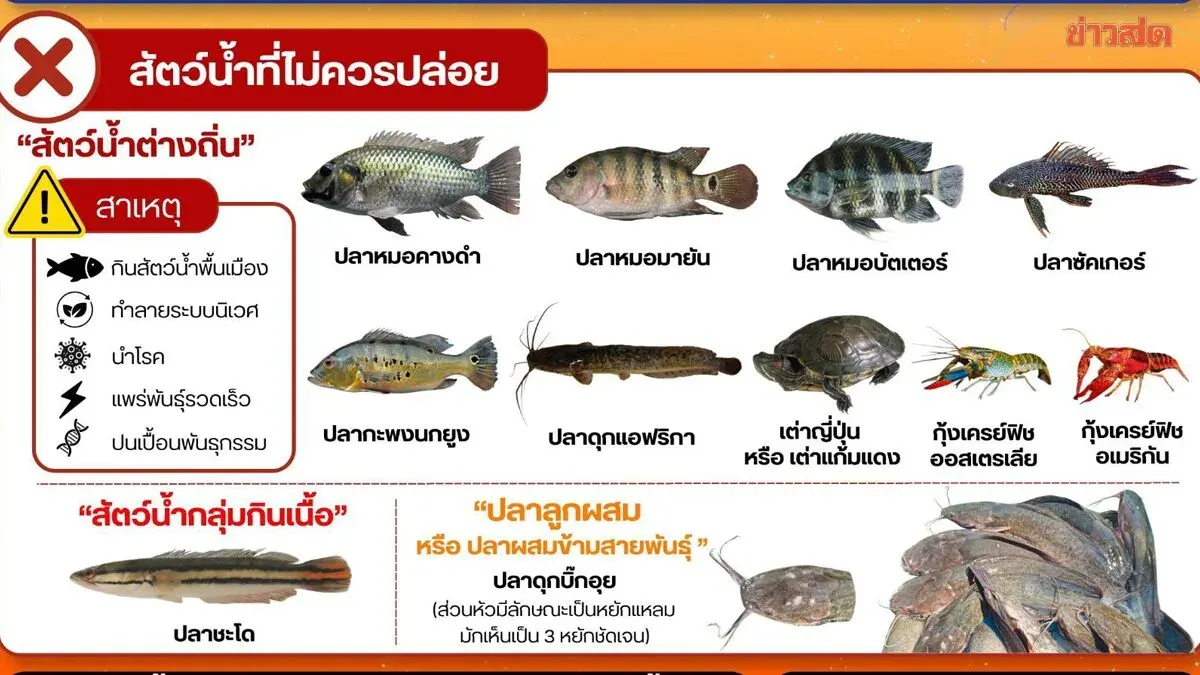
The Department of Fisheries has warned against releasing non-native aquatic species into natural water sources, citing ecosystem damage and legal consequences. Fisheries Director Thitiporn Laopraserit noted that while releasing aquatic animals during important Buddhist days is a popular practice for merit-making, the choice of species and water source is crucial. Non-native and hybrid species can breed rapidly, compete for food and habitat, consume eggs and larvae of native species, spread disease, and cause long-term ecosystem imbalance and reduced biodiversity. Predatory species like snakehead fish can decimate native populations if released without control.
The department urges the public to release native Thai fish species in appropriate water sources to help conserve aquatic resources and restore natural ecosystems. Releasing non-native species under sections 64 and 65 of the Fisheries Act B.E. 2558 is illegal and punishable by imprisonment of up to 2 years and/or fines up to 2 million baht. The public should also avoid purchasing protected wildlife under the Wildlife Preservation and Protection Act B.E. 2562 for release, as violations carry penalties of up to 5 years imprisonment and/or fines up to 500,000 baht.
The Department of Fisheries recommends releasing native Thai species including snapper, barb, gourami, and various other indigenous fish in suitable habitats—loaches and frogs in wetlands and rice fields, catfish and other large species in deep rivers and canals with strong currents, and freshwater mussels in ponds and paddy fields. However, catfish releases are not encouraged due to difficulty in distinguishing native from hybrid and alien varieties. Prohibited species include guppies, plecos, tilapia, Japanese turtles, Australian and American crayfish, peacock bass, African catfish, and hybrid catfish. Those possessing unwanted non-native species should surrender them to local Department of Fisheries offices for proper disposal.