Government and Opposition Unite to Protect ThaiHealth Funding
ThaiHealth presented its annual report to Parliament highlighting 23 health promotion achievements, including youth e-cigarette prevention networks spanning 1,600 schools and a 28.9% drop in alcohol-related disputes during Songkran. Both government and opposition MPs praised the results and united in opposing legal changes to the fund's sin-tax revenue structure, warning it would dismantle disease prevention mechanisms. Democrat leader Abhisit Vejjajiva dismissed fiscal discipline arguments as a pretext and urged preservation of ThaiHealth's independent operating model.
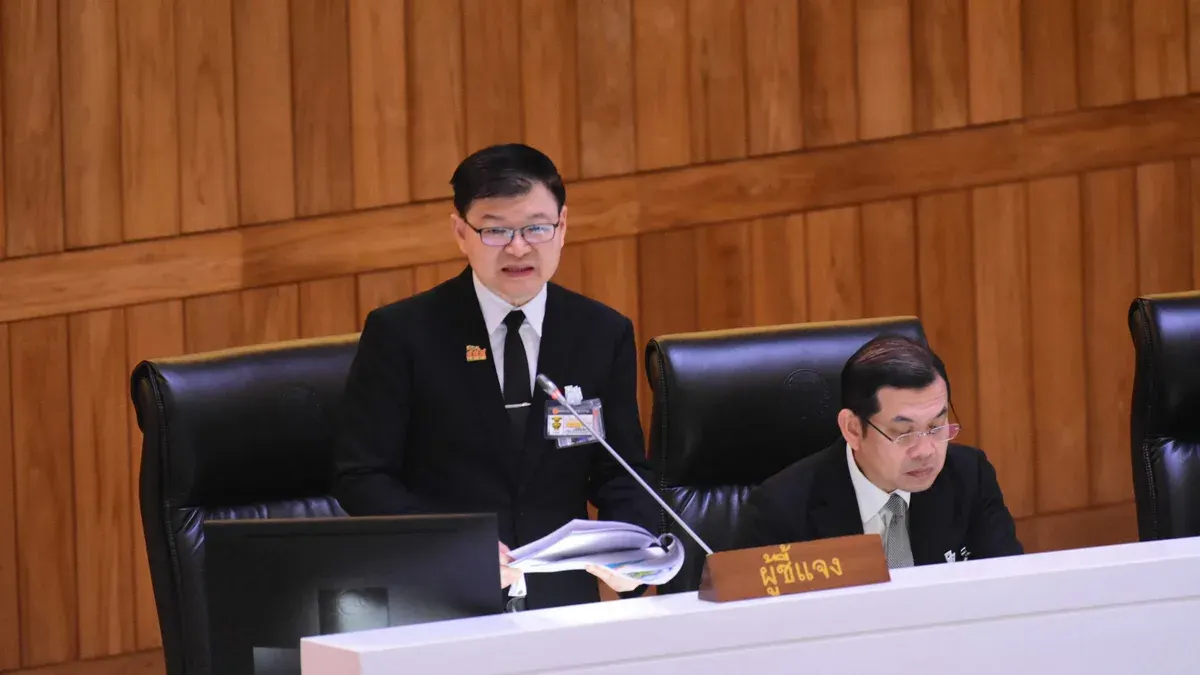
ThaiHealth presented its 2024-2025 annual report showcasing comprehensive well-being achievements. Government and opposition MPs jointly praised the work and aligned in opposing amendments to laws governing the fund's revenue, fearing disease prevention mechanisms would be undermined. Democrat Party leader Abhisit Vejjajiva stated ThaiHealth is the primary driver of citizen-led health promotion, supporting partners to work independently, continuously, and sustainably through the sin-tax revenue system — a correct and successful principle reflected in internationally recognized health behavior indicators. He asserted the fund's operating model must be preserved, arguing fiscal discipline and transparency claims carry insufficient weight to change the revenue system or move the budget into the regular system, as that would not guarantee better oversight. He urged ThaiHealth to improve its auditing, distribute funds more widely, set clear targets, and accelerate action on alcohol, tobacco, and e-cigarettes threatening youth.
Nakhon Phanom MP Alongkot Manikarn (Bhumjaithai Party) praised ThaiHealth's youth work in the province with the Provincial Sports Association, promoting physical activity and reducing sedentary behavior through Active Play in 13 schools since 2024, expanding into the B-Star Afterschool Program creating four model schools. He recommended four improvements: channel budgets directly to primary care units, schools, and communities; adjust indicators to show behavioral and health outcome changes; integrate work with the NHSO, Public Health Ministry, and local administrations to reduce duplication; and communicate funding mechanisms clearly while welcoming feedback.