Government Declares War on Northern Water Pollution Crisis
The Thai government has declared a "war" on toxic water pollution in the North, banning precursor chemicals for rare earth mining and establishing pollution control zones. Deputy PM Yotchanan Wongsawat led a multi-agency meeting unveiling measures including color-coded river monitoring and a joint Thai-Myanmar working group meeting in late November. The crisis stems from Chinese-backed mining in Myanmar contaminating border rivers with arsenic and heavy metals, threatening agriculture and food safety, requiring urgent cross-border cooperation.
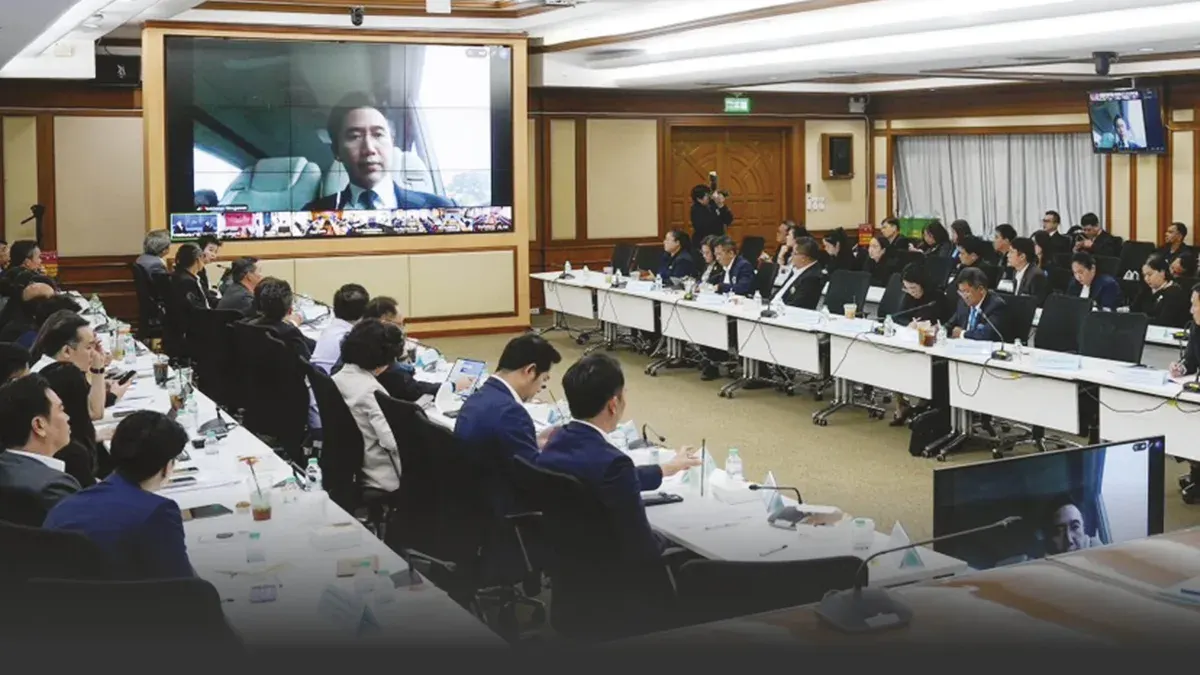
Deputy Prime Minister and Minister of Higher Education, Science, Research and Innovation Yotchanan Wongsawat, in his capacity as chairman of the Northern Disaster Prevention and Mitigation Committee, led a ministerial meeting with relevant agencies to urgently address toxic chemical contamination in northern water sources. The government declared an all-out "war" on the case, unveiling measures that run parallel to tackling root causes. First, a ban on the export and transit of precursor chemicals used in rare earth mining, employing the National Security Council mechanism alongside the Ministry of Industry and Ministry of Commerce to review relevant regulations, ensuring the announcements do not affect Thailand's economic sectors unrelated to the issue. Officials affirmed they will proceed carefully and do everything to achieve the best outcome and ensure public access to clean water. Subsequently, the Ministry of Natural Resources and Environment will declare pollution control zones to build confidence that these are safe and clean areas, and establish "sandbox" zones for water source restoration to prevent public concern over arsenic, while enhancing arsenic filtration mechanisms. The Department of Disaster Prevention and Mitigation will then work with provincial governors in the area to clearly communicate the situation in each locality. Additionally, provinces will expedite the designation of toxic surveillance zones in water sources — color-coded yellow, green, and red — in a massive scanning effort expected to finish before December 15, 2026, because this is data that farmers in Chiang Rai province need to know. Notably, a Thai-Myanmar joint working group meeting on water quality management will take place on November 25-26, with representatives from both governments attending. The arsenic and heavy metal contamination in northern water sources, particularly the Sai, Kok, and Ruak Rivers which border Myanmar, constitutes a dangerous crisis for residents in those areas. The source of the toxic contamination in Thailand's waters comes from large-scale mining in northern Myanmar, with Chinese investment groups also involved. Beyond the various measures the government has announced and is preparing to implement, the matter that requires equal importance is negotiating cooperation from the Myanmar and Chinese authorities, because Thailand cannot manage this alone without such cooperation. The most important thing is to accelerate action as quickly as possible, because people in the area are still worried, as it affects food sources and the agricultural sector.