Health Ministry Escalates Arsenic Response in Five Rivers
The Ministry of Public Health has intensified its response to arsenic contamination in five major rivers, ordering twice-monthly testing of village water supplies across ten provinces and expanded screening for heavy metals in water, food, and human samples. Health authorities have established a urine arsenic reference level of 100 µg/L and a drinking water threshold of 10 µg/L, while urging the public to avoid direct river water use and rely on certified piped water systems.

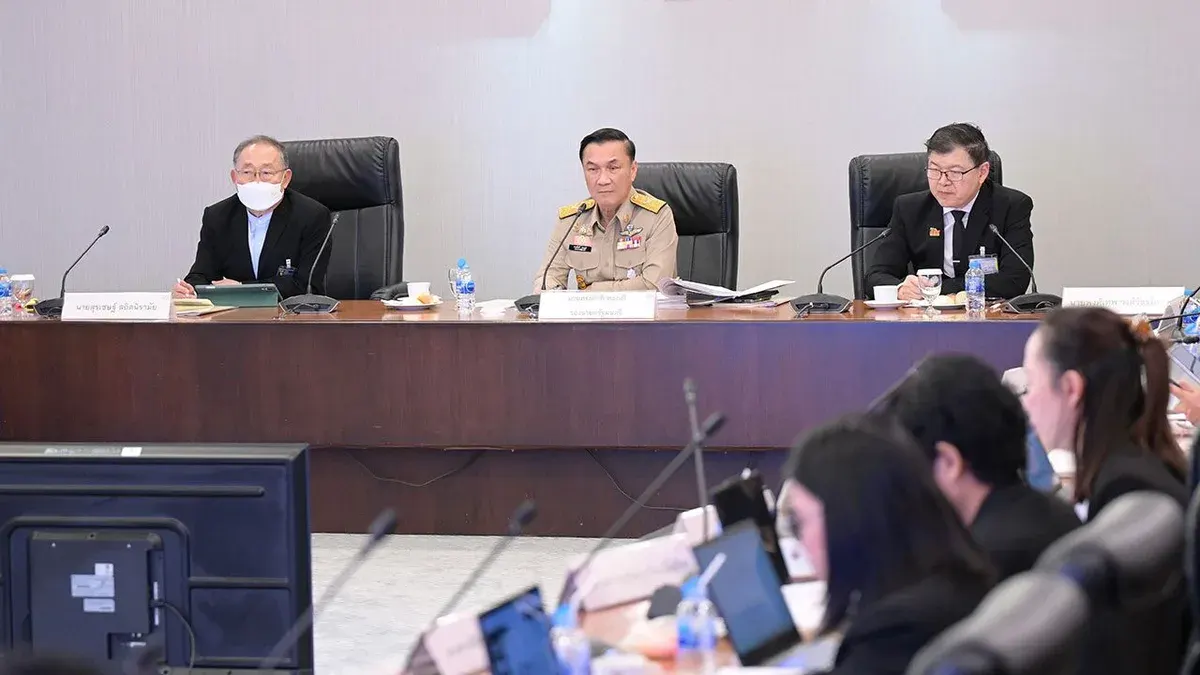
On November 24, 2026, Dr. Somrak Jengsaman, Permanent Secretary of the Ministry of Public Health, disclosed details following the second meeting of the surveillance committee on drinking water quality and public health regarding arsenic contamination in the Kok, Sai, Ruak, Mekong, and Kraburi rivers. The meeting included Dr. Thiti Saengtham, Director-General of the Department of Health, Dr. Naruedon Khatthasima, Deputy Director-General of the Department of Health, and executives from relevant agencies, convened to establish a systematic, comprehensive, and cross-sectoral public health response in line with orders from Prime Minister Anutin Charnvirakul and the Minister of Interior.
"The meeting agreed to escalate water and food quality surveillance in ten at-risk provinces, prioritizing Chiang Mai and Chiang Rai. Village water supply systems — both surface water and groundwater — will be randomly tested and monitored twice monthly, while laboratory capacity for drinking water analysis in risk areas will be expanded," Dr. Somrak said. The Food and Drug Administration (FDA) is preparing random checks on bottled water, ice, rice, vegetables, and fruit from high-risk sources. The Department of Medical Sciences will support analysis of arsenic, lead, and cadmium in water, food, and human samples to ensure accurate and sufficient data for risk assessment.
On public health protection, the Department of Disease Control and the Department of Medical Services have designed a proactive screening, investigation, referral, advisory, and follow-up system for both individual patients and cluster abnormalities, with separate surveillance for acute and chronic cases. A urine arsenic reference value of 100 micrograms per liter has been set, with conditions affecting testing specified, and a drinking water surveillance threshold of 10 micrograms per liter adopted to ensure consistent public guidance.
Additionally, agencies were ordered to expedite a one-month action plan covering sampling points for water, food, and urine, testing frequency, reporting timelines, budgets, and operational details to ensure efficient inter-agency coordination.
"We advise the public to avoid using river water directly, and instead rely primarily on piped water from provincial waterworks or village water supply systems certified to drinking water standards. Personnel from all agencies stand ready to assist the public, ensuring safe consumption options and peace of mind," Dr. Somrak concluded.