Health Ministry Warns PM2.5 to Spike Nationwide From November
Thailand's Public Health Ministry warns that PM2.5 pollution will likely surge from November due to winter weather trapping pollutants, especially in Bangkok, surrounding provinces, and the central region. Officials have activated health contingency plans and urge the public to monitor air quality via official apps, limit outdoor exposure, wear N95 masks, and seek medical care for respiratory symptoms.
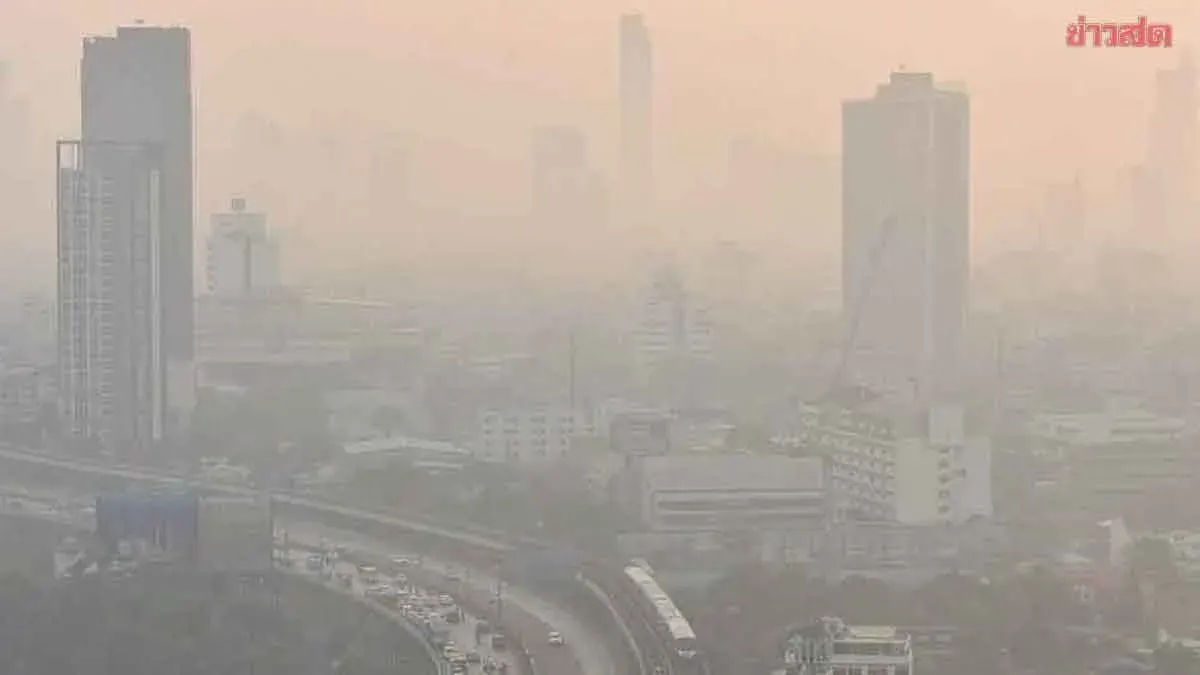
On November 13, 2026, Public Health Minister Phatthana Phromphat disclosed the PM2.5 situation, stating that monitoring indicates dust levels may rise from November due to winter weather conditions — low atmospheric pressure and poor ventilation — combined with pollution sources that favor dust accumulation. The Ministry has ordered health agencies to closely monitor the situation and prepare contingency plans, prioritizing high-risk areas and vulnerable populations.
Permanent Secretary Dr. Somruk Chungsaman said he has directed relevant agencies to prepare health protection measures and mitigate PM2.5 impacts in advance, focusing on risk communication, health service readiness, and coordination with local agencies so the public receives proper guidance and access to services. Health districts and provinces have been tasked with risk assessment, preparedness planning, and close monitoring, while health facilities must ready screening, care, and referral systems for patients, as well as provide health consultation channels and safe-zone information.
Department of Health Director-General Dr. Thiti Saengtham advised the public to check dust levels before going out via the Air4Thai, AirBKK, or Life Dee apps. If levels are high, people should reduce or avoid outdoor activities, especially at-risk groups. If going out is necessary, wear a well-fitted N95 or KN95 mask, avoid outdoor exercise, keep doors and windows closed indoors, clean without stirring up dust, and use dust-free rooms when pollution is severe.
"We ask for public cooperation to stop burning waste and agricultural materials, reduce dust-generating activities, and follow announcements from relevant agencies. Those with chronic conditions should keep medication on hand. If experiencing frequent coughing, chest tightness, breathing difficulty, dizziness, rash, or other abnormal symptoms, see a doctor promptly," Dr. Thiti said.
Nearby dust-free rooms can be found at the Dust-Free Room platform https://podfoon.anamai.moph.go.th/. Additional information is available via the Department of Health hotline 1478, and PM2.5 exposure risk can be assessed at https://4health.anamai.moph.go.th.