Invasive Nutria Ravage Palm Oil Farms, South Fears Economic Disaster
Invasive African nutria are destroying palm oil plantations in Chumphon province, with one farmer losing over 300 saplings to the rodents, and officials warning the infestation could devastate Thailand's entire southern oil palm industry if
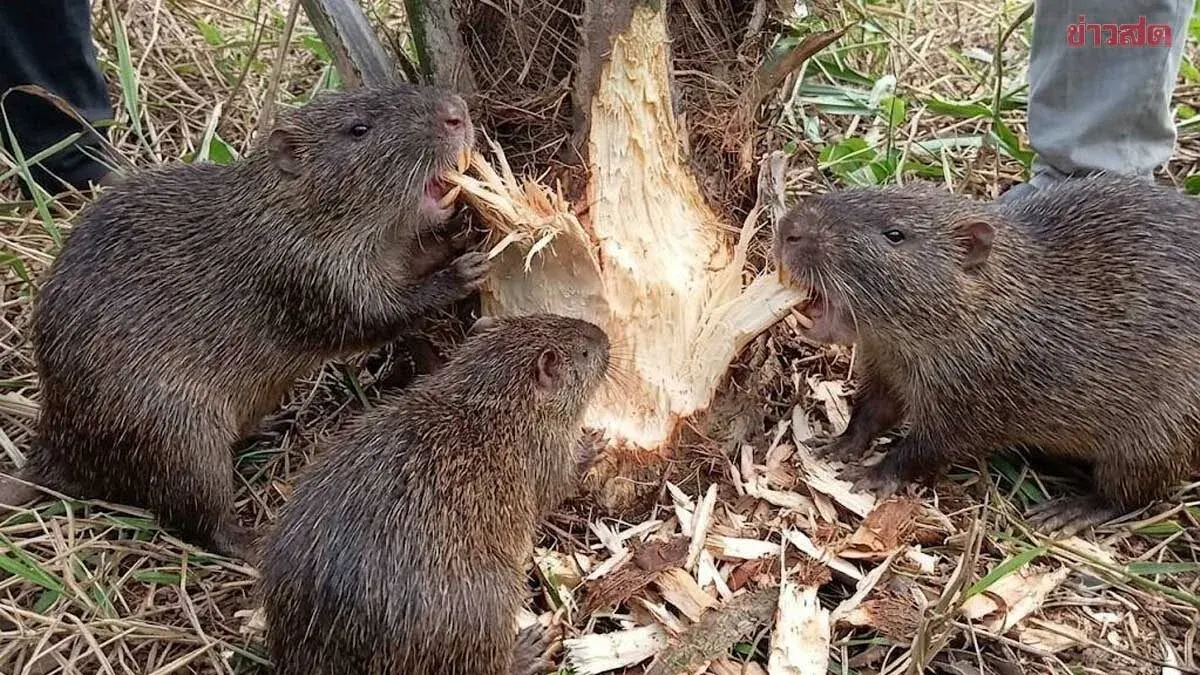
Invasive African nutria are causing severe damage to palm oil plantations in Chumphon province's Ta Sae district, prompting urgent calls for government intervention. A field inspection of a 64-year-old farmer's 22-hectare palm oil plantation—planted to replace rubber trees—revealed that large rodent-like animals with sharp teeth have stripped bark from the bases of young 1–2-year-old palms, killing some immediately and leaving others withered. The farmer reported that over 300 of his 500 newly planted saplings have been damaged, and his attempts to control the population using traps and rodent poison have failed; he managed to catch only two nutria before they learned to avoid traps, and hundreds have now been born, attacking nearly every palm tree.
The infestation is not limited to this farm; over 10 neighboring farming families in the area face identical losses. Officials warn that without decisive action, damage could spread across Chumphon province and engulf all 14 Southern provinces, home to Thailand's and the world's most significant oil palm cultivation areas. The provincial Farmers' Council chairman has ordered members to gather damage data for an emergency meeting and coordinate with agricultural agencies to research and implement urgent eradication and compensation measures.
African nutria were first introduced to Thailand from the African continent in 1994 by foreign merchants in Ratchaburi province, marketed as a new "economic animal" claimed to be easy to raise, quick-growing, grass-eating, and valuable for meat, fur, and hide exports. Many Thai farmers fell victim to the scheme, purchasing breeding stock at inflated prices; when farming proved unprofitable due to lack of market demand from 1995–1999, many farmers secretly released nutria into natural waterways. The species has since become a national environmental crisis, devastating rice fields, vegetables, fruit orchards, and aquatic plants, and is now destroying the South's signature oil palm industry.