BOT Governor Warns of K-Shaped Economy, Urges AI Adoption for Productivity
Bank of Thailand Governor Vithai Rattanakorn warned that while AI-related exports now make up 24% of total exports and have surged over 55% this year, the economy is developing a K-shaped divide. He urged businesses to adopt AI to boost productivity and address competitiveness gaps and labor shortages, and stressed the need to balance innovation, financial inclusion, and cybersecurity trust as AI-driven cyberattacks escalate.
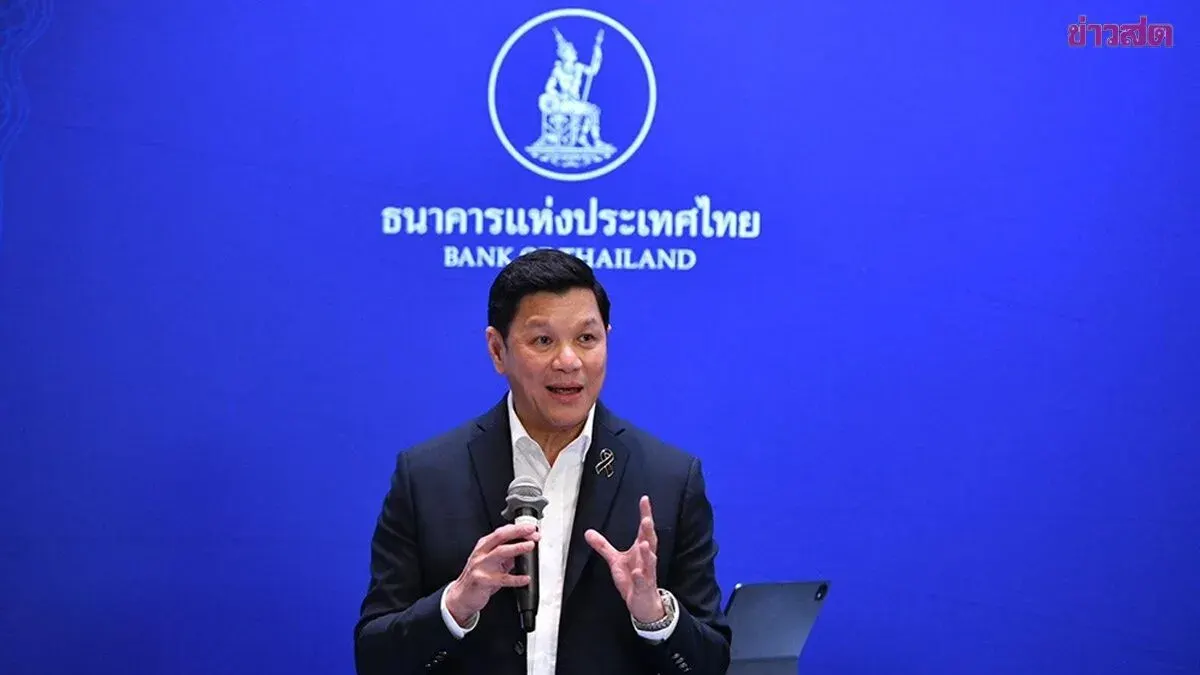
Bank of Thailand Governor Vithai Rattanakorn, speaking at the 9th Money Expo 2026 Bangkok Year-End, said AI is transforming many aspects of the world and Thailand is benefiting economically. AI-related exports make up about 24% of total exports and have grown more than 55% this year. Investment inflows, such as data centers, are also AI-linked. At the same time, the economy is taking on a K-shaped character. Vithai said the macroeconomy still faces challenges in business sector adaptation to AI. The key is raising productivity to address competitiveness gaps and labor shortages from an aging society. If businesses adapt and increase productivity, it will create real efficiency and long-term competitiveness for business groups and the nation. AI adoption has created efficiency, increased revenue, and reduced costs. The financial industry also benefits — banks can use AI for customer screening, fraud detection, suspicious account monitoring, credit and risk analysis, product development, and more effective investment analysis, while delivering services that better match customer needs. Vithai highlighted three areas requiring balance: 1. Innovation — more innovation is essential to drive efficiency and productivity. 2. Inclusion — expanding credit access through improved credit risk and business assessments for both individuals and SMEs. 3. Trust — cyberattacks and scams are rising sharply; since early November, attempted cyber intrusions have surged in multiple countries including Thailand. Attempts on financial institutions supervised by the BOT have increased significantly, though defenses have been strengthened. 'Massive cyberattacks are being carried out by AI agents probing systems with 4-5 million attempts at a time, so security rigor must be raised further,' Vithai said.