Khao Yai Park Defends Firecracker Use on Wild Elephant
Khao Yai National Park defended its use of firecrackers on wild elephant Phlai Sarika in July, saying the animal was in musth and aggressively leading a herd into residential areas near Nakhon Nayok. Park officials established a review comm
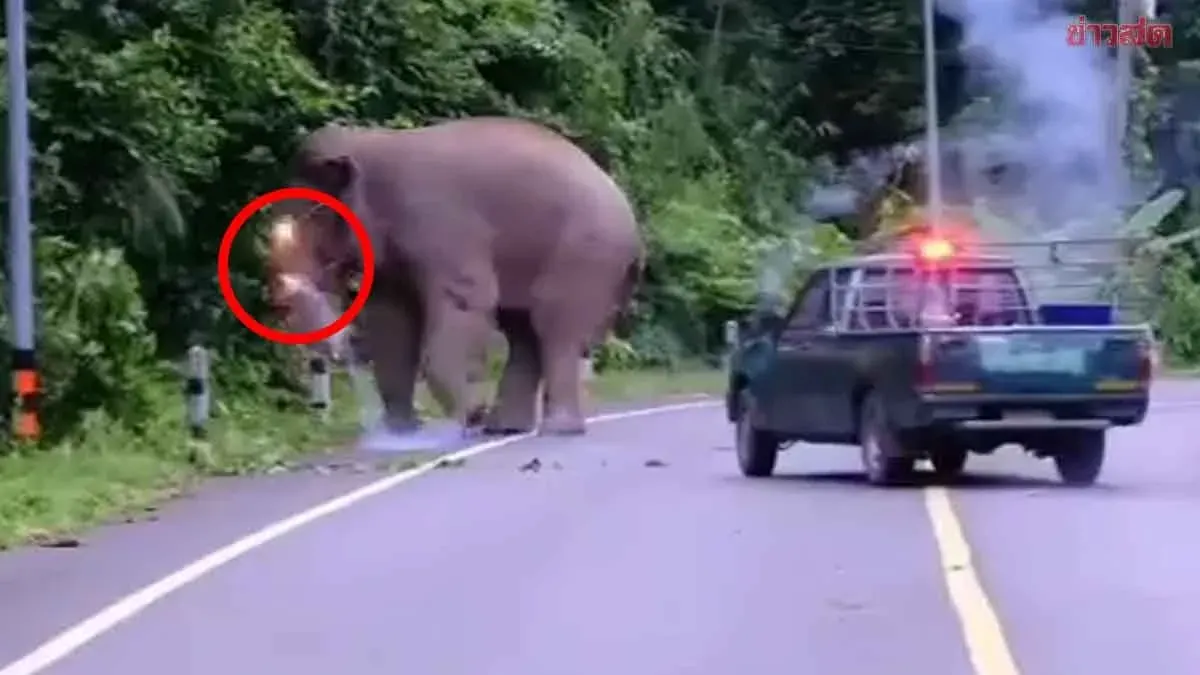
Khao Yai National Park officials explained the decision to use firecrackers on the wild elephant Phlai Sarika, stating the animal was in musth and becoming increasingly aggressive, making the controlled deterrent necessary. Park authorities emphasized the safety of both people and elephant, and announced a fact-finding committee would review the incident and improve operational procedures.
Online criticism arose following images and video from July 12 showing staff deploying the device against Phlai Sarika near the Sarika Waterfall entrance in Nakhon Nayok Province. On July 20, park director Chaiyya Huay Hongthong explained that the person in the footage was a mobile patrol ranger tasked with monitoring wild elephants. He attributed the apparent closeness between workers and the elephant in the video to camera angle distortion, asserting that actual working distances remained safe throughout the incident. The park thanked the public for feedback and said it would improve communication and operational guidelines.
Park officials also established a committee to thoroughly investigate the matter and ensure fairness. Sataporn Teerawattana, head of National Park Zone 6, provided scientific context: over the past two months, Phlai Sarika exhibited signs of musth, making the elephant more aggressive, less aware of surroundings, and more prone to confronting obstacles. Gentle pushing methods and light barriers previously effective were no longer sufficient.
On the day of the incident, Phlai Sarika had led over 20 wild elephants into a local durian plantation, causing damage and threatening public safety. With the elephant in musth and displaying heightened aggression, staff needed to urgently push the herd out of residential areas to prevent wider damage and reduce risk to lives and property. Staff and volunteers chose firecrackers over loud noise devices to avoid startling the elephant into panic or harming its hearing, instead briefly attracting visual attention to stop the animals' advance without causing physical injury.
The park established a committee to examine the facts, instructing operational teams to refine procedures with emphasis on advance monitoring, regular risk assessment and route tracking with wildlife experts, and increased community cooperation on food-source management to reduce elephants leaving the forest.