Kla Tham Skips Sa Kaeo By-Election, Boosting Pheu Thai Chances
The by-election for Sa Kaeo Constituency 3 MP on December 6 has become a focal point of national political speculation after the incumbent Kla Tham Party declined to field a candidate, effectively handing an advantage to the Pheu Thai Party. While Kla Tham cites timing constraints, analysts view the move as a potential signal of rapprochement between the two parties following their earlier rift over government formation. The outcome will test whether Pheu Thai can convert this opening into a victory and what it portends for future party alliances.
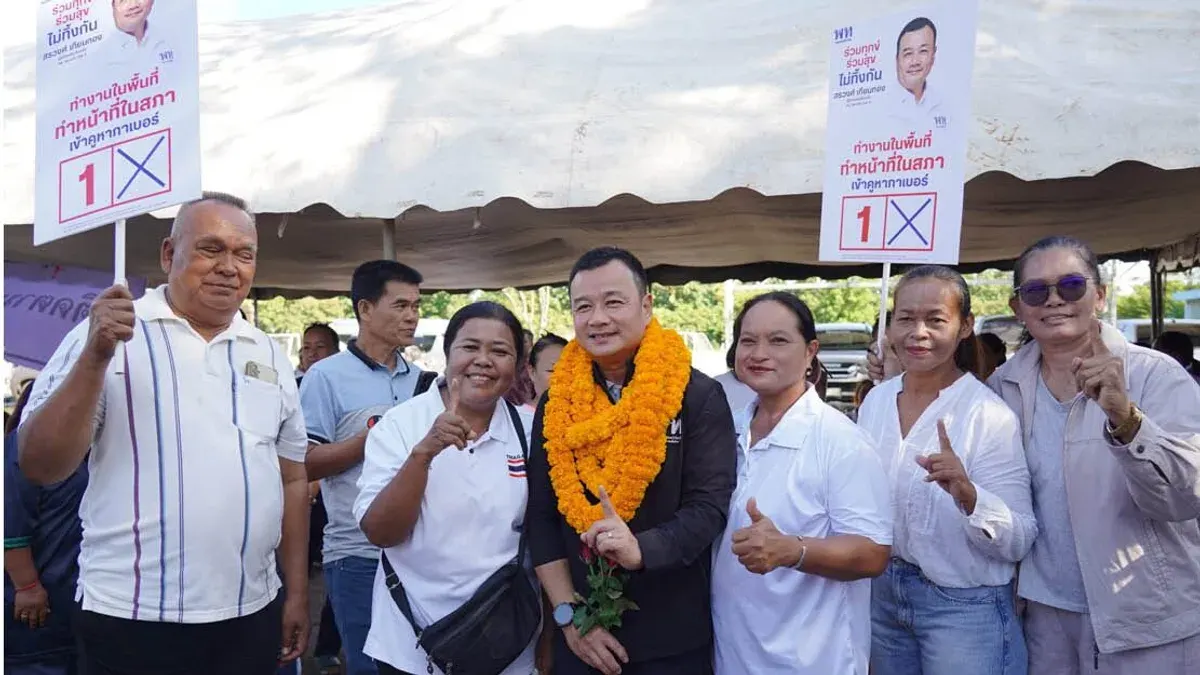
The by-election for Sa Kaeo Constituency 3 MP is set for December 6. Although Pheu Thai holds the advantage since the incumbent Kla Tham Party decided not to field a candidate to replace the late former MP Surasak Chingnawon, clearing the way for Surawong Thienthong to reclaim the seat, the backdrop is viewed as having political intrigue worth watching. Surawong drew ballot number 1 and declared readiness for a full campaign, touting his strength in grassroots work, having assisted people during floods, and vowing to push for reviving the border economy, trade, and tourism, hoping to reclaim the seat after losing in the previous general election. Pheu Thai leader Chulaphan Amornvivat is preparing to mobilize core leaders including Chen Yotsachan Wongsawat to help canvass, confident that their bond with the people will bring the party back to power. However, the key talking point is Kla Tham of retired General Thamanat Prompow, the former champion, announcing it would step aside and not field a candidate. Party spokesperson Atthakit Sirilatthayakorn claimed the party couldn't find a candidate within the limited timeframe but insisted it wasn't a political retreat and that the party still values the Chingnawon family's wish to carry on the late MP's legacy. The reasoning is understandable, but politically it inevitably raises questions because this is an important vote base; not fielding a candidate equals directly opening the path for Pheu Thai. Thus arises the perception that Kla Tham is playing a close-friend game with Pheu Thai, after they once were at odds when Kla Tham fell out of the government formation equation centered on the Bhumjaithai Party of the 'Two N's.' This withdrawal from the Sa Kaeo Constituency 3 by-election is therefore interpreted as possibly not just about unpreparedness to field a candidate, but a signal to de-escalate confrontation, restore relations, and increase national political bargaining power. However, there is no evidence confirming the two parties have agreed to exchange benefits, so one should not rush to conclusions. Yet it is certain that this by-election measures not only the popularity of Pheu Thai and Surawong, but also reflects the future direction of the relationship between the two parties. But the most important thing when the former champion doesn't field a candidate is that the entire burden falls back on Pheu Thai — whether it can maintain this advantage. Because people don't elect representatives based on inter-party relations, but based on parties and politicians who deliver real solutions to their problems. The Sa Kaeo contest thus isn't just about whether Surawong can reclaim the seat, but also whether Kla Tham's non-participation is a step back or paving the way for a new political alliance, and ultimately who will benefit most from this chess move.