Opposition Leader Calls for Investigation Into Local Exam Corruption
Opposition leader Phakamon Nuntanatpong calls for a full investigation into civil service exam corruption, alleging the probe is narrowing scope to protect high-level officials and criticizing the lack of financial audits into bribery schem

On July 20, 2025, at the Novotel Bangkok Sukhumvit 20 hotel, opposition party leaders held a forum titled "Birth, Aging, Sickness, Corruption: How Can Thais Break This Cycle?" During a panel discussion on escaping systemic problems, Phakamon Nuntanatpong, opposition list MP and Pheu Thai Party spokesperson, highlighted the urgent need to overhaul the civil service examination system. She compared the ongoing exam corruption scandal to a compelling film whose ending remains uncertain—particularly whether those truly responsible will face justice.
Phakamon expressed deep concern that the investigation appears to be narrowing its scope to protect high-level figures, which could become the defining scandal that brings down the current government. She pointed out that local corruption in civil service exams occurs every year, with people paying bribes to secure positions. Those making payments are often influential local politicians seeking to "buy" specific exam scores to prevent answer changes or displacements of higher bidders.
She criticized the selective nature of the investigation, noting that only five officials from the Interior Ministry face serious disciplinary action and only three have been formally charged so far. Most troublingly, no government agency has yet requested a financial audit. She called on Interior Minister Anutin (the first Anutin) to contact Prime Minister Anutin (the second Anutin) to order the investigation, expressing frustration that when both figures share the same name and position, obstacles seem to multiply rather than disappear.
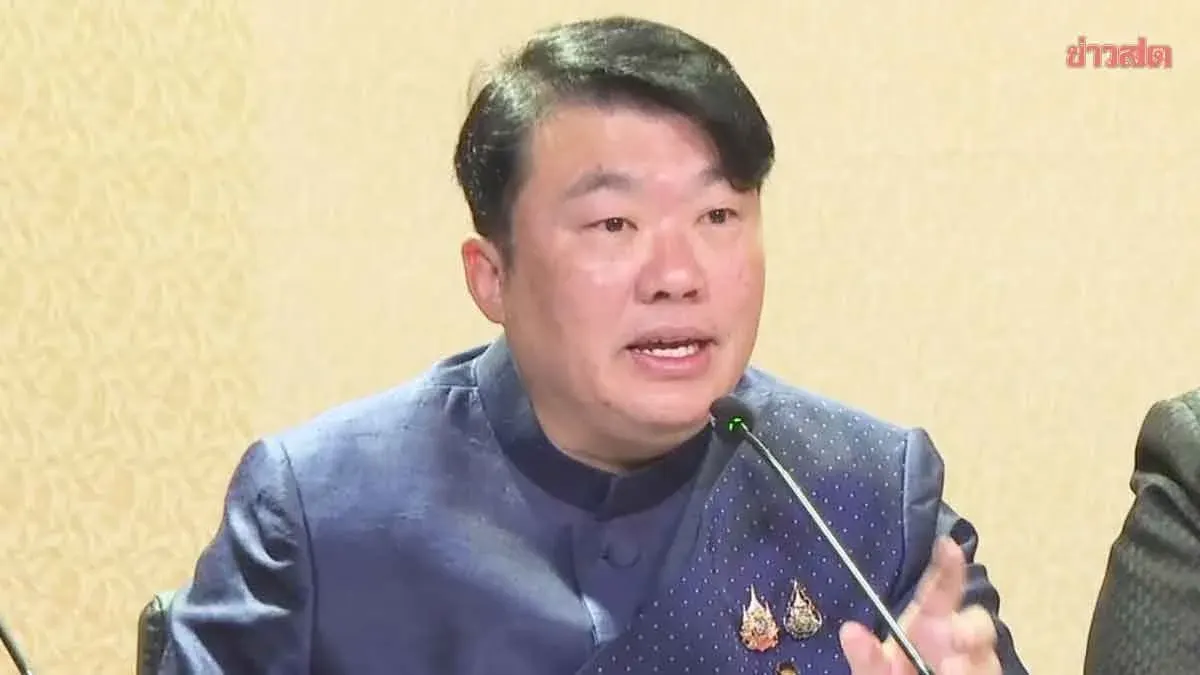
Meanwhile, opposition MP Wisut Tantinanthan discussed combating corruption through the Procurement Act 3.0, which aims to establish transparent government procurement rules and eliminate conflicts of interest. He identified problems in premium contractor schemes that create opportunities for cartels and government-to-government procurement without competitive bidding.