Revered Phra Kring Baken Amulet History Revealed at Wat Eiam
The user wants a short summary of the article about Phra Kring Baken amulets at Wat Eiam. The article details the history of these amulets, originating in Cambodia, first Thai reproductions by Than Chao Khun Sri around 1942, and the highly
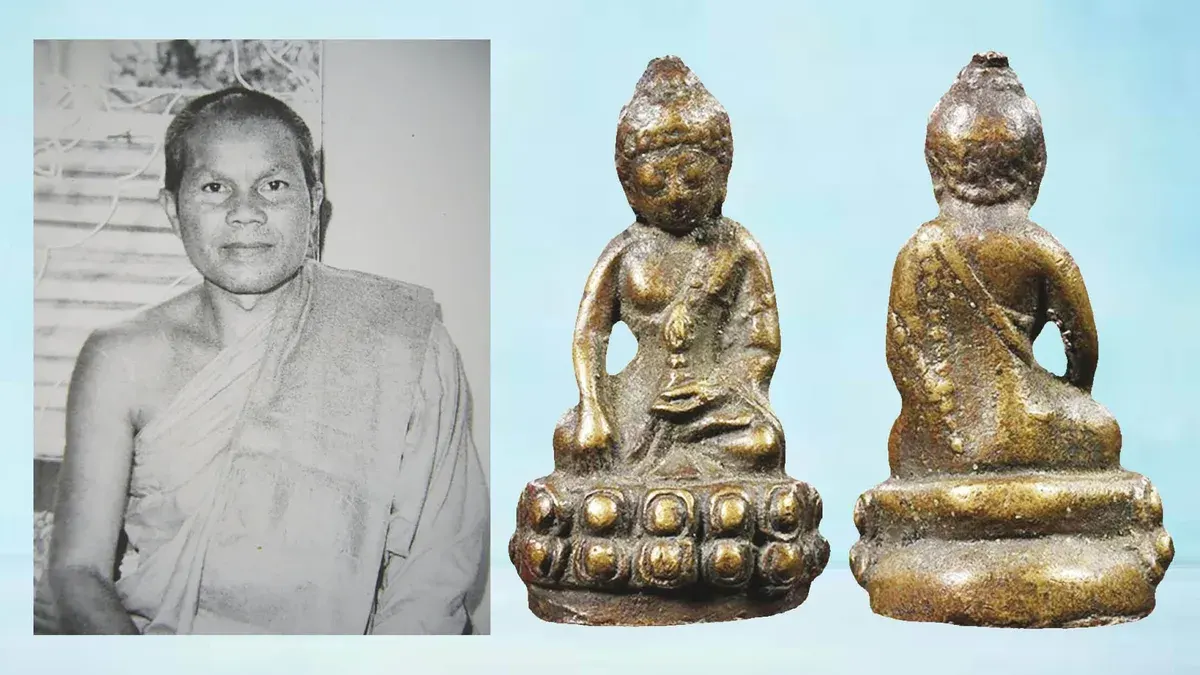
"Phra Kring Baken" amulets originated at Phnom Bakheng in Cambodia, earning the names "Phra Kring Baken" or "Phra Kring Nok" (foreign Phra Kring). They are extremely ancient with no definitive dating, and only a handful have been found in Thai temple crypts.
Regarding Thai reproductions, the first notable series was created by Phra Mongkol Rajamuni (Sin Yatitharo), commonly called "Than Chao Khun Sri" of Wat Sutthasat Thepwararam. He used original Cambodian Phra Kring Baken to create molds, casting trial batches around 1942 CE in very limited numbers.
A second, highly sought-after version is the Phra Kring Baken of Wat Eiam Woranut. Luang Pu Tim Thammatharo (Phra Khru Wisit Sophon), the renowned guru monk of Wat Chang Hai in Pattani who forged the modern Luang Pu Thuad amulet legend, presided over its creation. In 1963 CE, Luang Pu Tim was invited to assist Wat Prasat Bunnayavas after a fire and resided at Wat Eiam. The temple then produced sacred objects as mementos and for renovation fundraising.
The Wat Eiam Woranut Phra Kring Baken in Bang Khun Phrom was cast from molds taken from original Cambodian pieces. Luang Pu Tim served as the ceremonial master for the casting and consecration at Wat Eiam on November 25, 1963 CE. Field Marshal Praphas Charusathien chaired the monastic pavilion dedication. Approximately 3,000 pieces were produced.
The sacred alloy included melted bullet casings from decommissioned Army ordnance, fragments from the older Wat Sutthasat Phra Kring series, and yantra foil sheets from southern guru monk lineages. The amulet bodies exhibit a yellowish-bronze hue turning brown, cast solid in the "tan thong" method. Artisans then drilled the base of each amulet, inserted a "kring" bead (which rattles when shaken), and sealed it with gold alloy.
Collectors say this batch ranks second in popularity only to Than Chao Khun Sri's own Phra Kring.
Luang Pu Tim, born Tim Phrompradu on August 21, 1912 CE, in Ban Na Pradu, Na Pradu Subdistrict, Khok Pho District, Pattani, was the son of Inthong and Num Phrompradu, one of six siblings. At age nine, his parents entrusted him to Phra Khru Phatthakorn Gowit (then the novice Thammachoto, abbot of Wat Na Pradu near his home) to study at the temple school. He ordained as a novice at 18 but soon disrobed to help his parents farm. At 20, he underwent full ordination at Wat Na Pradu, observing two rains retreats there before moving to Wat Muang Lin Thawapi Vihara in Nong Chik District, Pattani, to study Buddhist doctrine. He later returned to teach at Wat Na Pradu, and in 1941 CE became abbot of Wat Ratsadorn Bun (Wat Chang Hai), initially commuting between the two temples while still teaching at Wat Na Pradu.
During World War II, Japanese troops landed in Pattani. The southern railway line from Hat Yai to Su-ngai Kolok ran past Wat Chang Hai, transporting soldiers and supplies daily, terrifying local residents. Luang Pu Tim shouldered the heavy burden of providing food and shelter to travelers passing the temple day after day, earning a reputation for boundless compassion.
When he first settled at Wat Chang Hai, the temple was abandoned and dilapidated. He spearheaded the restoration of the stupa housing Luang Pu Thuad's relics, making it a dignified place of worship. Determined to build an ordination hall, he partnered with Anan Kananurak to create the now-legendary Luang Pu Thuad amulets.