Sa Kaeo Farmers Race Rain to Harvest as Rice Prices Plunge
Sa Kaeo rice farmers are harvesting early to beat incoming rain, accepting immature crops to avoid total loss. Prices have crashed to just 1,300 baht per kwian with extra penalties for wet grain, while fuel, machinery, and labor costs keep climbing. Growers say they face a perfect storm of flood damage, low prices, and high costs, and are demanding urgent government aid to avoid heavy losses.
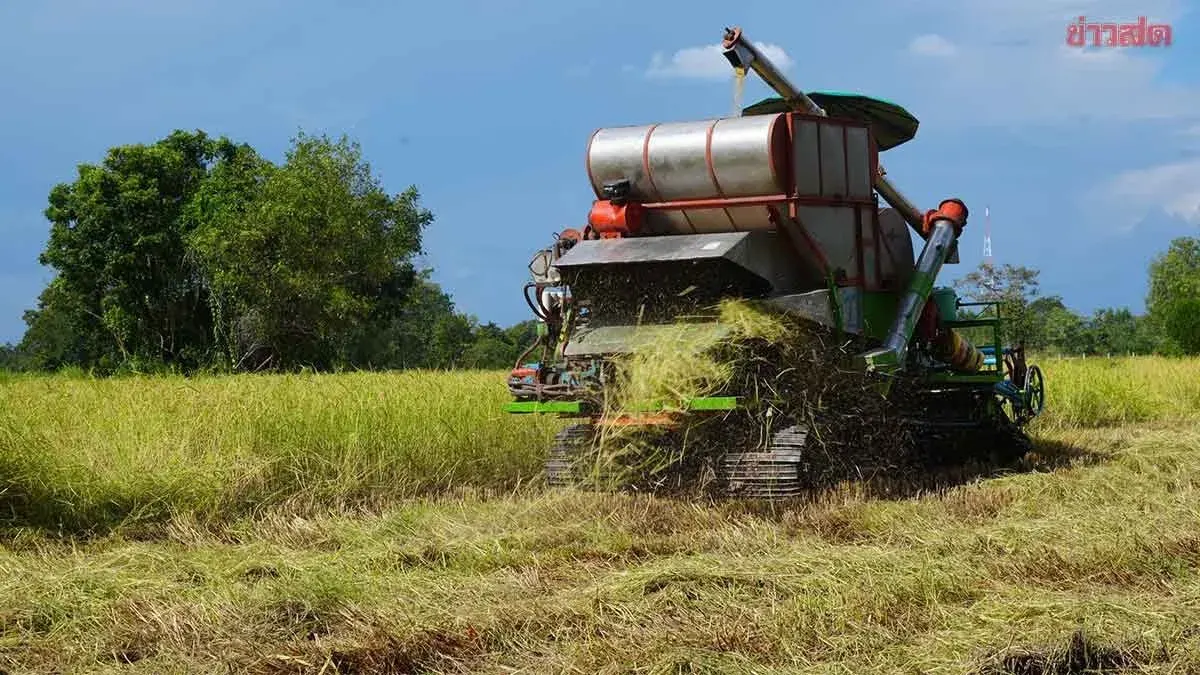
Sa Kaeo — Farmers in Sa Kaeo are scrambling to mobilize labor and machinery to harvest rice in a race against time, even though some fields are not yet fully mature, fearing that more rain will cause severe yield damage. At the same time, rice prices this year have dropped alarmingly, peaking at only 1,300 baht per kwian, and rice with high moisture content or poor quality faces further price deductions. This comes on top of continuously rising production costs.
This year's rice farming situation in Sa Kaeo province has been severely difficult. Many areas suffered flooding, damaging rice plants, leaving grains incomplete, and reducing yields below expectations. Meanwhile, purchase prices have fallen, with the highest price at just 1,300 baht per kwian; lower quality or wet rice fetches even less, further shrinking farmers' income.
Beyond yield and price problems, farmers must bear rising costs for fuel, machinery, harvesting operations, and wages. In particular, higher fuel prices have driven up both production and harvesting expenses.
Concerned that more rain may fall, many growers have decided to harvest early, even from fields not fully ripe, because leaving the crop risks further rain damage and could increase post-harvest handling costs.
This year marks another all-around crisis for Sa Kaeo farmers: floods destroying yields, uncooperative weather, falling rice prices, and relentlessly rising production costs. Despite toiling all season, at harvest they face returns that do not match their outlays, and many do not know whether they can sell at a profit.
The outcry from farmers presents a pressing challenge for the state to swiftly find relief measures — on rice prices, production cost reduction, and support for growers affected by natural disasters — so that farmers do not have to shoulder the risk alone.