Thai Airways, PTT Begin Using Domestic SAF Fuel to Meet Net Zero Goal
Thai Airways and PTT Group have launched Thailand's first domestic sustainable aviation fuel operation, powering a Bangkok-Singapore flight with locally produced HEFA-SPK fuel that cuts emissions by up to 80 percent compared to conventional
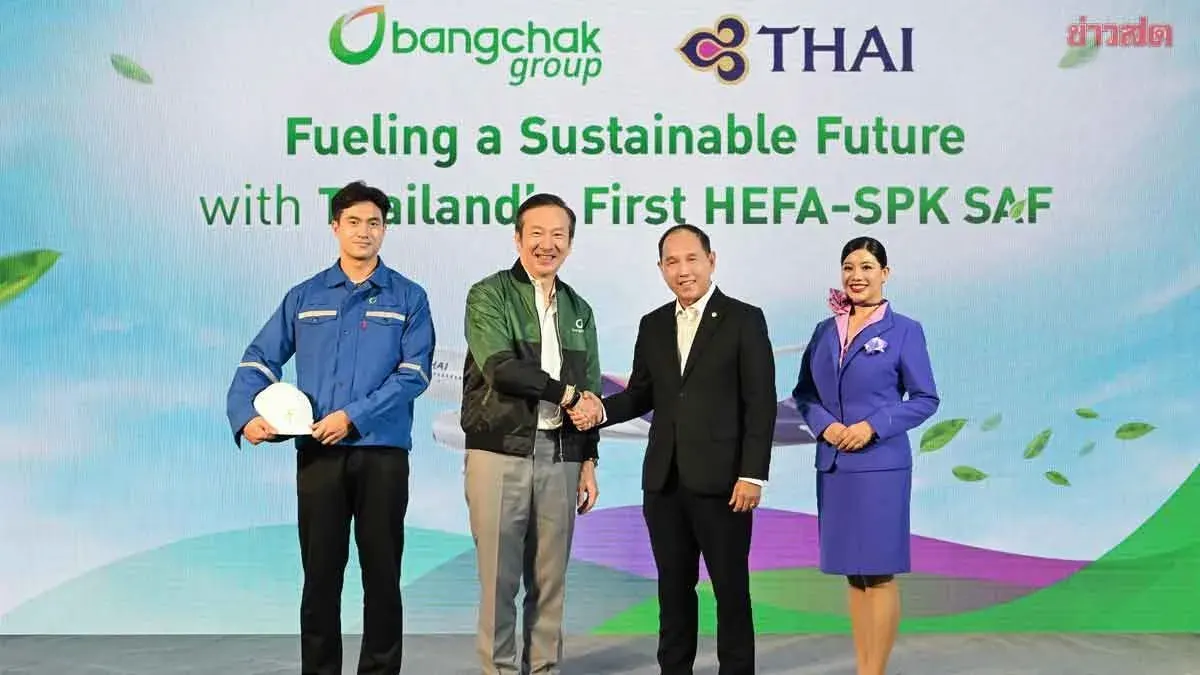
Thai Airways and the PTT Group have partnered to fuel flight TG409 (Bangkok–Singapore) with domestically produced sustainable aviation fuel (HEFA-SPK SAF) for the first time at Suvarnabhumi Airport, signaling a major collaboration between Thailand's two leading organizations to reduce aviation emissions and transition toward Net Zero energy goals. According to Chai Eamsiri, President and Chief Executive Officer of Thai Airways, the initiative demonstrates Thailand's capability to develop a robust energy and aviation ecosystem that supports the industry's sustainable future. The SAF used on this flight originates from Thailand's first standalone HEFA-SPK production facility, which began commercial operations in May 2026 with an initial capacity of 1 million liters per day. The facility uses recycled cooking oil as raw material and can reduce lifecycle greenhouse gas emissions by up to 80 percent compared to conventional jet fuel, while meeting international standards including ISCC CORSIA and ISCC EU certification.
Chaivatana Kovavisarach, President and Chief Executive Officer of the PTT Group, emphasized that this collaboration marks Thailand's entry into the global low-carbon aviation industry and demonstrates the country's readiness to support the industry's transition while creating long-term business opportunities. The SAF is transported from PTT's Phra Khanong refinery to Suvarnabhumi Airport via pipeline infrastructure managed by Bangkok Pipeline Transport Company (BPT) and stored at the Bangkok Aviation Fuel Services (BAFS) facility before being loaded onto aircraft according to standard procedures. Thai Airways has been strictly complying with the European Union's ReFuelEU Aviation Initiative since 2567 (2024), using sustainable aviation fuel on all European routes and continuing to increase the proportion of SAF usage in 2568 (2025), including flights departing from airports such as Charles de Gaulle in Paris. This partnership underscores both organizations' commitment to sustainable aviation, reducing greenhouse gas emissions, and achieving Thailand's Net Zero Carbon Emission target by 2570 (2027).