Sugarcane Farmers Squeezed as Costs Soar, Prices Stall at 850 Baht Per Ton
Sugarcane farmers in Nakhon Ratchasima are losing money as production costs soar while the government-set price remains stuck at 850 baht per ton, leaving many unable to break even.
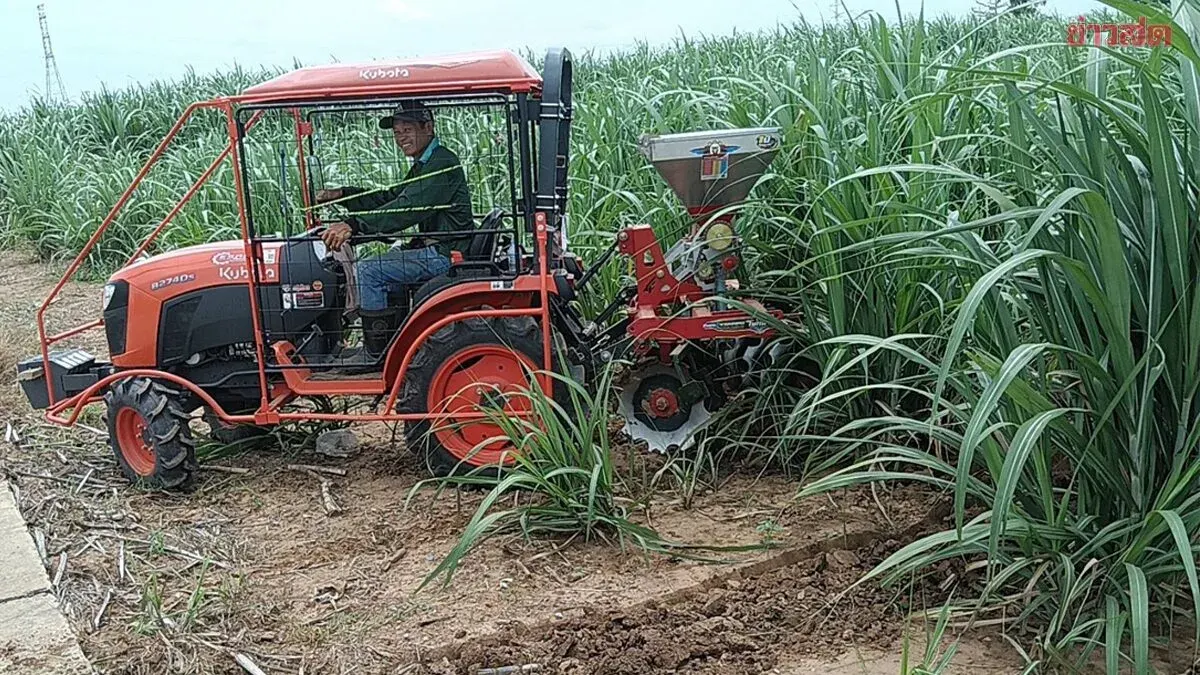
Sugarcane farmers in Nakhon Ratchasima province are facing severe hardship during the 2568/69 production season, caught between sharply rising production costs—labor, diesel, fertilizer, and other expenses—and a government-set base price of only 890 baht per ton for sugarcane with 10 degrees Brix sweetness. The cabinet's decision does not align with farmers' actual expenses and operational burdens. Additionally, a government program called "Fresh-Cut Sugarcane for PM 2.5 Reduction" approved with an additional budget of 477.05 million baht to assist farmers during the 2567/68 season remains in the implementation stage, with compensation payments still pending.
Vicharn Tangtah, 60, a sugarcane farmer in Si Khio district, disclosed that he planted 16 rai of sugarcane with an investment exceeding 100,000 baht. He paid 5,500 baht per rai for planting and variety selection, plus costs for fertilizer, labor, diesel for tractors, and other expenses—everything is expensive. Yet when he sells his sugarcane, he receives only 850 baht per ton before deducting transportation, harvesting, and other costs. He could break even if he harvests 15–20 tons, but below 10 tons becomes difficult.
This year, drought struck. Rain came sporadically, weeds overran the fields, and he had to hire spray teams at 150 baht per rai to apply herbicide. He also had to irrigate the cane. When diesel prices spiked to 51 baht per liter, pumping water to irrigate burned through 1,000 baht per gallon daily—10 days of pumping cost 10,000 baht, and he still needs a second round. Fortunately, fuel prices have since eased.
Tangtah's plea to the government: raise the purchase price to 1,400 baht per ton, no lower. Production costs for fertilizer, chemicals, labor, and fuel remain prohibitively high.