Supreme Court Rules Citizens Can Sue Election Commission for Fraud
The Supreme Court President ruled that citizens have the right to directly sue the Election Commission and its members for election fraud, establishing that political rights are fundamental human rights and election corruption usurps popular sovereignty. The landmark decision confirms such cases fall under the Criminal Court for Corruption and Misconduct Cases, enabling public scrutiny of the EC's controversial handling of fraud investigations.
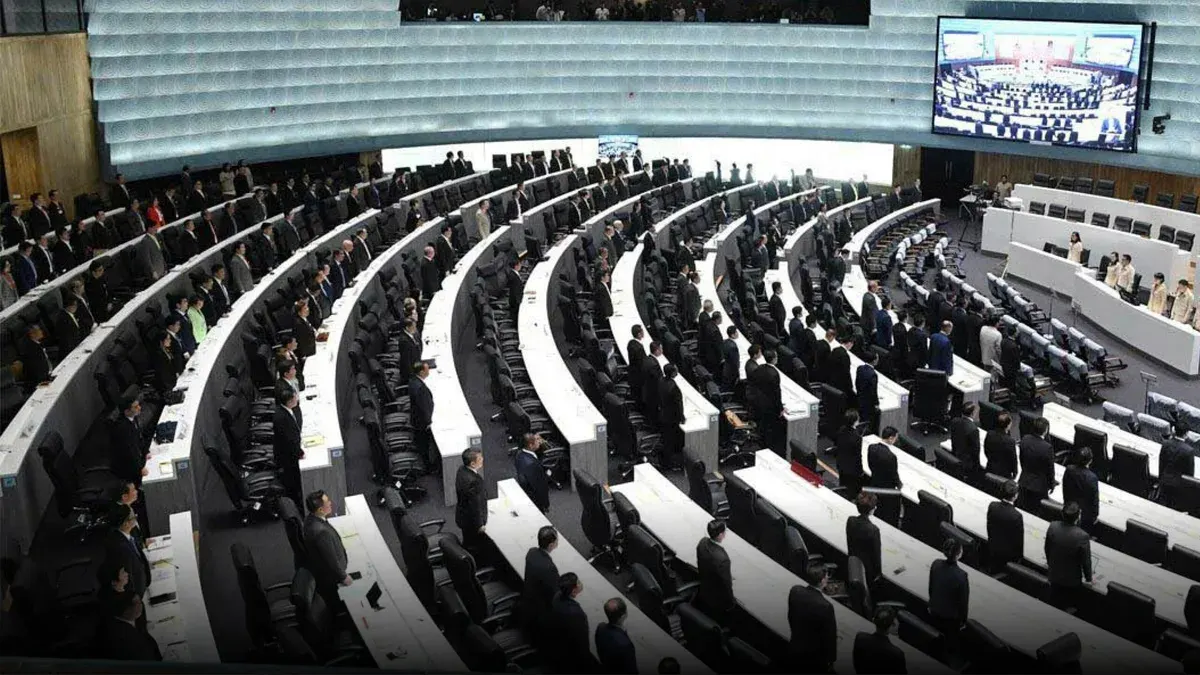
Supreme Court President Wichit Klongmikun issued ruling No. 27/2569 concerning cases where citizens or victims of election fraud sue the Election Commission (EC) and related parties. The ruling clarifies that political rights and freedoms are fundamental human rights under the Universal Declaration of Human Rights and the International Covenant on Civil and Political Rights, which the Thai Constitution affirms by stating that sovereignty belongs to the Thai people. Corrupt acts to obtain elections improperly constitute usurpation of popular sovereignty from the people. Therefore, all citizens, including prosecutors, are considered injured parties and have the power to file suit directly in court of first instance under Criminal Procedure Code Sections 2(4) and 28(2). The Supreme Court President further clarified that this case falls under the jurisdiction of the Criminal Court for Corruption and Misconduct Cases under the Act Establishing the Criminal Court for Corruption and Misconduct Cases B.E. 2559, Section 3, Paragraph 1(1). The ruling stems from a reserve senator suing the EC Secretary-General and eight EC members at the Nonthaburi Provincial Court for malfeasance in office or improper performance or omission of duties. The case arose from doubts about the EC's performance and a 4-3 vote regarding investigation and prosecution of election fraud cases. Subsequently, the EC filed a jurisdictional objection, arguing that as officials of an independent organization accused of actions related to their duties, the case might fall under the Supreme Court's Criminal Division for Political Office Holders or the Criminal Court for Corruption and Misconduct Cases rather than ordinary courts. This led the Nonthaburi Provincial Court to issue a stay order and refer the jurisdictional issue to the Supreme Court President for the clarifying ruling. This decision is expected to positively impact the investigation process for election fraud cases, which are politically sensitive and affect the legal system and democratic development. Particularly, the performance of the EC majority and the EC Secretary-General has created significant public doubt, as seen in cases where the EC selectively prosecuted some accused parties or delayed proceedings by appointing Sub-Committee No. 36 despite Investigation Sub-Committee No. 26 having already gathered evidence and recommended prosecution. Therefore, it is entirely appropriate that the general public or injured parties have the right to sue to scrutinize the EC's performance as determined by the Supreme Court President's clarifying ruling.