Thai Karting Officials Say 'Nong Phayu' Engine Illegal
The Royal Thai Automobile Association said the engine cylinder head used in kart racer 'Nong Phayu's' vehicle violates the regulations for the Cadet‑B class, though the team can still explain without a set deadline. The violation was discovered after a protest following the driver's first‑place finish in the TrueVisions Championship 2026. Officials noted that while the flywheel shroud is legal, the cylinder head lacks the required laser markings and IAME logo, and any penalty would depend on a future committee review.
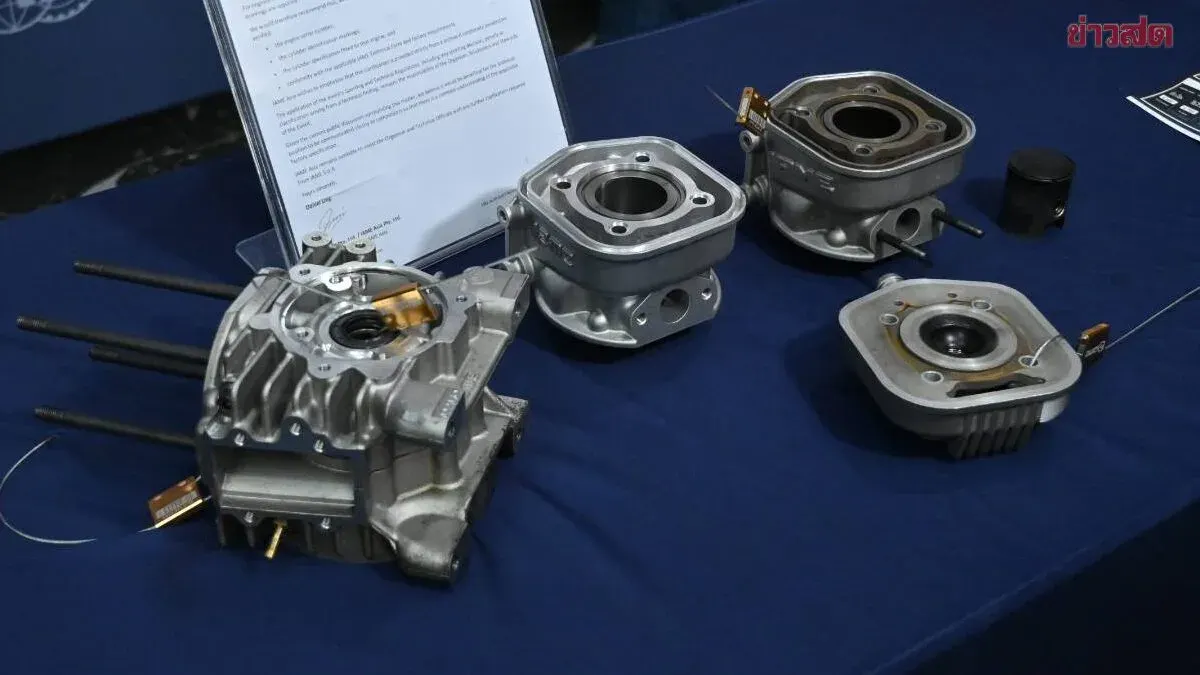
The Royal Thai Automobile Association (R.Y.S.T.) has clarified that the engine component used in 'Nong Phayu's' kart violates the rules, although the mechanical team retains the right to explain without a fixed deadline. The issue arose after a protest in the TrueVisions Championship 2026 Cadet B class, where 'Nong Phayu' won first place, prompting officials to inspect whether the engine complied with regulations. The association later stated that the kart's engine was not compliant, noting that all engines in the Cadet‑B class must be identical.
On 15 October 2069, association manager Sirawat Jeimsiriwat explained that the flywheel shroud bears a stamped number; according to IAME Asia documentation, engines numbered from 11150 onward should use the new 2026 cylinder head, but 'Nong Phayu's' cylinder head is numbered 27632, which does not meet that requirement. While the flywheel shroud itself is legal, the cylinder head is not. He noted the new head features two laser‑etched marks and a small IAME logo, absent on the older part, and said any effect on compression would need to be answered by the manufacturer.
Sirawat added that, under normal procedure, a found violation would lead to disqualification, dropping the competitor to last place. However, since the two earlier rounds did not use the disputed cylinder head, those results stand. He explained that pre‑race checks usually only examine the exterior; proper engine inspections and the issuing of gold‑lock seals are done by organizers to prevent engine swaps, with a broken seal resulting in a foul.
When asked who would decide if DT Motorsport’s data could change the outcome, Sirawat said the Royal Thai Automobile Association would need to form a committee, which would take time, and that DT Motorsport or the kart’s mechanical team may still present their case without a fixed deadline. He concluded that information from the manufacturer confirms the part is in violation.