Thai MP Demands Policy Overhaul Following ICJ Rohingya Verdict
Thai MP Thawi Sodsong urges the government to overhaul its national security, human rights, and migrant worker policies following the ICJ's ruling that Myanmar committed genocide against the Rohingya. He highlights Thailand's own history with the 2015 Rohingya trafficking case and warns that millions of Myanmar workers in Thailand cannot be expected to return home safely amid ongoing conflict. The MP also cites systemic corruption in the Myanmar government's document renewal process that exploits migrant workers in Thailand.

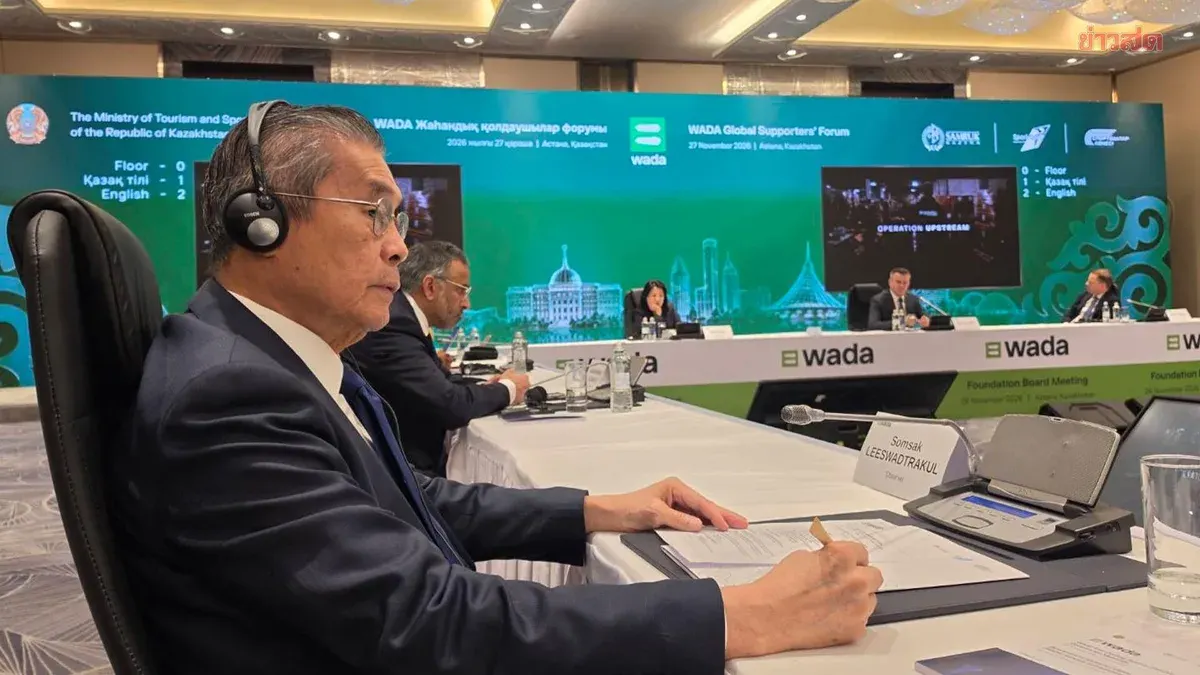
On November 27, 2026, Pol. Lt. Col. Thawi Sodsong, a party-list MP and leader of the Prachachat Party, posted on Facebook about lessons from the International Court of Justice (ICJ) ruling on the Rohingya genocide and Thailand's stance. The ICJ judgment on November 19, 2026, which found Myanmar committed genocide against the Rohingya, serves as a significant milestone in international law and a lesson for Thailand as a neighboring country to seriously review its policies on national security, human rights, refugee protection, and cross-border migrant worker management.
The ruling underscores international community concerns about repatriating individuals to Myanmar amid ongoing conflict, persecution, and human rights violations. This aligns with the position of the UN High Commissioner for Refugees (UNHCR) that returns must be voluntary, safe, and dignified.
Thailand has historical lessons from the 2015 Rohingya human trafficking case. The discovery of mass graves in Khao Kaew, Sadao District, Songkhla Province, led to prosecution of a human trafficking syndicate and transnational criminal organization with 103 defendants across 11 indictments, including businesspeople, influential figures, local politicians, soldiers, and police. The Supreme Court's verdict was read on April 2, 2024.
Pol. Lt. Col. Pawina Pongsiripan, a key investigator in that case, later resigned from the civil service and sought asylum in Australia, citing concerns for her own safety. This episode reflects that the justice process must be independent, free from interference, not allow perpetrators to escape accountability, and genuinely protect victims, witnesses, law enforcement officials, and human rights defenders.
Data from the International Organization for Migration (IOM), presented to the House Committee on Legislation, Justice, and Human Rights on November 26, 2026, shows Thailand hosts 4.23 million foreign workers, of which 3.33 million are from Myanmar — 79 percent of all migrant workers — serving as a vital labor force in manufacturing, construction, agriculture, fisheries, trade, and services.
Meanwhile, Myanmar has over 16 million people in need of humanitarian assistance and more than 4 million internally displaced persons. Thailand must therefore prepare long-term strategies, not based on the assumption that all migrant workers and refugees can safely return to their country of origin.
Furthermore, measures by the Myanmar military government affecting workers in Thailand, according to related data and complaints, include: - Collecting 2-3 percent income tax - Mandating 25 percent remittance of earnings through designated banks using below-market exchange rates - Using proof of tax payment and money transfers as conditions for issuing or renewing passports and Certificate of Identity (CI) documents - Enforcing conscription laws and restricting travel abroad for male workers aged 18-35 - Requiring millions of workers to rely solely on the Myanmar government's CI system, which besides severe practical limitations, risks pushing workers out of the legal system and enabling systemic corruption
As evidenced by complaints to the committee about 'ghost queue' fees reaching up to 6,500 baht per person, with costs rising from 310 baht to 2,670 baht.