Thailand-China Business Roundtable Aims to Surge Chinese Investment
Prime Minister Anutin Charnvirakul and Chinese Premier Li Qiang co-chaired the Thailand-China Business Roundtable in Bangkok, pledging to accelerate the ACFTA 3.0 trade agreement and boost Chinese investment in Thai industries. The meeting highlighted over 500 BOI applications from China in the first nine months, a target to launch the first high-speed rail phase by 2030, and new incentives for data centers, semiconductors, and AI. Both leaders emphasized deeper supply-chain integration, particularly in electric vehicles, to create a stronger production base for exports.
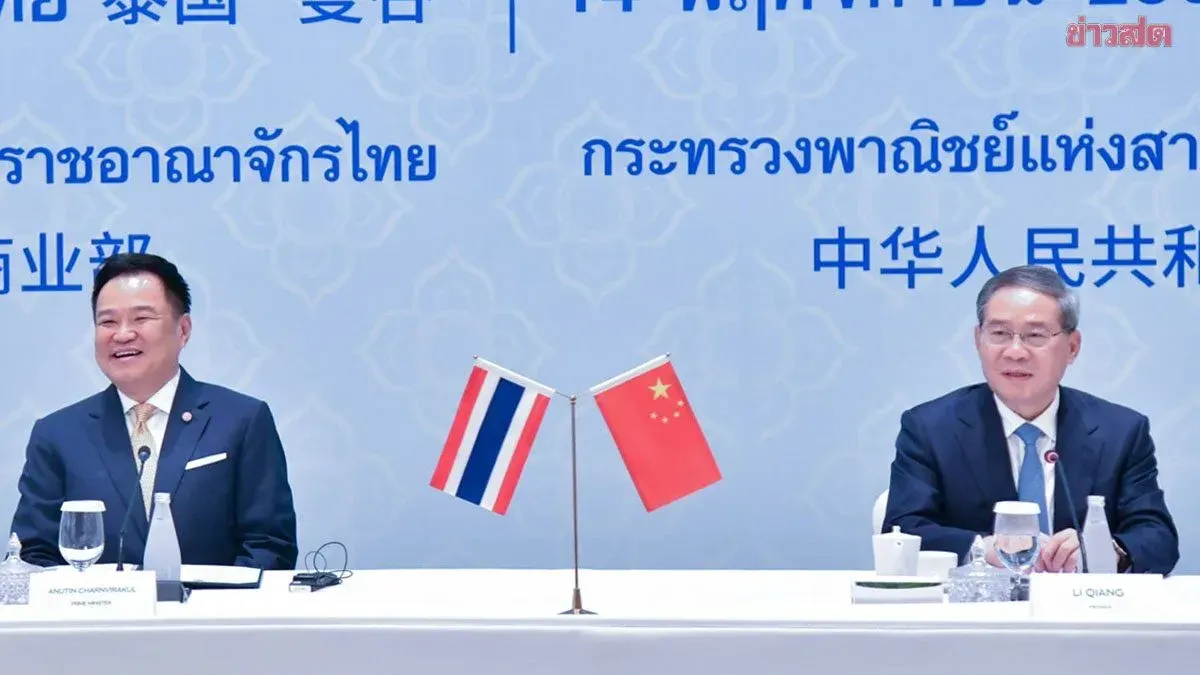
At 10:30 a.m. on November 14, 2026, at the Mandarin Oriental Hotel in Bangkok, Prime Minister Anutin Charnvirakul, also Minister of Interior, opened the Thailand-China Business Roundtable together with Chinese Premier Li Qiang, who was on an official state visit. The meeting was attended by deputy prime ministers, heads of government agencies, and more than 200 top business leaders from both countries.
Anutin stated that the Thai government will cooperate with China in all dimensions under the 'build together' concept to elevate relations from partners to co-thinkers and co-investors. He pledged to push the ASEAN-China Free Trade Agreement (ACFTA 3.0) into force quickly, advance the Thai-China high-speed railway project so the first phase can begin service by 2030, and invite more Chinese investors into Thailand's targeted industries.
'This meeting is not merely to reaffirm good relations but to discuss how both countries can turn this relationship into tangible economic and social benefits,' Anutin said. 'Thailand and China face the same challenges — environment, technology, aging society, and opportunities for the new generation. No country or business can grow strongly without cooperation and comprehensive partnerships.'
He explained that 'build together' means combining each side's strengths to achieve more powerful results, the next step in Thai-China relations. Thailand's strategic location at the heart of ASEAN makes it a gateway for trade, tourism, investment, technology, and cooperation from all directions, linking China with ASEAN and the regional economy with global markets.
On economic policy, the government is driving a new growth cycle for Thailand's economy, which already has a solid industrial base, entrepreneurs, and skilled labor. The state's role is to promote technology transfer, skills, and new cooperation into business opportunities and income for the people, with the private sector leading and the government facilitating, removing obstacles, and speeding up business operations.
At the same time, the government will strengthen energy security, increase alternative and clean energy, and modernize regulations to support future industries such as data centers, semiconductors, and AI, alongside sectors where Thailand already excels — automotive, electronics, banking and finance, agriculture and food, medical and healthcare. Investment in both infrastructure and human capital will proceed simultaneously, with China remaining a key partner.
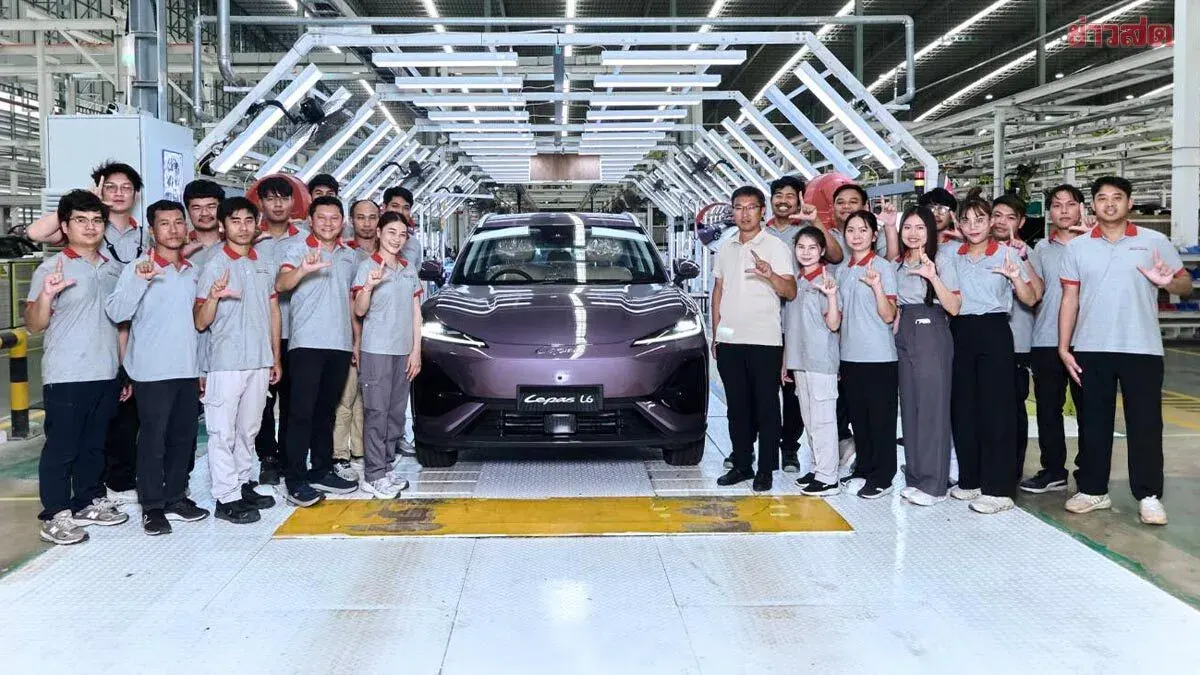
The Prime Minister highlighted two areas of clear cooperation: electric vehicles, acknowledging that many Chinese manufacturers have chosen Thailand as a production base in recent years. The next step is to link these investments with Thai parts makers and entrepreneurs to develop Thailand's supply chain and build an export-oriented production base, believing a strong production chain will ensure business stability.
The Prime Minister also noted that the second area...