Wat Phra Mahathat Becomes Thailand's Ninth UNESCO World Heritage Site
UNESCO has designated Wat Phra Mahathat in Nakhon Si Thammarat as Thailand's ninth world heritage site and first cultural site in the South, recognizing the thousand-year-old temple's iconic bell-shaped stupa and historical significance.
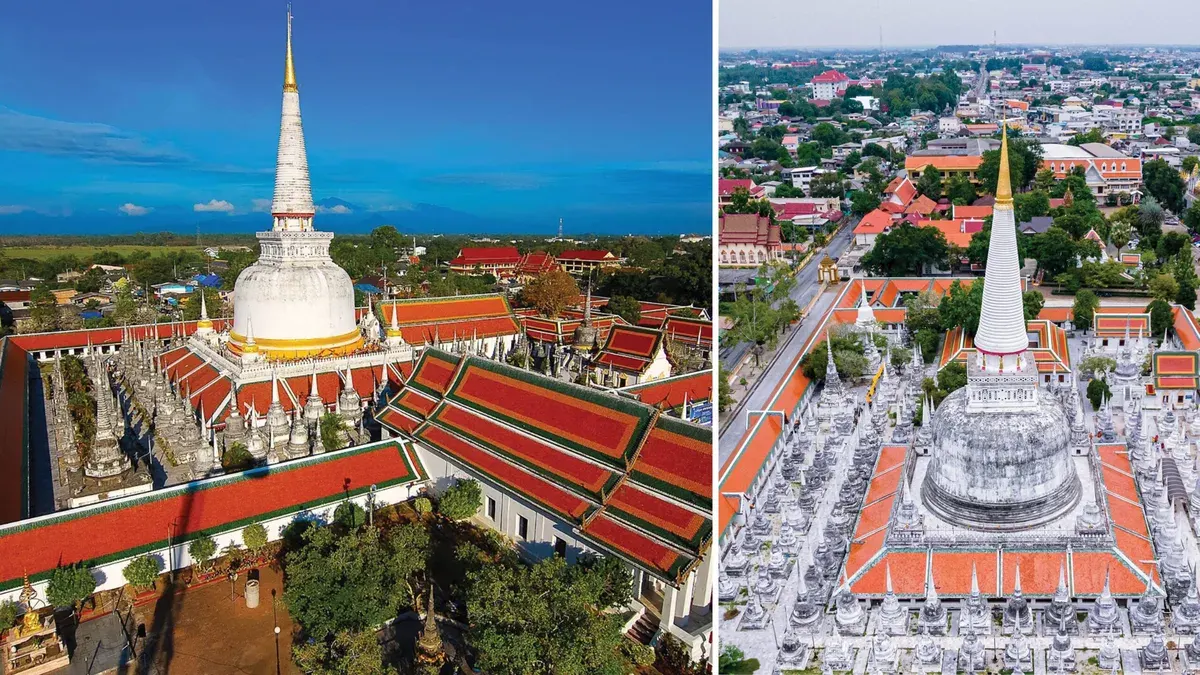
The bell-shaped stupa of Wat Phra Mahathat Woramahaviharn has dominated the center of Nakhon Si Thammarat for more than a thousand years. Today it is no longer merely a spiritual center for Thai people—it is a new heritage site for the world. Residents of Nakhon Si Thammarat and Thai citizens celebrated this historic moment after UNESCO's 48th World Heritage Committee meeting in Busan, South Korea, unanimously voted on July 25, 2025, to designate Wat Phra Mahathat Woramahaviharn in Nakhon Si Thammarat as a cultural world heritage site.
This marks Thailand's sixth cultural world heritage site, its ninth world heritage site overall, and the first cultural heritage site in Southern Thailand. Though historical records lack clear evidence of its origins, legend tells of Prince Thanthakumara and Princess Hemchala, two royal children from Thamburi, who brought the sacred tooth relic (Emerald Tusk) fleeing warfare to the sandy shore and built a small stupa to enshrine relics as its foundation.
In 1719, King Sri Thammaracha established Nakhon Si Thammarat and rebuilt the stupa. During the reign of King Chanthraphanusingharatmaja, the second king, he invited Buddhist monks from Sri Lanka to establish the sangha and renovated the stupa according to Sri Lankan architectural style—the inverted bell shape that appears today. According to Fine Arts Department records, the temple was originally called Wat Phra Brommathat, though whether monks permanently resided there remains unclear.
The Fine Arts Department notes that the temple's historic structures were maintained sporadically by local lords and respected elders. The governors of the time appointed a senior monk called Phra Kru Hem Jetiyanuraks as head, with four assistants who rotated custodian duties without monks taking permanent residence.
During the reign of King Mongkut (Rama VI), in 1858, he visited Nakhon Si Thammarat and appointed Phra Kru Vinaidthorn (Nun) from Wat Phet Chrik to be the abbot. From then on, the temple had a permanent abbot and resident monks. It received the new name Wat Phra Mahathat Woramahaviharn by royal decree under the Ministry of Religious Affairs' royal monastery regulations.
Wat Phra Mahathat Woramahaviharn covers 34.43 rai in a rectangular layout enclosed by a brick wall surrounding the stupa cluster—the spiritual center of the temple. It comprises one large main stupa on a high square base, four directional stupas at the corners, and 120 small stupas arranged in three concentric square rings around the main structure.
The finial of the main stupa features 52 tiered gold umbrellas, with ornate square pedestals between the bell and umbrellas decorated with stucco Buddha figures in graceful poses arranged as a circumambulatory, called the "Phra Wien." The stupa's spire stands 10.89 meters high and is sheathed in pure gold weighing 800 baht or approximately 216 kilograms—the origin of the province's motto referencing the "Golden Relic."
The significant tradition associated with the temple is the "Cloth-Raising Ceremony," in which townspeople collectively donate fabric.