Special Report - The Coin of Luang Por Phrom from Wat Chong Kae, Nakhon Sawan Province
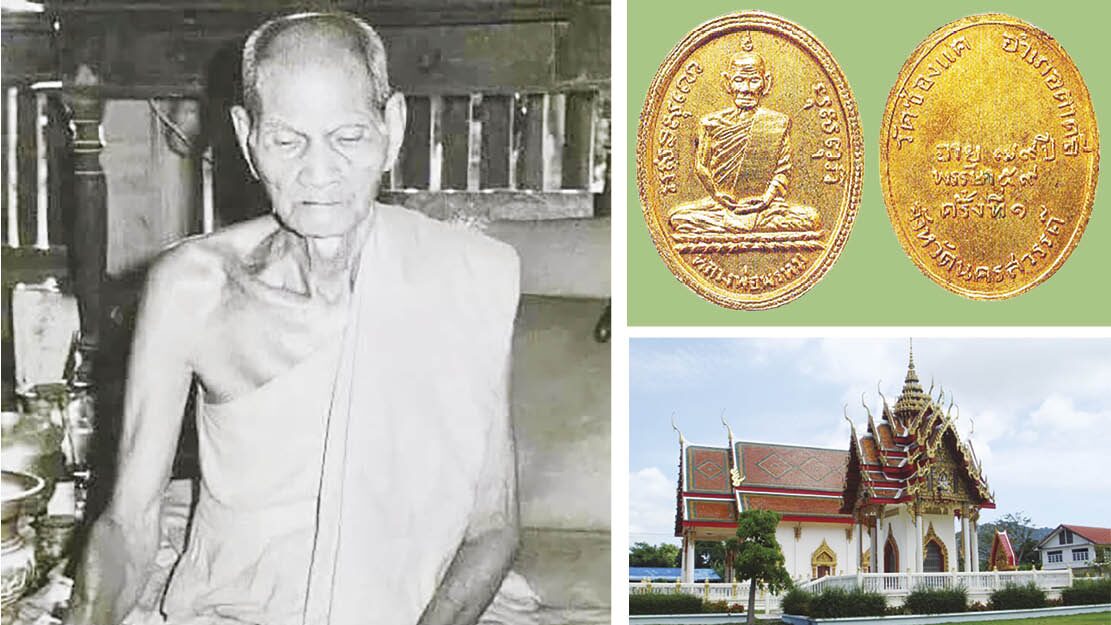
Luang Por Phrom Thawaro from Wat Chong Kae in Nakhon Sawan was a famous monk known for his high compassion and simple lifestyle. Born on April 12, 1883, in Ban Phreak, Ayutthaya, he came from a family with four siblings.
During his childhood, he learned reading and writing from monks in nearby temples, studying Khmer script alongside Thai language. He also studied mystical arts from a lay teacher named Ajarn Puang. At the age of 20, he was ordained as a monk at Wat Khian Lai in Ban Phreak, Ayutthaya on March 15, 1904, with Luang Por Thom as his ordination mentor.
He studied Buddhist scriptures, became proficient in Khmer language, and began practicing meditation. After studying meditation with Luang Por Dam for about 4 years, he embarked on long wandering pilgrimages. He traveled to Myanmar, visiting Yangon and paying respects at the Shwedagon Pagoda, crossing through mountain ranges.
Eventually, he arrived at Chong Kae mountain in Nakhon Sawan during heavy rain and found a small cave suitable for meditation. At that time, Wat Chong Kae had two monks but no abbot and was quite dilapidated. The local villagers, impressed by his practice, invited him to stay and become the temple's first abbot.
Villagers donated land, and he began developing the temple from 2460 BE (1917), gradually building living quarters, assembly halls, and a kitchen, partly funded by selling his personal and inherited assets.
When the temple needed to build an ordination hall, they decided to create sacred amulets. Luang Por Phrom, who loved bells, focused on bell-shaped amulets and sacred powder, which became his unique signature.
He retired as temple abbot in 2514 BE (1971) after 54 years of service, passing away peacefully on January 30, 1975, at Ban Mi Hospital in Lopburi at the age of 91, with 71 years as a monk. Throughout his life, he made significant contributions to the community, including religious preservation, medical assistance, and temple development.