90 Million Baht Library Abandoned For Decade, Locals Say
A 90-million-baht library and planetarium at Nakhon Ratchasima Rajabhat University has sat sealed and unused for a decade, its interiors stripped by theft while locals question why construction funds were wasted on an inaccessible facility.
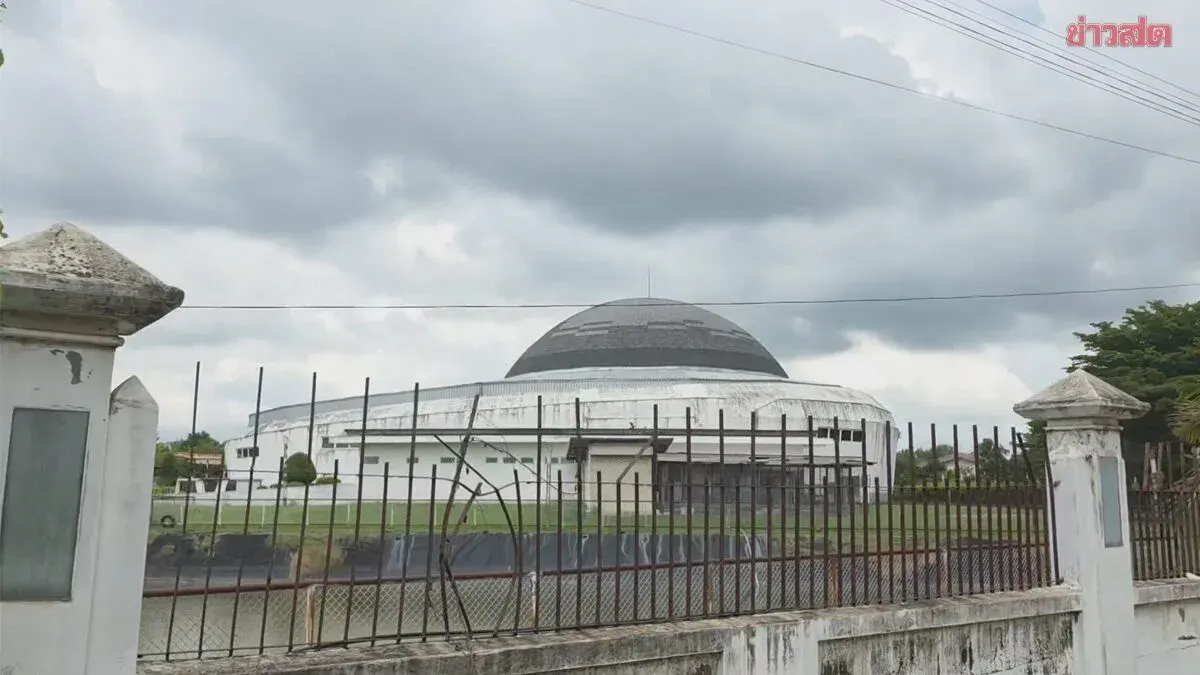
On September 11, reporters visited the Korat Living Library and Planetarium facility located within the Nakhon Ratchasima Rajabhat University Preparatory School in Mueang district. The two-storey library building stands near the planetarium, with the entrance sealed off by steel barriers and a security guard post. Media were not permitted to enter the deteriorating structure, which has been further blocked with additional metal panels. Residents interviewed in the area expressed disappointment over the waste of nearly 90 million baht in construction funds, as the public now cannot access the facility. The planetarium previously hosted community programs, student visits, and documentary screenings, while the surrounding landscaped gardens were designed for public recreation. However, the facility was eventually closed and placed under security guard supervision, citing issues such as damaged electrical poles. Residents questioned why these maintenance problems were never repaired to restore the facility to its original purpose. The Living Library itself has never hosted major events. Its interior, once equipped with furnishings and materials, has been largely emptied due to theft, leaving most equipment non-functional. Restoring it would require substantial additional funding given the extent of internal damage, yet questions remain about whether such investment would be worthwhile if the facility remains closed to the public. Although the school has since constructed a boundary fence addressing previous concerns about proximity to campus operations, the library and planetarium remain sealed off. Two main sources of regret emerged: the waste of a constructed asset sitting unused, and the squandering of public tax revenue on a facility inaccessible to taxpayers. If properly restored and reopened to the public, the facility could again serve the community. The case has raised critical questions about state asset management—why projects consuming large budgets fail to deliver public benefit upon completion, and who bears responsibility when neglect leaves infrastructure deteriorated beyond practical use.