Abhisit Slams Speaker's Committee Rules as Threat to Oversight
Former PM Abhisit Vejjajiva criticized Speaker Wan Muhamad Noor Matha's new committee
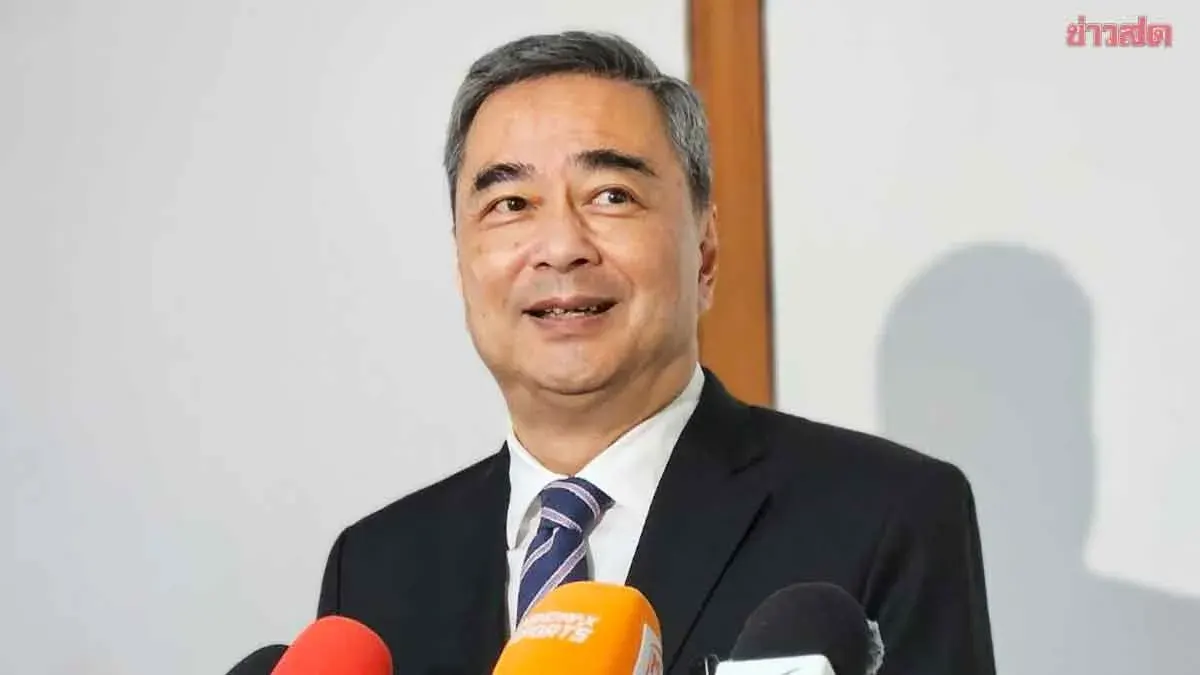
Former Prime Minister and Democrat Party leader Abhisit Vejjajiva criticized House Speaker Wan Muhamad Noor Matha for issuing new working regulations for all 35 standing committees that require consensus on every decision, saying the move violates the constitutional spirit of oversight and urging the government not to fear scrutiny if its actions are transparent and correct.
Speaking at the Wellbeing Learning Center in Bangkok's Wang Thonglang district at noon on November 3, Abhisit said the opposition caucus was likely already discussing the issue. He noted that in the committees he sits on, efforts are made to ensure all members participate in setting agendas, calling meetings, and deciding which agencies to summon for information. However, requiring consensus on everything becomes problematic when government MPs — who hold a majority in nearly every committee — refuse to cooperate with investigations, effectively paralyzing the committees' work and defeating the constitutional purpose of these mechanisms.
"My main concern is finding a balance," Abhisit said. "If there's fear a committee chair might act arbitrarily, you don't need a consensus rule — just require them to notify the meeting. Then members can question or challenge it. But locking in a rigid framework where the government refuses all cooperation means parliamentary oversight cannot function, which violates the spirit of democratic mechanisms."
Asked if the regulations effectively bind the opposition's investigative powers, Abhisit said the greater worry is the broader push to amend House rules — which could result in all committee chairs coming from the government side if the Bhumjaithai Party's proposed changes pass. He emphasized that parliamentary work has long relied on political tradition, mutual recognition of roles, and the understanding that while the government holds a majority in the House and committees, the core principle of oversight is giving the minority the ability to scrutinize. Existing rules already define what committees can and cannot investigate, and their legal powers have clear boundaries, so there should be no cause for concern.
"Therefore, I urge the government: don't fear scrutiny. If what you're doing is correct and transparent, there's nothing to fear. On the contrary, if scrutiny shows everything you've done has sound reasoning, it benefits the government. If opposition scrutiny fails, the opposition hurts itself. Let the mechanism work — otherwise it's not democratic."
Asked whether this amounts to an attempt to consolidate power and shut the door on oversight, Abhisit said concerns have been expressed in many excessive forms, but reiterated: don't be afraid, because the truth cannot be escaped. Regarding whether the opposition will take formal action or submit objection letters, Abhisit said the opposition caucus discussed the matter that morning but he did not attend, so he doesn't know the outcome. Personally, he believes the situation should de-escalate, as requiring consensus on everything will make legislative work extremely difficult.