Agriculture Ministry Tackles Saline Soil Crisis Across 17 Provinces
Thailand's Agriculture Ministry is rolling out a nationwide initiative to tackle saline soil degradation across 17 northeastern provinces, affecting 33,200 rai of farmland through integrated soil conservation and digital technology solution
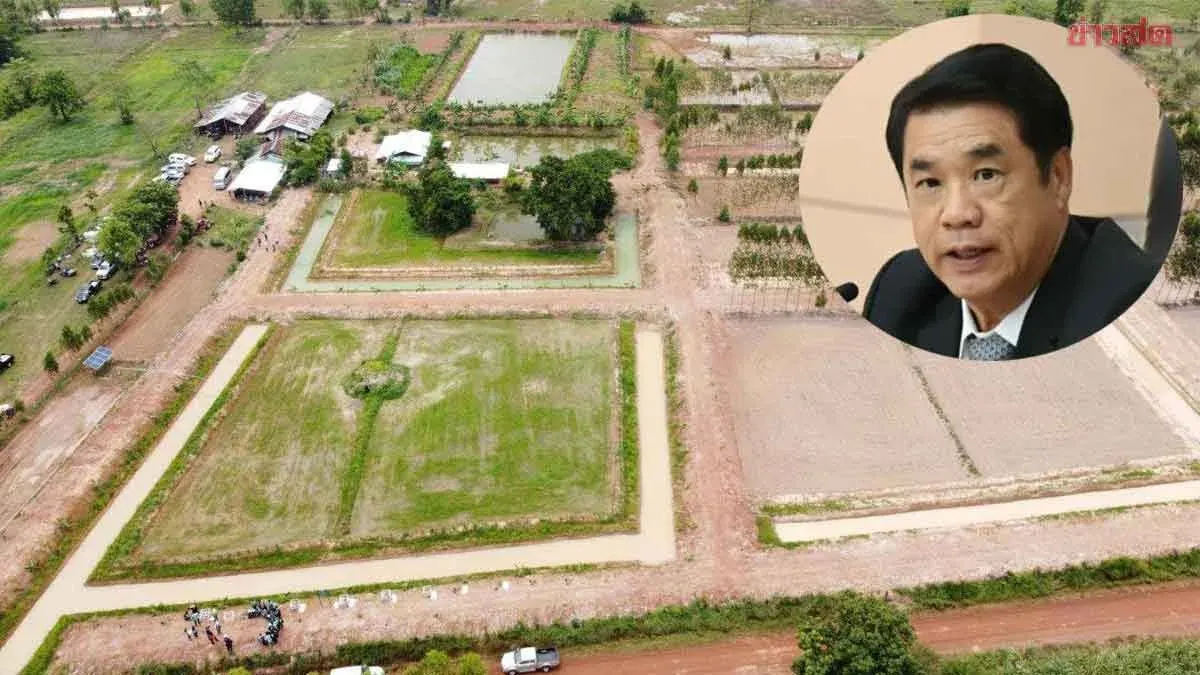
Agriculture and Cooperatives Minister Suriya Juangrungruangkit has announced that his ministry is prioritizing systematic land and soil resource management while promoting technology and innovation to strengthen the country's agricultural sector. He has tasked the Department of Land Development with urgently rolling out proactive saline soil management nationwide under an innovation agriculture framework to ensure sustainable livelihoods for Thai farmers. This approach integrates knowledge, technology, and innovation with area-based management to increase land-use efficiency, reduce production costs, and create lasting job security and improved living standards for farmers.
The department is implementing area-based management across sub-watershed basins, combining soil and water conservation systems with digital innovation and data to enhance land use and farmer prosperity. According to Department of Land Development Director Sumitra Wattana, the agency is now actively addressing the saline soil crisis through integrated development covering 33,200 rai across 17 northeastern provinces, using area-based management on sub-watershed bases with measures tailored to the severity of salinity problems.
Saline soil conditions severely limit agricultural production, degrading soil structure, reducing fertility, and hindering plant growth—especially rice, the nation's primary economic crop. The department is therefore implementing systematic solutions through four integrated dimensions: (1) developing active soil and water conservation systems at the watershed level to reduce and slow salt spread while promoting green manure crops and increasing organic matter to restore soil fertility; (2) sub-watershed area-based management, classifying areas into four salinity severity levels to determine appropriate measures; (3) applying innovation and technology to manage saline groundwater levels, preventing salt from rising to the surface, and developing proactive monitoring systems to restore saline areas; and (4) establishing a center of excellence for saline soil management by developing soil database systems and e-services to support planning, monitoring, and solving saline soil problems accurately and efficiently.