Election Commission Reveals Senate Vote-Buying Scheme Details
We need to produce a short summary, 1-2 sentences, target 120-220 characters, never more than 240. Must be English only. Provide facts: The article about Election Commissioner (GEC) Sithichai Inthawiset revealing behind-the-scenes of the "s

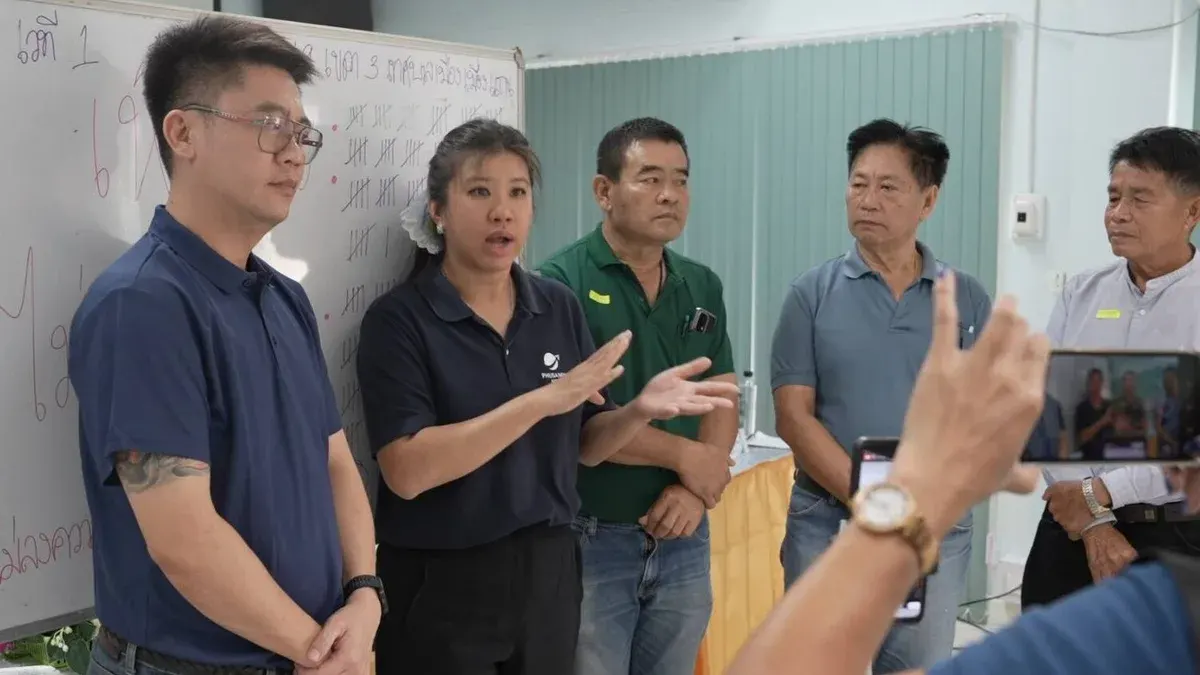
Election Commission member Sithichai Inthawiwat disclosed details of the Senate vote-buying case and the functioning of work sets 26-36, which he called two gears uncovering a national-level mystery. He spoke at the Office of the Royal Society on September 30, 2026 during a forum titled "Senate vote-buying case: the real story every Thai must know." He said an examination of the Senate election structure showed 48,226 applicants from 20 occupational groups. Management is divided into three tiers: district (928 districts, each headed by the district chief), province (each headed by the provincial governor), and national (led by the EC secretary-general). Each tier has seven members. He noted a major loophole: the law requires applicant registration to be confidential, prohibiting disclosure of numbers and names. This enabled the creation of vote banks by moving applicants to occupations with few candidates. With only just over 1,000 EC staff nationwide, the Commission must rely heavily on local administration. He added that, according to Supreme Court precedent, if an applicant completes the form correctly and has proper endorsements, the district election director must accept the application; verification of the applicant’s actual occupation is later assigned to the EC for in-depth investigation. Sithichai said the irregularities became clear on national election day at the Impact Exhibition and Convention Center in Muang Thong Thani, when officers found documents resembling a "command list" left in a bathroom. This forced the EC to urgently print new candidate introduction forms (Form Sor Sor 3) for the afternoon session. The premature leak inevitably caused confusion in voting. Meanwhile, field investigations in the first three to four months faced major obstacles because local witnesses were pressured into refusing to testify, and local EC offices lacked tools to trace financial flows, leading most complaints at district and provincial levels to be dismissed. Because the case spread nationwide, the EC revised its work plan: instead of the usual 25 investigation committees, it invoked authority under the Organic Act on the EC to bring in three main agencies—the Royal Thai Police, the Department of Special Investigation (DSI), and the Anti-Money Laundering Office (AMLO)—to work jointly. This led to the establishment of "Sub-committee No. 26" chaired by the EC secretary-general, with three DSI officers and six EC members, tasked with using special powers and tools such as tracing money flows, checking phone usage data, and re‑interviewing witnesses thoroughly (for example, witness 16/26 who gave consistent testimony three times) to build a solid case file and overcome previous limitations. After Sub-committee No. 26 gathered evidence amounting to tens of thousands of pages, the next key step was to scrutinize facts and law. Although the EC already had a regular sub‑judgment panel of 35 committees, due to the importance and volume of the case file, the full EC meeting of seven members resolved to appoint an additional special sub‑judgment panel, one set per member (sets 36‑42). "Sub‑judgment Panel No. 36" serves as a crucial gate for legal analysis, reviewing all evidence from Sub‑committee No. 26 and preparing an opinion to present to the full EC for a final ruling.