Election Commission Faces Pressure Over Senate Vote-Buying Probe
An investigation into alleged Senate vote-buying has uncovered evidence of organized operations and ballot irregularities, while an Election Commission official received 860,000 baht in suspicious payments from a politician's associate, rai
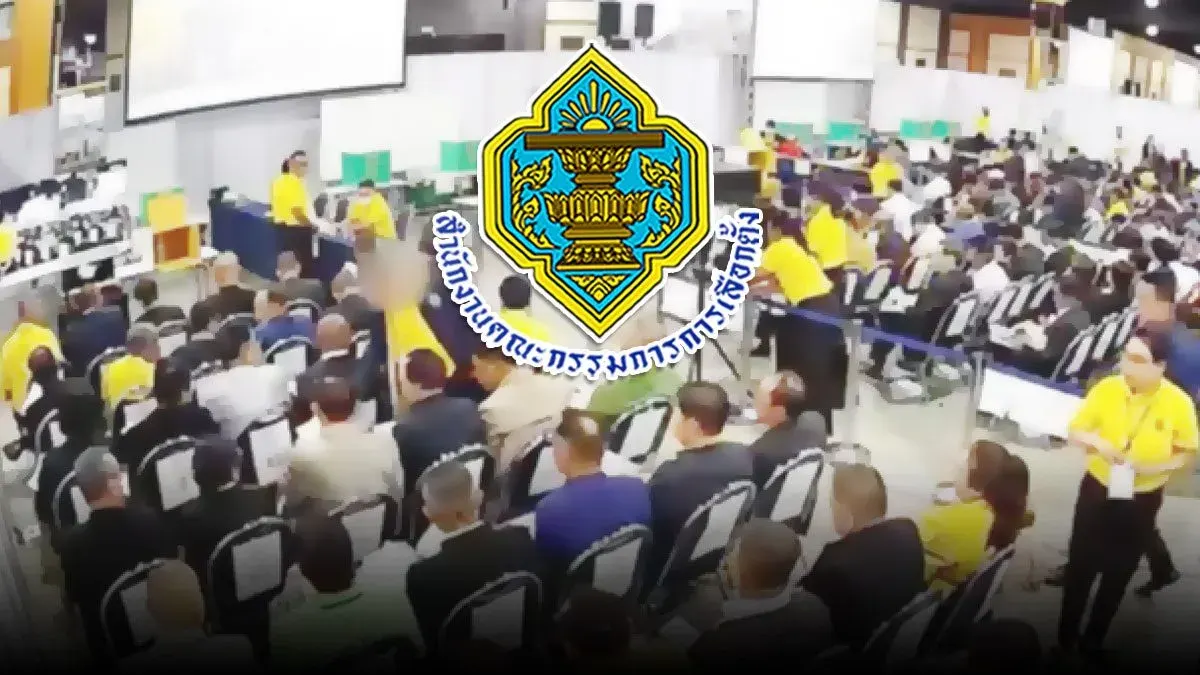
The investigation into alleged vote-buying in the Senate election has ballooned, with evidence mounting steadily. Documentation includes organized vote-buying operations, video recordings of the incidents, and ballot irregularities so obvious they would be visible from Mars. The question now is whether Election Commission board members will recognize these anomalies and refer the matter to the Supreme Court to ensure transparency, fairness, and justice according to the Commission's own motto—or whether they will ignore mathematical impossibilities and dismiss everything by rejecting complaints, allowing it all to pass through. We will soon see which path they choose.
The widening scope stems from investigators discovering that an Election Commission official received 860,000 baht from an associate of a prominent Amnat Charoen politician through 13 separate money transfers. This naturally raised questions about whether the payments connect to Senate vote-buying. The Commission's explanation, however, proved even more startling: they claimed the payments are unrelated to the Senate election but instead occurred during the 2566 House election, and the official has since been dismissed with the matter referred to the National Anti-Corruption Commission.
Yet examining the timeline reveals something striking: those transfers occurred precisely when the Election Commission was filing fraud complaints against Amnat Charoen House candidates. This suggests the two matters are clearly connected. The source of the money from 13 transfers is evident, so why has there been no investigation into whether it relates to House election fraud or official bribery?
Moreover, Election Commission member Sitthichote Intharawiseth stated the Commission has not yet re-examined Amnat Charoen's House ballots because the evidence does not sufficiently connect to them. This raises a troubling question: if money transfers from a politician's associate through 13 transactions are insufficient evidence, what level of proof does the Commission require to perform its duties?
This matter will not end easily, despite criticism that the Commission is attempting to limit accountability to the official who was dismissed. If this nation cannot trust the institution governing electoral rules and screening electoral integrity, society will lose faith and face inevitable collapse. If the Election Commission wishes to avoid being remembered in history for failings of conscience, it must provide answers now. Do not let this fade into silence with the wind.