Agriculture Department Urges Farmers to Use Microbes Instead of Burning Straw
Thailand's Department of Agricultural Extension is promoting microbial decomposition of rice straw as an alternative to burning, a method that reduces air pollution while improving soil fertility and cutting production costs within 5-7 days
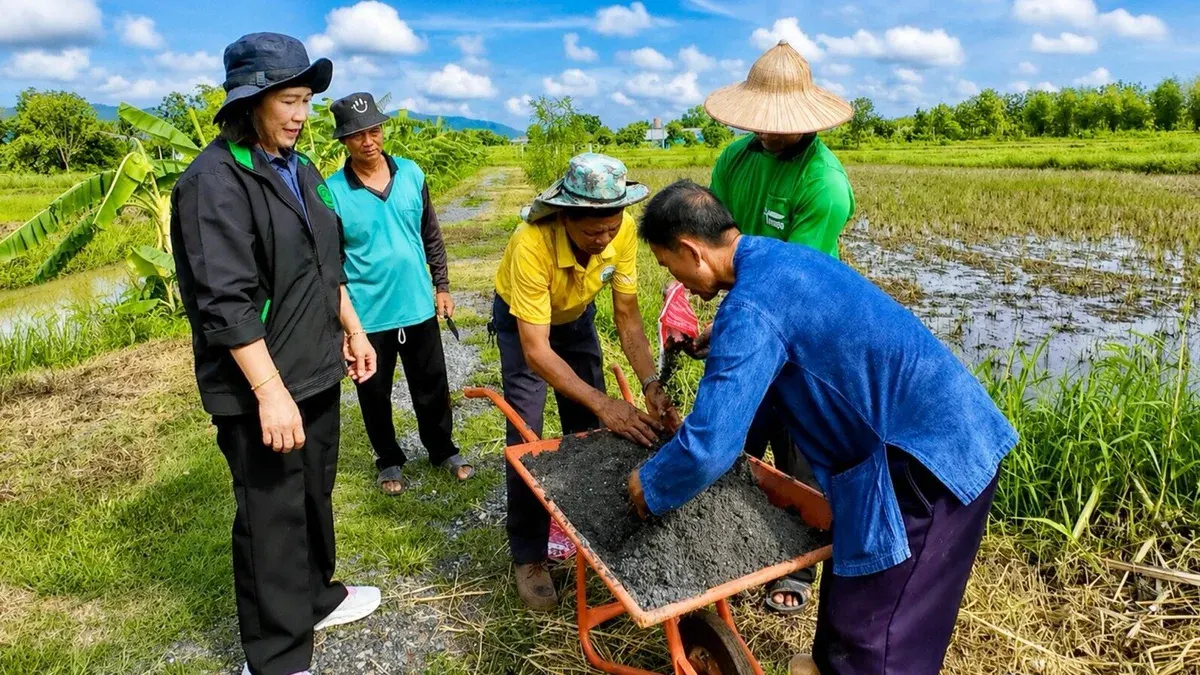
The Department of Agricultural Extension is recommending that farmers stop burning rice straw and use microorganisms to decompose straw and stubble within 5-7 days, returning nutrients to the soil while reducing PM2.5 pollution, improving soil health, and lowering production costs. Many farmers across Thailand are shifting from "burn everything" to "return nutrients to soil" using microbial starter cultures that can decompose rice straw and stubble within 5-7 days before preparing fields for the next crop, offering another method to manage agricultural waste while reducing burning and restoring soil fertility.
Suparee Manmai, a senior agricultural scientist at the Department of Agricultural Extension's Production Factors Development Research Division, said the microbial decomposition method is an important alternative for managing agricultural waste because it not only reduces burning and PM2.5 problems but also increases soil organic matter, improves soil fertility and water retention, and lowers long-term production costs. The application method uses approximately 1-1.5 kilograms of microbial starter per hectare, scattered across the field after harvest; for heavy straw, mix with 5 kilograms of compost or urea fertilizer per hectare, or 3 kilograms for moderate straw, then allow microbes to work for 5-7 days before field preparation.
The Department of Agricultural Extension has rolled out a project to expand the use of microbial starter cultures for decomposing organic matter to reduce burning in agricultural areas nationwide. Results from field applications show clear benefits: Kraitong Luntaiyoh, head of a participatory organic agriculture learning center in Nakhon Sawan province and a model farmer, reported switching from burning straw to using microbial decomposition, opening his land as a learning center for other farmers. After trials in the 2568 rice season, straw and stubble decomposed as intended, soil became more crumbly with better moisture, and subsequent corn and sugarcane crops grew better with higher yields than traditional burning methods relying on chemical fertilizers, prompting many local farmers to stop burning and adopt microbes instead.
Manas Thupmekhahh, a farmer in Uthai Thani province who adopted the microbial method, found improved soil fertility, reduced fertilizer and pesticide costs, and increased yields from 600-700 kilograms per hectare to 800-1,000 kilograms per hectare. Similarly, farmers in Kamphaeng Phet who switched from burning stubble to microbial decomposition reported stronger rice plants, especially in root systems and tillering, with model farmer Rossukan Onuuthai developing her field as a demonstration plot to build confidence and expand results to other farmers. Another farmer, Wasana Srianyoo, applied the microbial culture to 20 hectares and found better plant growth, reduced insecticide spraying, lower fertilizer use, fewer weeds, and stronger rice plants compared to untreated fields.