Deputy PM Unveils Smart Fertilizer Tech to Slash Costs, Increase Yields
Deputy Prime Minister Yoschanan Wongsuwat handed over automatic fertilizer mixing machines to five agricultural cooperatives in Chiang Rai, launching a precision farming model that cuts chemical fertilizer use to 30% and replaces it with organic alternatives. The technology, developed by TISTR and Suranaree University of Technology, has already proven in Udon Thani to halve fertilizer costs while improving yields and soil health. The government plans to expand the program nationwide through the BAAC and Ministry of Finance.
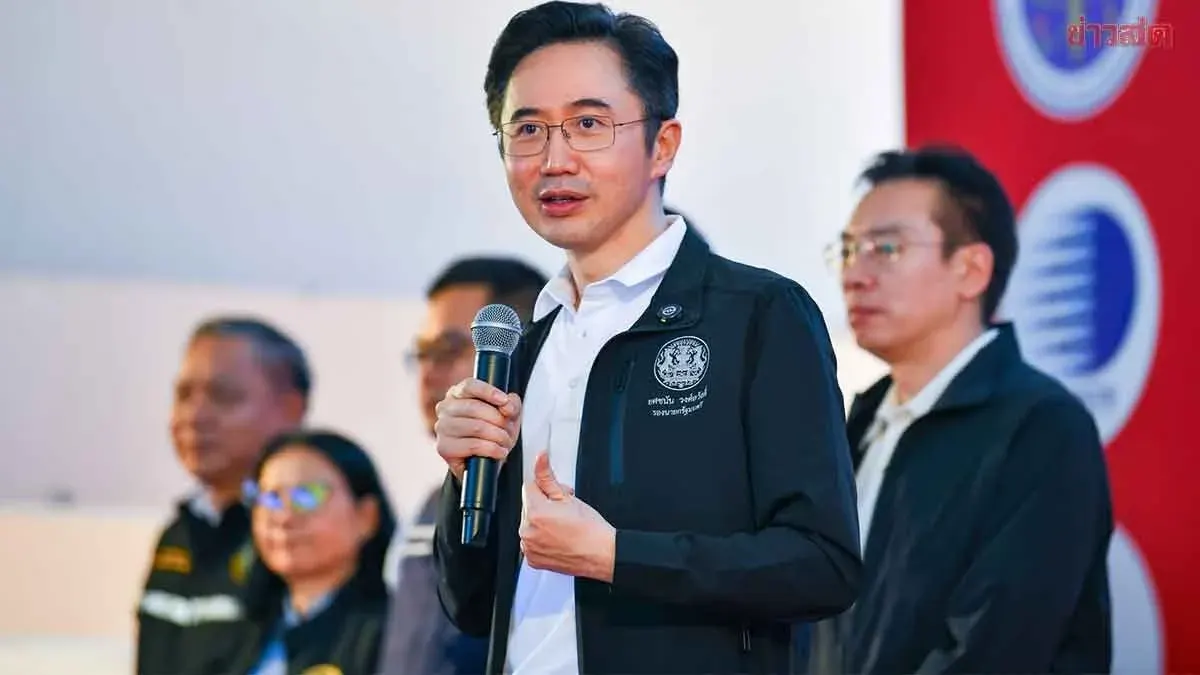
Deputy Prime Minister and Minister of Higher Education, Science, Research and Innovation Yoschanan Wongsuwat led the kickoff ceremony to deliver automatic fertilizer mixing machines — a key innovation jointly developed by the Thailand Institute of Scientific and Technological Research (TISTR) and Suranaree University of Technology (SUT) — to five pilot agricultural cooperatives in Mae Chan district, Chiang Rai. The event aimed to drive the "customized organic-chemical fertilizer" model toward high-precision agriculture.
Attending the ceremony were Assistant Minister of Agriculture and Cooperatives Piyarat Tiaypirach, Permanent Secretary of the Ministry of Higher Education, Science, Research and Innovation Supachai Pathumnakul, Chiang Rai Governor Chuechapong Phongchai, along with executives from government and private sector partners and farmer representatives.
Yoschanan stated that the ministry and its partners are demonstrating that any area with readiness can transition to customized fertilizer technology. Following successful pilot testing in Udon Thani province, the process begins with analyzing soil from each plot to determine the crop type and existing soil conditions. TISTR then designs a suitable fertilizer formula, reducing chemical fertilizer to only about 30% and replacing the rest with organic fertilizer. Beyond restoring soil health, this yields a double benefit: better harvests and clearly lower fertilizer costs due to cutting chemical use by more than half. The Bank for Agriculture and Agricultural Cooperatives (BAAC) is now coordinating with the Ministry of Finance to prepare for nationwide expansion of the project.
In his capacity as Chairman of the Farmers' Rehabilitation and Development Fund, Yoschanan added that solving farmer debt requires two parallel tracks: debt relief and income generation. Today's customized fertilizer project directly creates additional income and reduces costs. Other projects are also being readied to teach farmers supplementary occupations such as livestock farming, with universities and relevant agencies integrated into local areas. He assured farmers that the government will deliver on all promises and exceed them.
TISTR Director Weerachai Ajanan highlighted three key features of the automatic fertilizer mixer: 1) High precision (tailor-made fertilizer) — it can calculate and mix fertilizer matching actual soil analysis values; 2) Organic integration — blending chemical and organic fertilizers to restore soil and reduce unnecessary chemical use; and 3) Smart farming driver — the machine delivery and pilot training in Chiang Rai will serve as a prototype for expanding the technology to commercial farming communities nationwide.
The "Customized Organic-Chemical Fertilizer for Thai Farmers" project is a comprehensive model linking each agency's strengths: soil nutrient analysis (Land Development Department), formula design and mixing equipment (TISTR), academic standards (Department of Agriculture), and management (Cooperative Promotion Department).