Senate Panel Urges Military to Boost Intelligence as Southern Violence Spreads to Five Provinces
Thailand's Senate Military and Security Committee warned that insurgent violence has spread from three to all five southern border provinces, threatening key economic zones in Songkhla and Satun. The committee urged the 4th Army Region to overhaul intelligence operations, citing intelligence gaps as the main reason preventive measures have failed to stop unexpected attacks. Recent incidents have already caused tourist cancellations in Satun, raising concerns about the year-end tourism season.
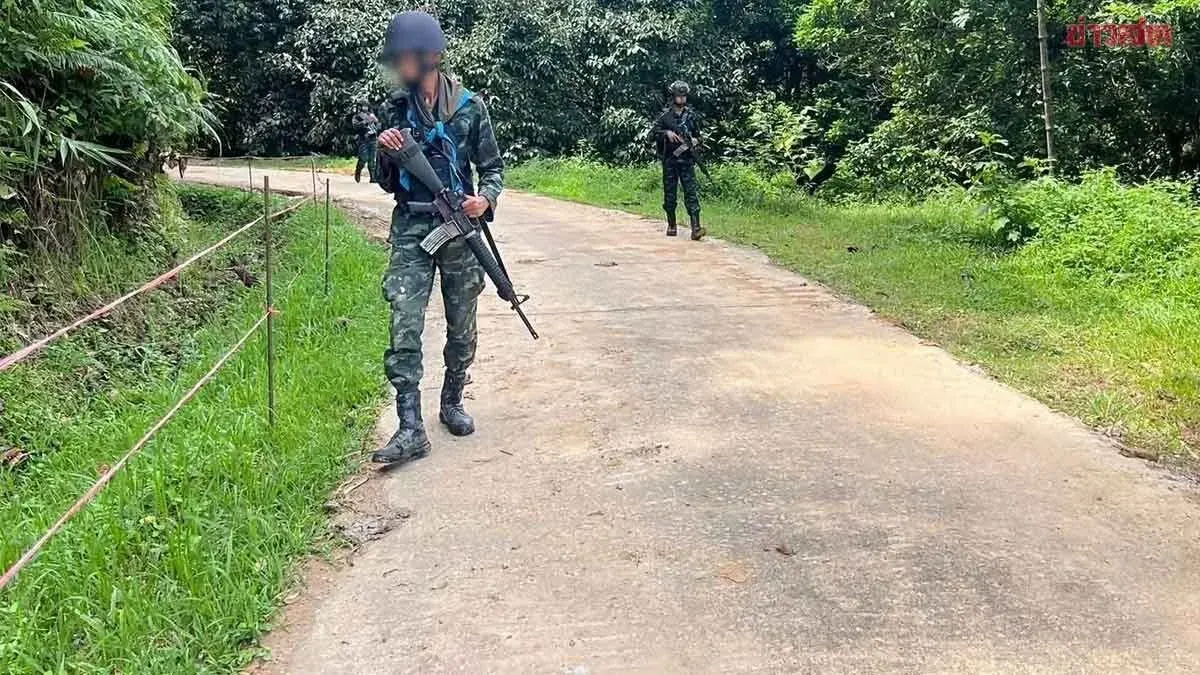
Songkhla — The Senate Committee on Military and National Security voiced alarm on November 15, 2026, over the spread of violent incidents from the three traditional deep-south provinces of Pattani, Yala, and Narathiwat into Songkhla and Satun, now encompassing all five southern border provinces. Committee spokesperson Chaiching Manirungkul disclosed that Chairman Sombat Nuanual is particularly concerned about the expansion of insurgent attacks into Sadao and Na Thawi districts — frontline areas vital to the economy, trade, investment, and tourism, and serving as a buffer for Hat Yai, a major tourist destination. Incidents in Kuan Kalong and Thung Wa districts of Satun have already triggered immediate travel cancellations by tourists fearing for their safety. The committee has urged the 4th Army Region to urgently track down perpetrators, disclose facts about insurgent groups, and bring them to justice. It also stressed the need for preventive measures to restore public and tourist confidence, noting the violence impacts not only security but also the border economy and tourism. Chaiching stated that the Barisan Revolusi Nasional (BRN) aims to destroy the border economy and tourism, and attacks in November — the year-end peak season — disrupt events meant to stimulate travel and year-end festivities. Since Lt. Gen. Chakrit Ujarat assumed command of the 4th Army Region on October 1, 2026, operational plans for the three provinces and four Songkhla districts have been intensively adjusted, focusing on main and secondary roads. The strategy targets vehicle and personnel checks, criminal networks, drug and human trafficking, and illegal labor — all complicating factors in the border region. The aim is to restrict armed group mobility and pressure them through joint search-and-arrest operations against those hiding in communities, which have already yielded arrests. However, Chaiching emphasized that intelligence remains a critical weakness: without clear intelligence on armed group movements and networks, authorities cannot predict where or when attacks will occur. Current broad-area prevention without intelligence support has failed, allowing unexpected attacks in five Yala districts, three Songkhla districts, and two Satun districts. He stressed that civic engagement and intelligence are the heart of prevention and arrest operations. Current prevention fails due to lack of intelligence support, while successful arrests rely on forensic evidence from attack scenes and interrogations of captured suspects to map networks. Most key operatives do not flee to Malaysia but hide within local communities. Therefore, the 4th Army Region must urgently reform intelligence operations to penetrate insurgent movements and allocate budget accordingly.