Bangkok Floods Drive Vegetable Prices Up 200%
We need to produce a short summary: 1-2 sentences, 120-220 characters (target). No more than 240 characters. Must be English only. Lead with what happened then single most important detail (who, where, or when). Not repeat title verbatim. P
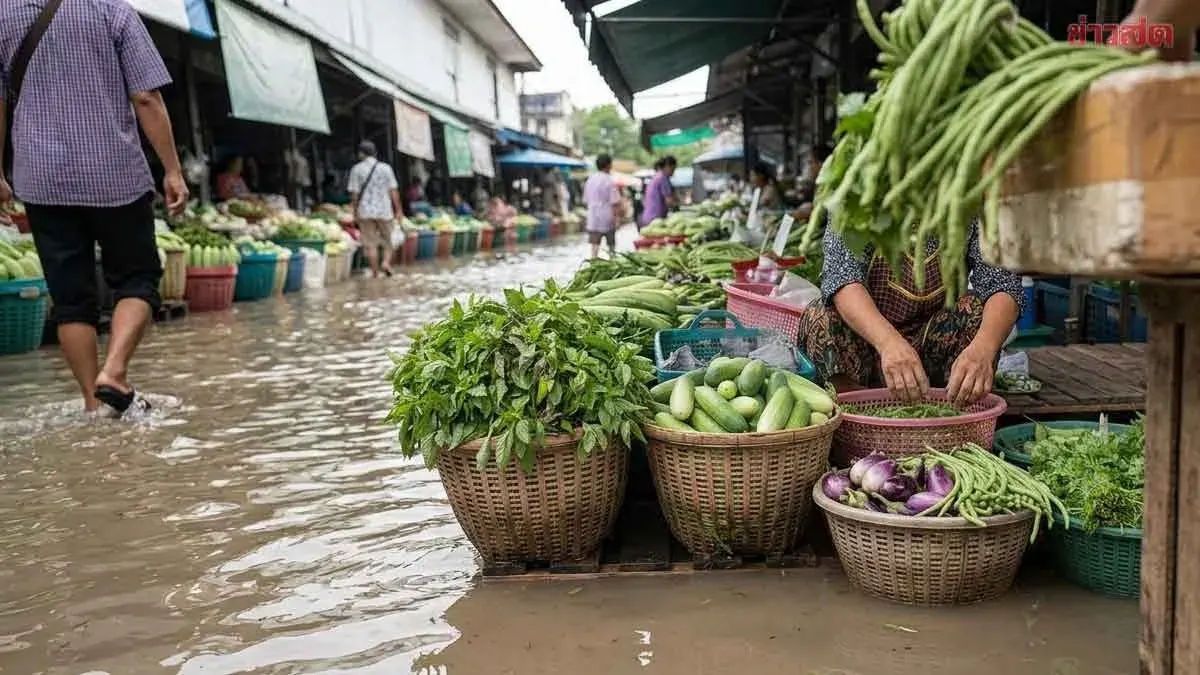
Khao Sod reporters surveyed fresh vegetable prices at Thailand's major wholesale market, speaking with Jeh Nok, owner of a fresh vegetable stall in the market. Jeh Nok, Auen Ruean Bunjongsub, explained that flooding in Bangkok and surrounding areas since last week has inundated key vegetable-growing provinces around the capital—including Nakhon Nayok, Nonthaburi, Suphan Buri, and Ang Thong—destroying most crops. The reduced supply has driven wholesale prices for many vegetables up threefold, or 200%, compared with normal periods. Adding the typical 10-baht-per-kilogram markup, retail prices have surged.
Important vegetables with sharp wholesale price increases include basil, horapa, and lemon basil, which rose from 50 baht per kilogram to 150 baht wholesale, retailing at 160 baht per kilogram. Chinese watercress increased from 12 to 80 baht wholesale, retailing at 90 baht per kilogram. Scallions went from 50 to 150 baht wholesale, retailing at 160 baht per kilogram. Coriander rose from 50 to 150 baht wholesale, retailing at 160 baht per kilogram. Cucumbers increased from 20 to 50 baht wholesale, retailing at 60 baht per kilogram. Weak-stemmed tomatoes increased from 20 to 60 baht wholesale, retailing at 70 baht per kilogram.
Jeh Nok noted that some vegetables, such as raw papaya, are expected to see prices triple soon because flood damage to crops is severe and there is no easy substitute. Currently, wholesale raw papaya costs 15 baht per kilogram and could rise to 45 baht wholesale, with a retail price around 55 baht per kilogram. Since raw papaya is a key ingredient in som tam, vendors may face steep cost increases and might need to raise the price of the dish.
She added that, while prices have spiked threefold due to the floods, they may stabilize going forward if the flooding does not persist as long as the 2011 event, reducing pressure on prices during the upcoming vegetarian festival in October. However, she cautioned that continued heavy rain could further damage crops and push prices higher again.