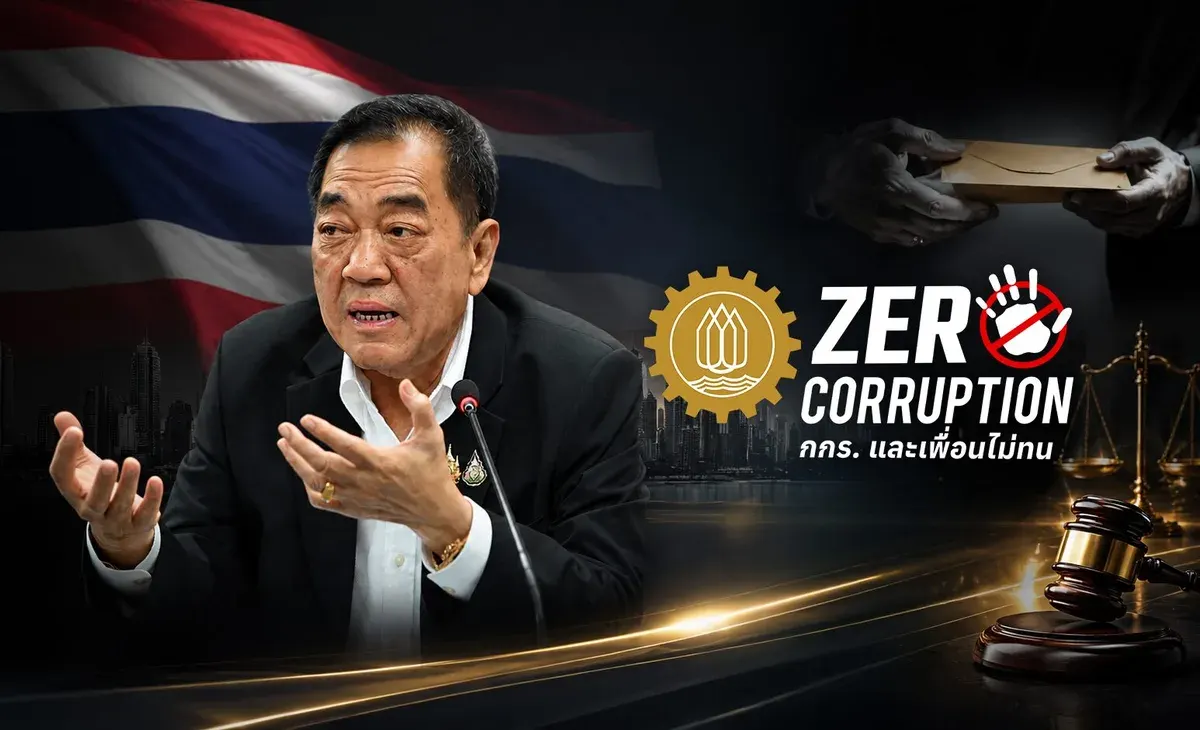
A Thai politician has slammed a local government civil service exam cheating scandal that allowed over 5,800 unqualified candidates to be appointed as officials, calling it a "theatrical show" that suggests those responsible are operating a
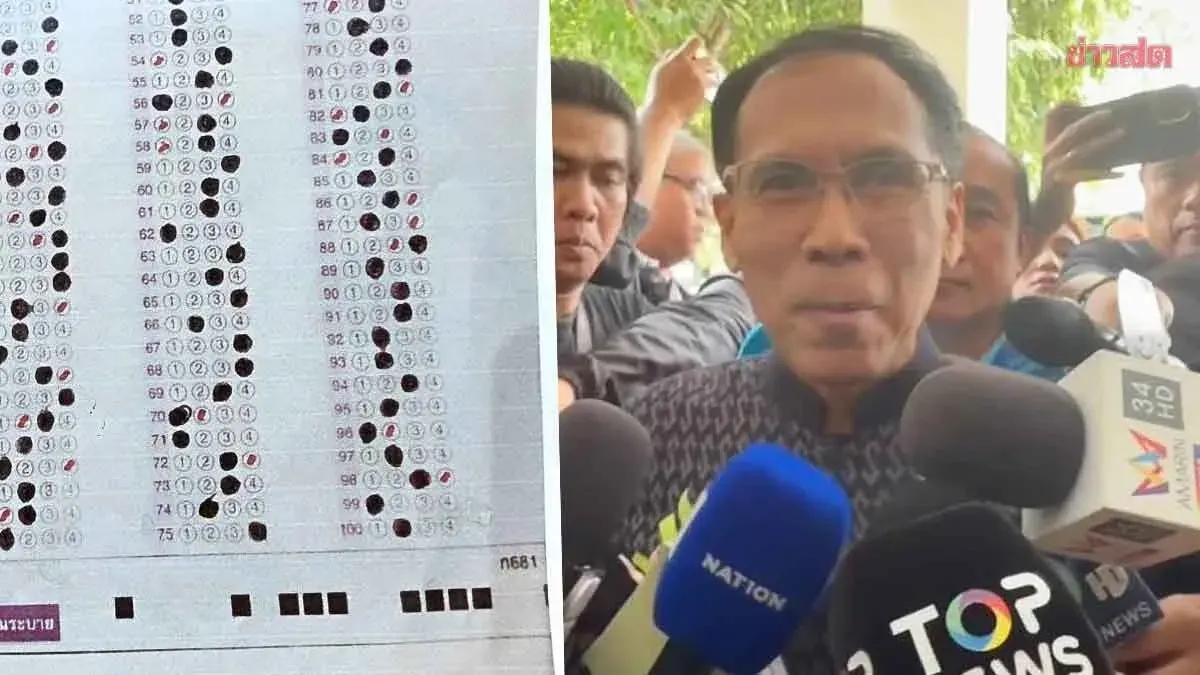
On July 17, 2569, Pol. Col. Tweesuwan Sod Suang, leader of the Prachathai party, posted on Facebook criticizing the local government civil service exam cheating scandal. He likened the fraud to a television drama titled "When the Accused Becomes the Investigator," arguing that it allows wrongdoers to operate above the law in a tragicomedy that leaves Thai citizens bewildered and questioning whether they are witnessing a theatrical production.
As a member of the Law, Justice, and Human Rights Committee, Sod Suang received complaints investigating the fraudulent civil service recruitment examination for local government officials. After reviewing the facts and applicable law, he expressed profound sadness, as the situation inevitably raises public suspicion that a "theatrical show" is being staged.
The facts reveal a stark discrepancy: correct exam scores remain with the universities contracted to administer the exams, and local government organizations confirm that the scores stored in their systems are also accurate. However, the results publicly announced by the Central Local Government Civil Service Exam Committee (CSCB) included 5,814 individuals who scored below the passing threshold or failed entirely, and these individuals have already been appointed as local government officials.
If the facts are as they appear, this is not merely an administrative error but constitutes the completion of multiple criminal offenses from the moment the fraudulent results were announced and used for appointments. The critical question is: who had the authority to approve or order the announcement of these fraudulent results?
Under the Local Government Personnel Administration Act, B.E. 2542 and the Head of the National Council for Peace and Order Order No. 8/2560 dated February 21, 2560, the Central Local Government Civil Service Exam Committee (CSCB) is responsible for conducting all civil service recruitment examinations. The CSCB comprises 19 members, including six ex-officio members (Permanent Secretaries of Interior and Education, the Civil Service Commission Secretary-General, the Budget Bureau Director, the Comptroller General, and the Local Government Promotion Department Director), six experts selected from provincial and municipal councils, six representatives of local government organizations, and one deputy director appointed by the Local Government Promotion Department Director to serve as secretary and chair.
The law grants the CSCB authority to conduct examinations, establish curricula, determine examination procedures, set candidate qualifications, establish passing criteria, maintain and remove candidates from the successful list, and handle all related matters. The contractual scope of work (TOR) explicitly stipulates that the contractor must prepare the list of successful candidates as determined by the CSCB and announce it on the website as specified by the committee, meaning the contractor lacks independent authority to determine the list.
During late 2568 to early 2569, the CSCB conducted and announced results for sections A and B on February 20, 2569, officially listing successful candidates. However, 5,814 names required revocation due to irregularities. This fraudulent announcement constituted the completion of the crime. On June 22, 2569, officers from the National Anti-Corruption Commission and the Metropolitan Police Bureau conducted searches at locations in Nonthaburi province where exam scores had been illegally altered, approximately four months after the results were announced.