Chao Phraya Dam Prepares for Major Water Release
Heavy rainfall across northern Thailand has prompted the Royal Irrigation Department to prepare major water releases from Chao Phraya Dam, with downstream water levels in Ayutthaya and Ang Thong provinces expected to rise by up to 1.25 mete
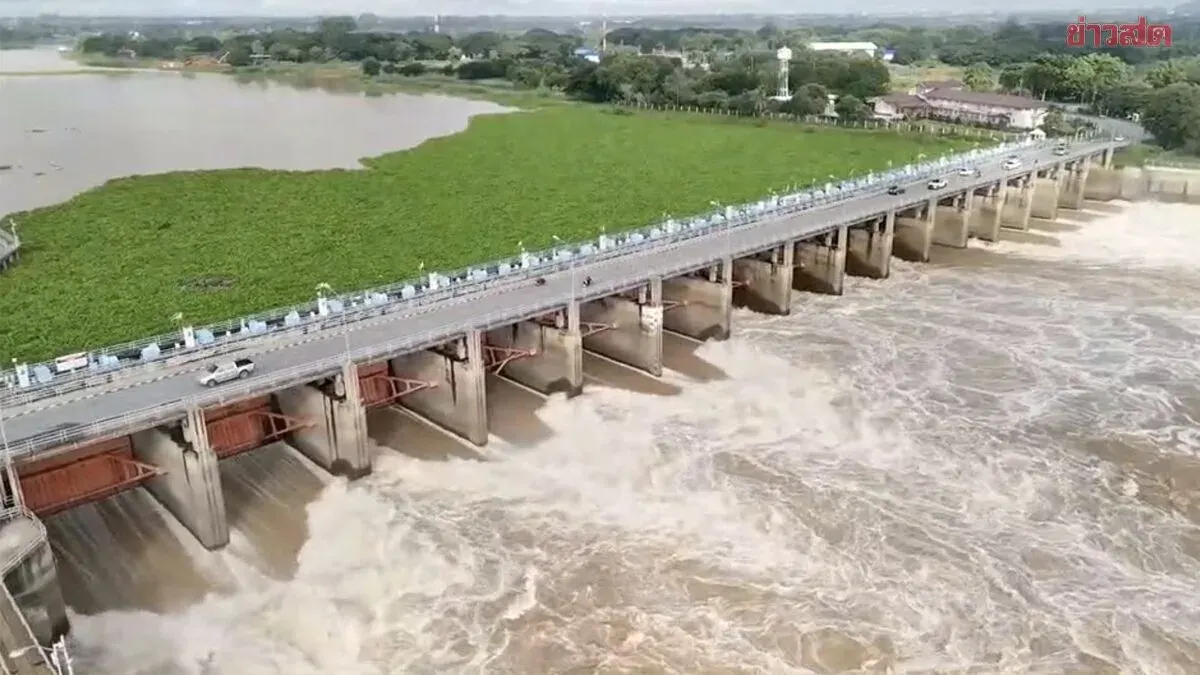
The Royal Irrigation Department issued its fourth alert for the Chao Phraya River basin on September 21 following heavy rainfall across northern Thailand that has swollen river flows. Forecasts predict that by September 27, water passing through the Nakhon Sawan monitoring station will increase to 1,600–1,950 cubic meters per second, while upstream of Chao Phraya Dam could reach 1,900–2,250 cubic meters per second. The department plans to release water downstream in staged increments.
Heavy rainfall measuring more than 116 millimeters fell across Phrae, Chiang Rai, Kamphaeng Phet, and Sukhothai provinces on September 20–21, driving the increase in water volume. As of 6 a.m. on September 21, flow at the C.2 station in Nakhon Sawan stood at 1,377 cubic meters per second. The irrigation system can absorb approximately 400–450 cubic meters per second, requiring the department to release roughly 1,300–1,500 cubic meters per second through the dam, which will raise water levels downstream by 0.75–1.25 meters.
Areas outside flood barriers in Ayutthaya province requiring close monitoring include Sena, Phakhai, Bang Baan, Ayutthaya, Bang Pa-in, and Bang Thai districts, as well as Wichian Chai and Pa Mok districts in Ang Thong province. However, the water release is not expected to affect communities within the flood barriers. The department will implement staged water releases and will seek further approval if upstream levels exceed capacity, requiring flows through the dam to exceed 1,500 cubic meters per second. All 11 provinces in the Chao Phraya basin, including businesses and residents along the river, have been alerted to monitor conditions closely and prepare for water level changes.