Chao Phraya Dam Raises Outflow as Northern Floodwaters Rise
Heavy rainfall in northern Thailand has swollen rivers feeding the Chao Phraya, prompting the Royal Irrigation Department to increase water release from the Chao Phraya Dam to 900 cubic meters per second. Authorities are diverting water into irrigation canals and monitoring levels closely to protect downstream provinces, including Bangkok, while urging residents in flood-prone areas to stay alert for official warnings.
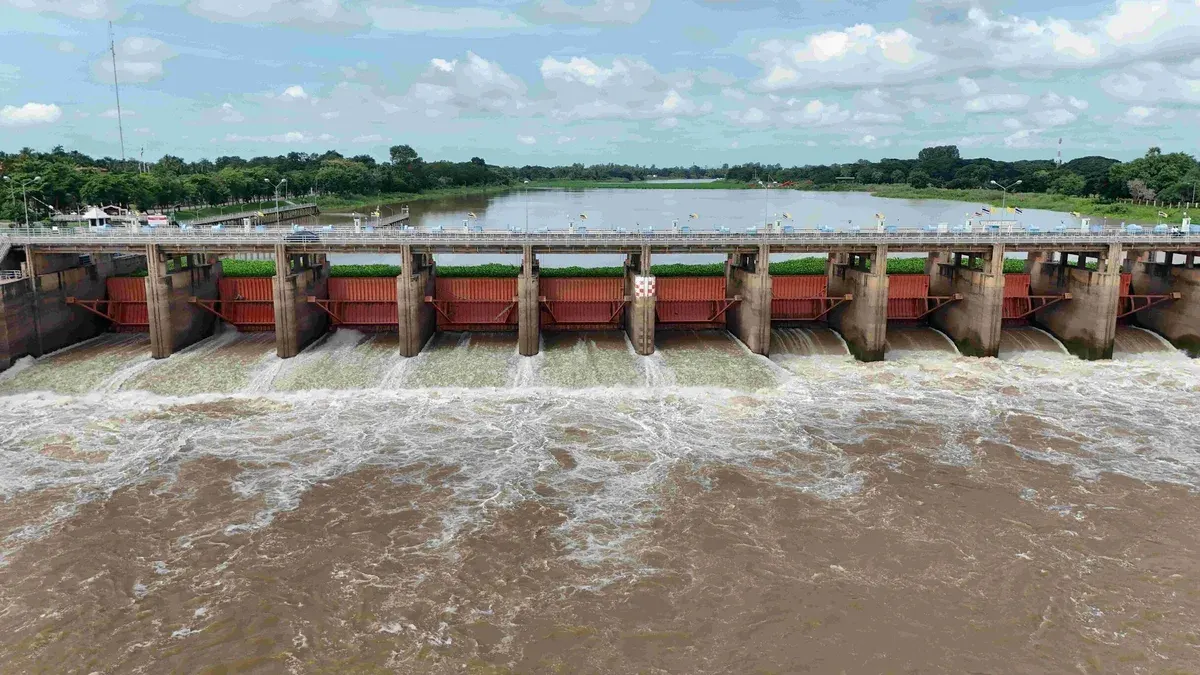
The Royal Irrigation Department is closely monitoring the Chao Phraya River basin after heavy rain hit lower northern and central Thailand from November 5–7, as forecast by the Meteorological Department. Rainfall on November 6–7 reached 172.5 mm in Lan Sak district, Uthai Thani; 130 mm in Nakhon Thai district, Phitsanulok; and 125.4 mm in Kosamphi Nakhon district, Kamphaeng Phet. This increased runoff into the Ping, Nan, and Sakae Krang river basins before converging in the Chao Phraya, pushing water levels above the Chao Phraya Dam higher again. The department has assessed the situation and prepared water management plans to minimize public impact.
Royal Irrigation Department Director-General Witthaya Kaeomi revealed that monitoring and forecasting show water volumes from Nakhon Sawan province and the Sakae Krang River are expected to rise from November 10–13 before gradually receding. The dam's water management plan has been adjusted in advance, with discharge rates set at appropriate levels. This morning (November 10, 2026) the outflow was gradually increased from 800 to 900 cubic meters per second by 14:00, and will be maintained at that rate while upstream volumes are closely tracked. Water is also being diverted into irrigation systems on both the east and west banks to reduce flow downstream.
Forecasts through November 19 indicate water levels at key gauging stations in Pathum Thani, Nonthaburi, and Bangkok remain below spillway levels, but low-lying areas outside embankments must be watched closely. Agencies are coordinating to issue early warnings and adjust management plans to match actual conditions, aiming to minimize public impact. Residents in at-risk areas are urged to follow official announcements closely.
Director-General Witthaya emphasized that the department will use rainfall data, upstream volumes, and forecasts to carefully plan water management, prioritizing impacts on communities both above and below the dam. Discharge plans will be adapted to changing conditions to keep water at appropriate levels and alleviate public hardship, in line with the policy of Agriculture and Cooperatives Minister Suriya Jungrungreangkit.