Civil Groups Demand Accountability After Bang Jak Refinery Explosion
Four Thai civil society networks have issued a six-point demand following the November 26 explosion at the Bang Jak oil refinery in Bangkok's Phra Khanong district. Citing previous incidents in 2011 and 2012, they call for transparent risk communication, independent environmental monitoring, compensation for affected communities, and a serious review of whether heavy fossil-fuel infrastructure belongs in densely populated urban areas.
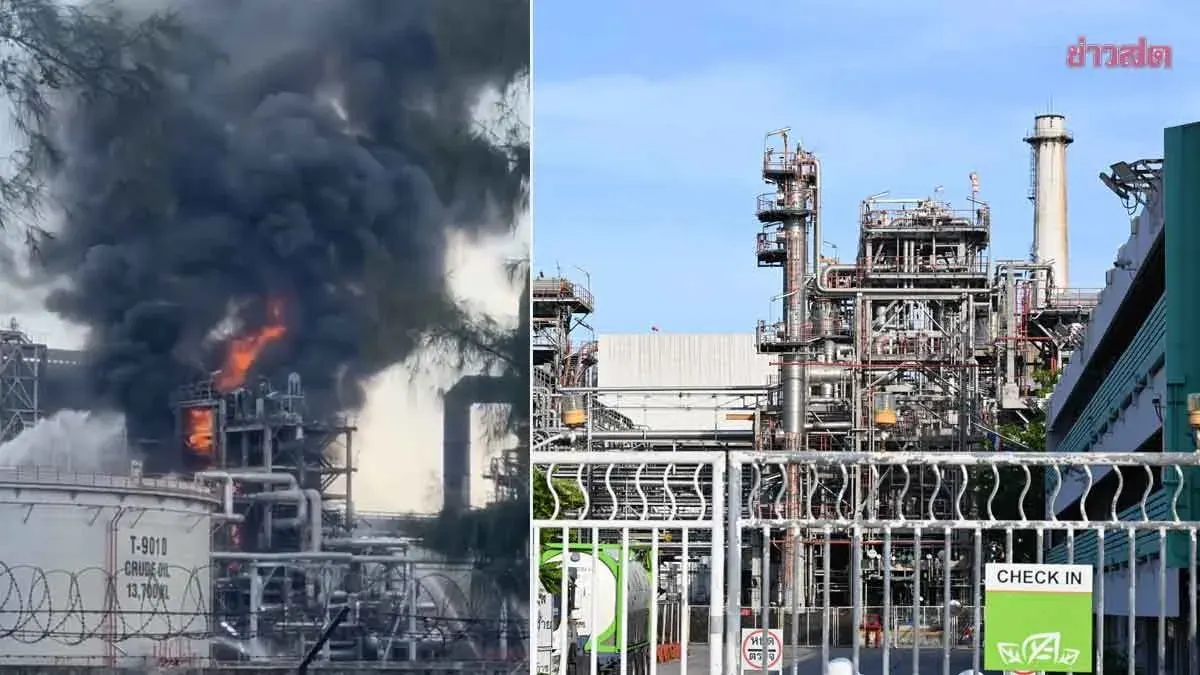
On November 27, 2026, the EARTH Foundation, ENLAW Foundation, CHIA Platform, and Fossil Free Thailand released a joint statement on the explosion at the Bang Jak refinery in Phra Khanong the previous day (November 26). They expressed concern and solidarity with residents in Phra Khanong, Bang Na, and surrounding communities, as well as firefighters and rescue personnel. Although authorities reported the situation was under control, the Bang Na district office continued urging residents to evacuate. The groups stressed that agencies must prioritize protecting lives, health, and safety, and not allow residents to return until safety is confirmed.
This is not the first incident. The refinery suffered a fire in January 2011 and an explosion at its crude distillation unit in July 2012, forcing nearby schools to close due to smoke. Since then, locals and civil society have demanded the refinery be relocated from the densely populated urban area, but over 14 years nothing has been resolved while the community, especially around Sukhumvit 64, has continued to expand.
The networks argue this event should not be treated merely as an industrial accident that ends when the fire is out. It must lead to accountability, compensation, and a serious review of whether large fossil-fuel infrastructure belongs in dense urban neighborhoods. Residents have the right to a safe environment, access to risk information, and participation in decisions affecting their lives.
Accordingly, they demand that Bangchak Corporation, Bangkok Metropolitan Administration, the government, and relevant regulators take the following actions:
1. Disclose information and communicate risks transparently — release comprehensive, continuous data on the incident, including preliminary causes, processes involved, types of fuel and chemicals, injury counts, risk-control measures, and safety conditions before allowing residents to return. Provide self-protection information to the public immediately.
2. Conduct independent environmental and health monitoring — arrange for independent agencies or experts to measure air and environmental quality in surrounding communities and downwind areas, focusing on PM2.5, volatile organic compounds (VOCs), and BTEX substances (benzene, toluene, ethylbenzene, xylenes) plus styrene. Publish results continuously and publicly so residents can assess health risks.
3. Accept responsibility for damages — (text truncated in source)