Constitutional Court Approves 400 Billion Baht Loan Decree
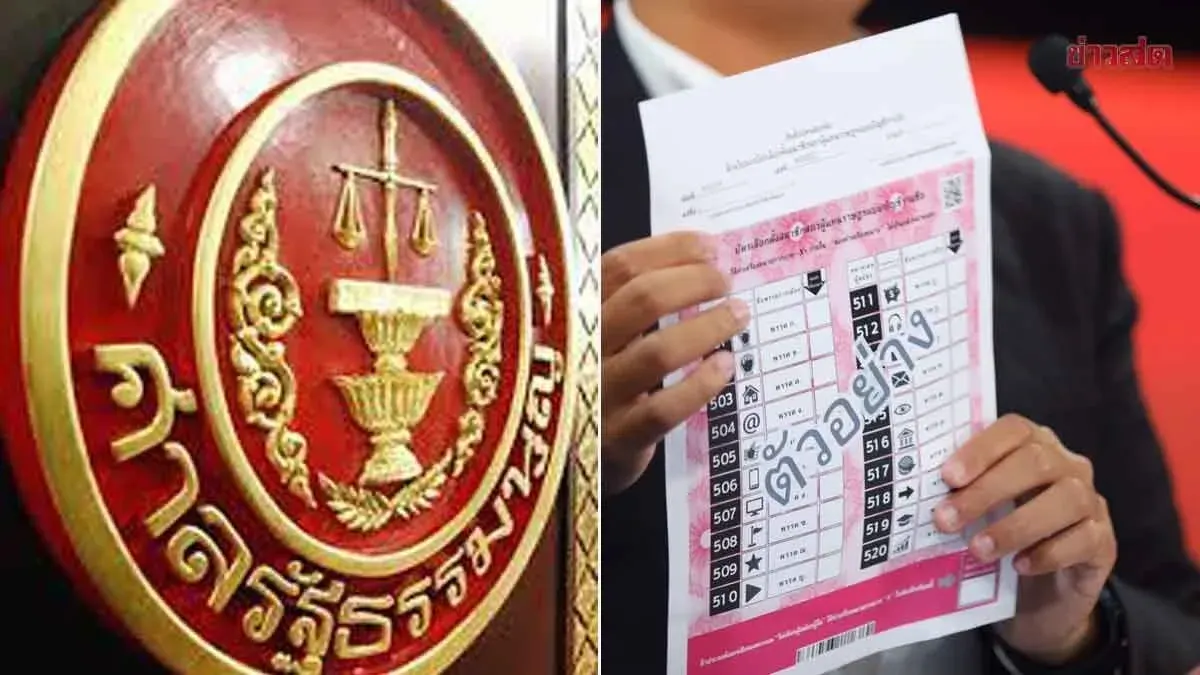
Thailand's Constitutional Court approved a 400 billion baht emergency loan decree, but opposition Pheu Thai party argues the government misused special powers to fund routine projects that should go through regular budget processes.

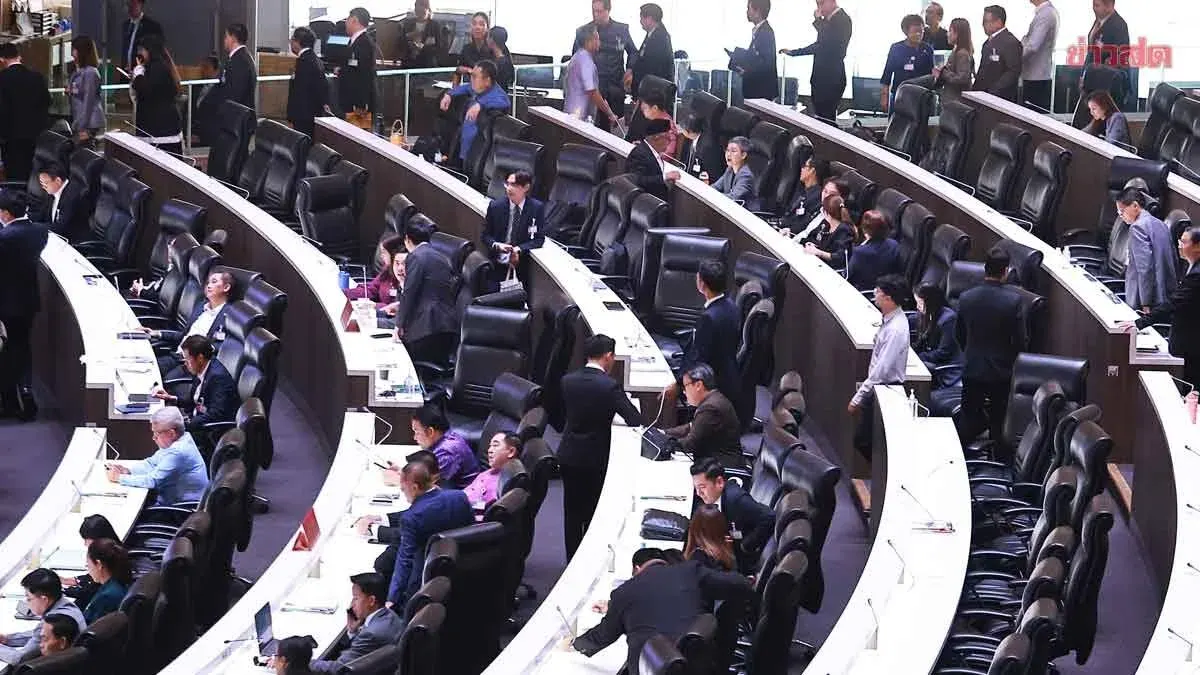
At noon on July 9, 2025, at Parliament, Nattapong Ruengpanyawuthit, Pheu Thai list MP and party leader, along with Sirikanya Tansukul, list MP and party deputy leader, held a press conference following the Constitutional Court's ruling that the 400 billion baht loan decree did not violate the constitution. They expressed disappointment but said the outcome was unsurprising and aligned with the party's prediction.
The party maintains the government had no legitimate urgent reason to invoke special powers for this loan decree. Instead, they allege it was an attempt to bundle various projects that could already be included in the annual budget bill. Nattapong noted that the special committee currently reviewing the 2570 fiscal year budget bill is examining these very projects, and that morning, local government agencies had presented details on projects they wanted to fund using the 400 billion baht loan.
Examples included solar sports courts, electric garbage trucks, and other initiatives that could be budgeted through regular appropriations without requiring special procedures or emergency borrowing. Nattapong stated these examples confirm Pheu Thai's long-standing assertion that the government's proposed projects do not meet the legal criteria for an emergency loan decree.
He also referenced Article 172 of the constitution, which explicitly allows the cabinet to call an extraordinary session to expedite parliamentary consideration of a decree only if outside regular session and waiting for normal proceedings would cause delays. The party will await clarity on the government's next steps.
When asked if Pheu Thai had discussed strategy with the Democrat Party, Nattapong said all actions must follow constitutional procedures. Whether to call an extraordinary session is the cabinet's decision. Pheu Thai reaffirms its opposition to the court's ruling, even though the outcome matched its predictions.
Sirikanya added that the party had previously monitored signals from the government regarding the ruling's outcome. She noted that before the court decision, no single energy transition project from the 200 billion baht allocation had even entered the committee screening process. However, within just one to two weeks prior, multiple ministers from Interior and Transport had announced projects intended for the loan.
Sirikanya revealed the party received documents circulated to local administrations that resembled a catalog or menu of projects and goods eligible for the 400 billion baht loan, rather than locally-initiated proposals. Many projects—including EV garbage trucks, solar sports courts, solar-powered oxygen generators, and rooftop solar installations—do not genuinely reflect meaningful energy transition or significant fossil fuel reduction. The party questions whether the loan's true purpose aligns with legitimate energy transition goals.