A 20-day excavation at Nakhon Ratchasima's historic city wall has uncovered 2,500 years of human settlement, from prehistoric times through the Ayutthaya era, with artifacts including pottery and animal bones now undergoing scientific datin
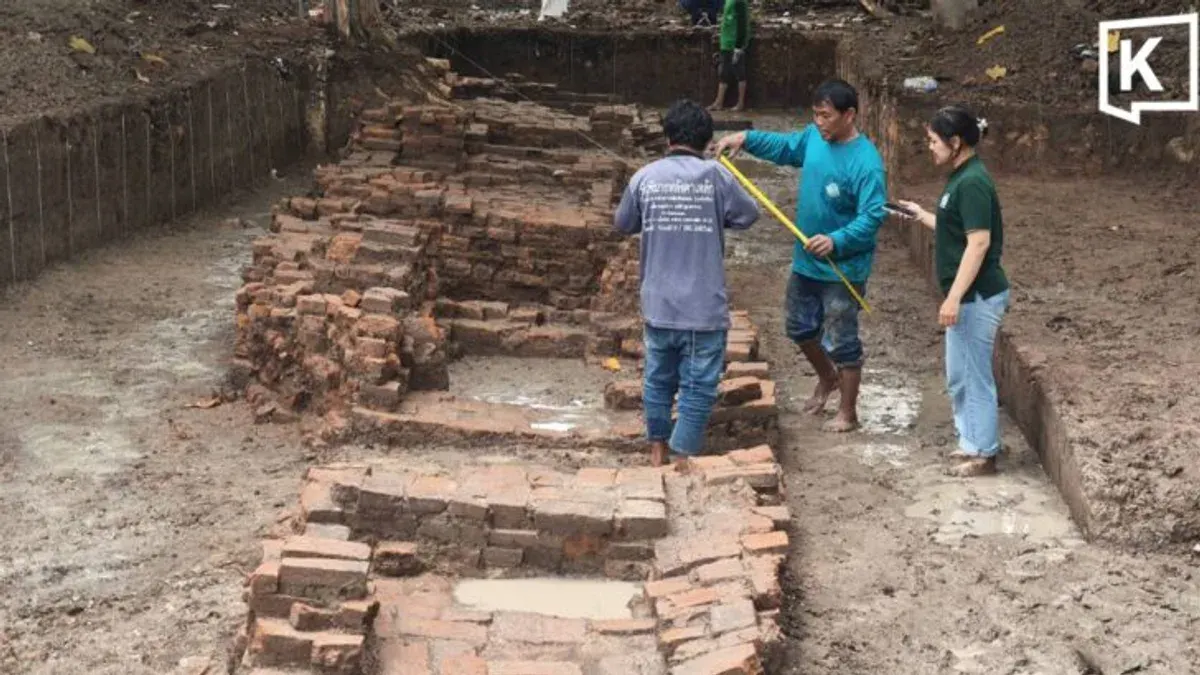
NAKHON RATCHASIMA — Archaeologists have uncovered an Ayutthaya-era city wall and evidence of human settlement dating back as far as 2,500 years during a 20-day excavation in Nakhon Ratchasima.
The excavation at the eastern section of Nakhon Ratchasima's old city wall, known as Phon Lan Gate or Phon Lan Fort, along Phon Lan Road, concluded on 8 August. The project was jointly conducted by the 10th Regional Fine Arts Office in Nakhon Ratchasima and Nakhon Ratchasima Municipality from 20 July.
Archaeologists expanded an excavation pit to 10 by 11 metres to further trace the city wall before preparing to backfill it to the original wall level. Somdet Leelamanotham, director of the Archaeology Group at the 10th Regional Fine Arts Office, along with archaeologist Wannaphong Palakawong Na Ayutthaya and staff collected soil samples before the site was backfilled. The samples will undergo scientific dating to establish the age of the city wall and the cultural layers found beneath it, including remains dating to the late prehistoric Iron Age.
Students from Nakhon Ratchasima Rajabhat University and young volunteers also took part in the archaeological work. Wannaphong described the excavation as a major discovery in the past 20 years, saying archaeological evidence must be examined before any landscape improvements are made around the old city moat because the area forms part of Nakhon Ratchasima's historic city.
The excavation uncovered evidence of human settlement from the prehistoric Bronze Age through the Iron Age and into the historic period. Finds included animal bones, pottery fragments, charcoal, soot, ash and seashells, shedding light on how people lived and survived in the area around 1,500–2,500 years ago. Some parts of the site had previously been disturbed by land use, including the construction of government housing over ancient cultural layers.
Archaeologists collected organic material beneath brick foundations, as well as bricks bearing traces of rice husks, for scientific dating. The results are expected to help establish when the city wall, city gates and fortifications were constructed. The expanded excavation has also revealed a section of the wall extending from north to south, consistent with historical records.
The Fine Arts Office plans to meet Nakhon Ratchasima Municipality, which owns the site, to discuss developing the area as a historical tourism landmark where future generations can learn about the past through its archaeological remains and historic architecture.
Long history of conservation
Previous conservation work on Nakhon Ratchasima's city wall and gates included excavations of the northeastern wall and fort in 1999 and 2000, with restoration and landscape improvements carried out during the latter project. Further excavation of the western section of the city wall took place in 2006. Historical records from the reign of King Rama V describe Nakhon Ratchasima's old city as roughly rectangular, with the eastern and western sections forming key defensive structures.