Lanta & News
No. 01 · ENDLESS
National

CP Foods Launches CPFresh National Durian Brand in China

CP Foods launches its CPFresh National Durian brand in China through partnerships with Thai government agencies, positioning Thai durian as a symbol of friendship while boosting the value of Thai agricultural exports in the Chinese market.

CP Foods Launches CPFresh National Durian Brand in China
11 Aug Khaosod

The Charoen Pokphand Group's China operations is advancing its strategy to boost the value of Thai agricultural exports in global markets by partnering with the Thai Embassy in Beijing, the Royal Thai Consulate-General, and Thai government agencies in China to promote the "CPFresh National Durian" concept. The initiative aims to elevate Thai durian from a quality agricultural product to a recognized consumer brand in China, while leveraging Thai food and cultural soft power to strengthen Thai-Chinese cooperation in economics, trade, tourism, and culture.

The festival opening ceremonies in Beijing and other major cities were recently attended by high-level representatives from both Thailand and China, including Ambassador Chatchai Viriyavejakul in Beijing, agricultural affairs advisor Prattakorn Thamnani, Thai Tourism Authority deputy director Suneerath Rujeemasai (Beijing office), CP Group China senior vice-chair Li Wenhai, and CP Group China CFO Paisarn Yangsomboon, along with Yang Gang and other executives.

Ambassador Chatchai Viriyavejakul stated that "Thai durian is not only the 'king of Thai fruits' but also the 'taste of friendship' that connects the hearts of Thai and Chinese people. We thank CP Group for its crucial role in expanding opportunities for Chinese consumers to experience the quality of Thai durian and Thai culture up close."

Yang Gang, CP Group China vice-chair and marketing director, noted that "CP Group, as the first foreign company to invest in China after reform and opening, remains committed to the '3 benefits' principle and leveraging its integrated industrial chain to connect agricultural trade, food, and culture between Thailand and China. The durian festival has evolved from a sales promotion activity into a platform for building Thailand's national brand value and a symbol of friendship between the two nations."

Over the past five years across major Chinese cities including Beijing, Guangzhou, and Changsha, the festivals have been well-received through durian buffet activities, Thai food markets, tropical fruit sales, CPFresh products, Thai cultural performances, durian parades, and online campaigns. The project's success reflects CP Group's role in using agricultural and food business capabilities to create added value for Thai agricultural products in global markets through the CPFresh brand while leveraging Thai soft power to sustainably drive Thai-Chinese economic and diplomatic relations under its "3 benefits" business principles.

No. 01 of Read at source → Next
National

Households Need B3,000 Bill for Solar Panel Subsidy

BANGKOK: To qualify for the government subsidy for installing rooftop solar panels, households must have a minimum monthly electricity bill of around B3,000, according to the Finance Ministry.

Households Need B3,000 Bill for Solar Panel Subsidy
11 Aug The Phuket News

BANGKOK: To qualify for the government subsidy for installing rooftop solar panels, households must have a minimum monthly electricity bill of around B3,000, according to the Finance Ministry.

No. 02 of Read at source → Next
Breaking

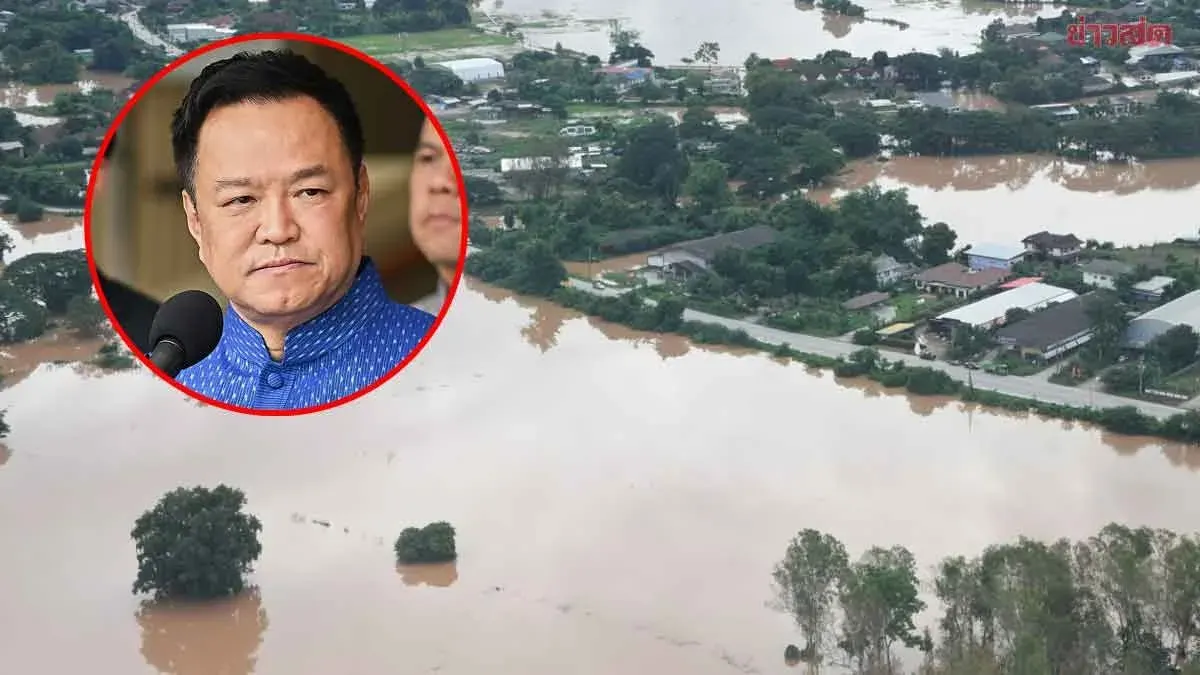
PM Allocates 100 Million Baht Per Deputy PM For Flood Emergency Response

Prime Minister allocates 100 million baht to each deputy PM for emergency flood response in northern Thailand, as authorities issue alerts and coordinate evacuation plans across flood-prone regions.

PM Allocates 100 Million Baht Per Deputy PM For Flood Emergency Response
11 Aug Khaosod

The Deputy Interior Minister confirmed plans to manage flooding in the North and Northeast, while announcing that the Prime Minister has allocated 100 million baht to each deputy prime minister to handle the water emergency. At 12:10 p.m. on August 11, 2025, at Government House, Jetsada Thaiyaseth, Deputy Interior Minister, addressed current flooding in several areas, noting that the Department of Disaster Prevention and Mitigation is coordinating with the National Disaster Warning Center.

Cell Broadcast alerts were issued before noon on August 11 for areas in Chiang Rai province, the Mekong River, and Phayao province. The Northeast region, where Mekong water levels are rising steadily, remains under full surveillance in all areas.

Jetsada discussed monitoring efforts in Mae Sai District, Chiang Rai province during the flood season, confirming that contingency plans are in place with multiple drills already conducted. Provincial governors have been instructed to coordinate with local agencies for preparedness. In case of emergency, alerts will be sent via Cell Broadcast system, along with announcements through village networks, local radio stations, and community leaders.

When residents receive warning messages, they are asked to implement their rehearsed emergency plans and cooperate with local leaders in evacuating themselves and their vehicles.

Jetsada also revealed that following the Prime Minister's assignment of deputy prime ministers to oversee nationwide flood and drought management, a report was presented at today's cabinet meeting (August 11). The Prime Minister authorized an additional emergency budget allocation of 100 million baht to each deputy prime minister to support flood-affected areas and address drought conditions.

The Prime Minister hopes these funds will effectively support affected residents and address both current flooding and potential drought situations expected next year. He also instructed authorities to identify water storage areas during the current flood season to help mitigate potential drought conditions in early next year.

No. 03 of Read at source → Next
National

Thai Wafer Posts Strong H1 Sales of 4.76 Billion Baht

Thai Wafer achieved 4.76 billion baht in first-half sales, up 3.5% year-on-year, driven by growth in higher-margin food and specialty ingredients despite supply chain pressures from rising cassava prices and geopolitical tensions.

Thai Wafer Posts Strong H1 Sales of 4.76 Billion Baht
11 Aug Khaosod

Thai Wafer (TWPC) revealed first-half 2025 earnings with total sales of 4.762 billion baht, a 3.5% increase from the same period last year, and net profit of 139 million baht, up 0.7% year-on-year. The results reflect the company's ability to maintain revenue growth and profit levels despite rising raw material costs, particularly in the second quarter. Second quarter sales reached 2.343 billion baht, up 1.8% from the prior year, as the company maintained disciplined management of operating expenses and finance costs that helped offset raw material impacts.

CEO Ho Ren Hua noted that the company's supply chain faced challenges from elevated cassava root prices due to drought and disease, along with cost pressures from U.S.-Iran geopolitical tensions. However, proactive risk management kept overall impact contained. The food business and specialty ingredients (HVA) division drove growth, with their combined gross profit margin reaching 79.5% in Q2 and 71.5% in the first half, reflecting the company's strategy to shift toward higher-margin, less volatile businesses.

TWPC launched three new products in the first half, including soft glass noodles that achieved 2.6 times monthly growth within four months of launch. The company plans to introduce 8-9 new SKUs in 2025 to expand its customer base and increase high-margin product share. Under its China 2.0 strategy, TWPC opened a new manufacturing facility in China in July 2025 and has begun commercial production.

No. 04 of Read at source → Next
National

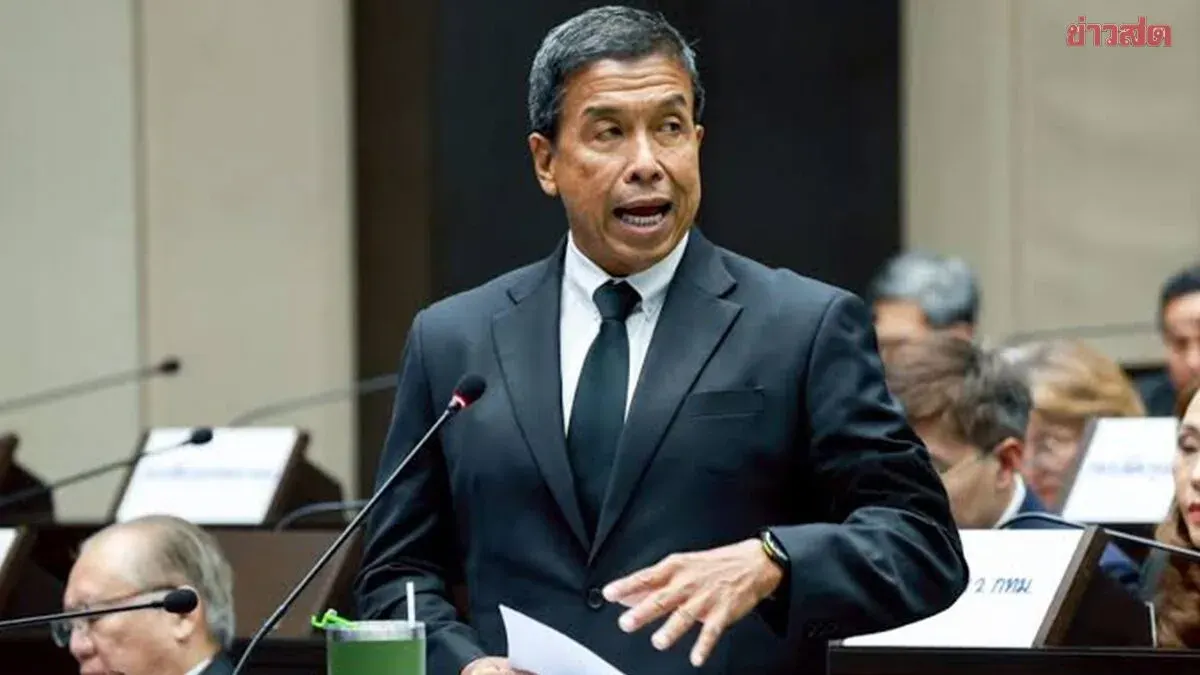
Bangkok Governor Adopts Seven-Point Anti-Corruption Plan

Bangkok's governor unveiled a seven-point anti-corruption plan developed with Thailand's Anti-Corruption Organization, introducing measures including whistleblower protection, mandatory data disclosure, and AI-powered procurement transparen

Bangkok Governor Adopts Seven-Point Anti-Corruption Plan
11 Aug Khaosod

Bangkok Governor Chatcahai Sittiphan announced on August 11 that he had consulted with Mana Nimitrmongkol, chairman of the Anti-Corruption Organization of Thailand (ACT), to establish a roadmap for anti-corruption efforts across the city. Sittiphan stressed that corruption is Thailand's greatest challenge and that public vigilance on the issue is increasing. He noted that ACT has consistently provided valuable guidance to Bangkok and that the city is committed to continuous improvement, even if results are not always perfect.

ACT has submitted seven new recommendations covering multiple areas including whistleblower protection, mandatory data disclosure, procurement transparency using ACT AI risk assessments, and full disclosure of construction projects through the CoST program. Bangkok will implement all seven guidelines and hold ongoing consultations to achieve tangible results. The seven-point "Corruption-Free Bangkok" initiative includes: protecting citizens who report corruption; mandating automatic data disclosure as Thailand's first government agency to do so; using ACT AI to assess bid-rigging risks in all procurements; disclosing 100% of construction project data via CoST; requiring all private bidders and concession seekers to allow data disclosure; expediting community complaints resolution; and improving overall city efficiency through civil servant salary increases, expanded IT services, and appropriate staffing levels. These measures aim to establish Bangkok as a national anti-corruption model with high administrative performance.

No. 05 of Read at source → Next
Police

Real Motive in Nonthaburi Governor's Death Wasn't Debt Dispute

Former Nonthaburi assemblyman Chalod Riangrang fatally shot provincial governor Pol. Maj. Thongchai Yenpraserit in August; investigators determined the motive was rejected financial support, not a claimed debt dispute.

Real Motive in Nonthaburi Governor's Death Wasn't Debt Dispute
11 Aug Khaosod

On August 11, authorities reported progress in the case of Chalod Riangrang, former Nonthaburi provincial assemblyman, who used a firearm to fatally shoot Pol. Maj. Thongchai Yenpraserit, the provincial governor. While Chalod claimed the killing was over a 11-million-baht debt that Thongchai owed him, interviews with local political figures at all levels confirmed this account is false.

Investigators found that Thongchai, who served multiple terms as governor and was well-regarded in the community, had no known financial debts and maintained a trustworthy family and financial standing. In contrast, Chalod had lost his political influence over recent years, struggled financially, and had become isolated. For several years, Thongchai was Chalod's only reliable support, occasionally giving him 50,000 to 100,000 baht when requested.

However, when Chalod's requests became too frequent, Thongchai began distancing himself and eventually refused to see him. Investigators suggest this sudden withdrawal of support likely caused Chalod severe emotional distress, as if his last lifeline had been severed, prompting the fatal attack. Police have deployed 20 officers to guard Chalod in custody due to fears of retaliation, and a search of his home recovered over 50 bullets and 9 firearms, most of which had been sold. The court denied bail given the severity of charges and the violent nature of the crime.

No. 06 of Read at source → Next
National

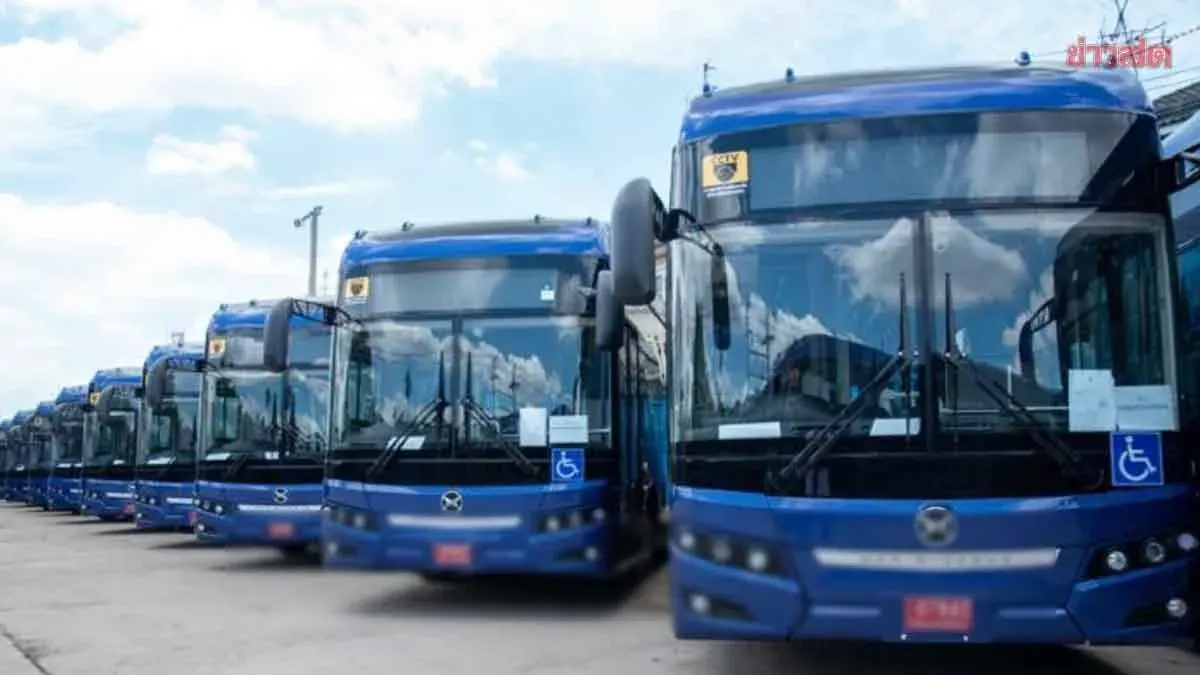
Thailand Plans EV Bus Fleet Overhaul Using Borrowed Funds

Thailand plans to replace its public transport buses with 2,320 electric vehicles by mid-2026, funded through 200 billion baht in emergency borrowing as part of a broader EV infrastructure overhaul.

Thailand Plans EV Bus Fleet Overhaul Using Borrowed Funds
11 Aug Khaosod

Deputy Prime Minister Pipat Ratchakitprakarn revealed progress on a proposal to convert public transport buses from combustion engines to electric vehicles using 200 billion baht from emergency borrowing authority. He stated the plan has been discussed with Finance Minister Ekniti Nitithadprasat since the recent Persian Gulf tensions began.

Under the public transport system upgrade, Thailand expects to receive approximately 2,320 electric buses by mid-2026. Following delivery, all BMTA buses will be converted to the EV system. The plan also aims to transition intercity public transport buses to electric vehicles, potentially drawing additional funding from the emergency borrowing authority if details meet budget criteria.

While final budget figures have not yet been determined, officials anticipate submitting the proposal within this month. Transport Ministry officials have confirmed that if project specifications align with the emergency borrowing framework, the proposal will be formally submitted. The broader objective is to convert all public services—particularly in Bangkok—to electric vehicle systems.

No. 07 of Read at source → Next
Tourism

Thailand Travel Guide: Plan Your Trip by Season and Region

Thailand's six regions operate on different seasonal calendars and monsoon cycles, so choosing the right area for your travel dates—whether the cultural north, beach-lined Andaman coast, or Gulf islands—is key to avoiding rain and maximizin

11 Aug The Thaiger Travel

Where to start your Thailand trip, by region and seasonLegacyMost guides treat Thailand like it has one climate and one obvious itinerary, but we both know it has neither. The country splits into six regions running on different seasonal calendars, and getting that wrong is the difference between a trip that flows and one spent waiting out rain on an island that was never going to be dry in October anyway. The short version: pick fewer regions and stay longer in each, but this leaves way too much for interpretation. The Andaman coast and the Gulf coast run on opposite monsoon cycles, so “rainy season” depends entirely on where you are standing. Everything below exists to help you match your dates, your interests and your available time to the right part of the country. The regions, and what each one actually offers

Region Summary

Northern Thailand Lanna culture, mountain scenery, historic temples and slow-travel favourites including Chiang Mai, Chiang Rai and Pai.

Northeast Thailand Explore Isaan for authentic regional food, ancient Khmer ruins, Mekong landscapes and a slower side of Thailand.

Central Thailand Bangkok’s city energy meets the historic ruins of Ayutthaya and the riverside landscapes of Kanchanaburi.

East Thailand Combine Pattaya’s nightlife and attractions with quieter island escapes around Koh Chang, Koh Mak and Koh Kood.

South Thailand: Gulf Coast Island life, diving, wellness and beaches across Koh Samui, Koh Phangan and Koh Tao, plus laid-back Hua Hin.

South Thailand: Andaman Coast Thailand’s famous tropical coastline, from Phuket and Krabi to dramatic islands, diving and quieter Khao Lak.

Northern Thailand Wat Rong Khun in Chiang Rai | Photo by Chirapriya Thanakonwirakit from Getty Images This is where Thailand’s Lanna kingdom held its own culture, language and architecture for centuries before joining Siam, and that history is still visible everywhere in Chiang Mai’s old city walls, temple design and even the local dialect.  Beyond Chiang Mai, the region covers Chiang Rai near the Golden Triangle, the slow-travel town of Pai, and the full Mae Hong Son Loop through the northern hills. It suits culture-focused travellers, trekkers and long-stay digital nomads far more than beach-first visitors, and the cooler mountain climate is a draw for anyone escaping the heat of the plains further south. A few highlights include:

Doi Suthep, the mountaintop temple overlooking Chiang Mai’s old city Certified ethical elephant sanctuaries, now the standard over riding camps Wat Rong Khun, the striking white temple in Chiang Rai The Golden Triangle, where Thailand, Laos and Myanmar meet along the Mekong Pai’s canyon, hot springs and long-running backpacker scene, reached via a famously curvy mountain road

Chiang Mai alone justifies four to five days. Add Pai or the full Mae Hong Son Loop, and you are looking at a week to ten days.  One thing worth knowing before you book: agricultural burning pushes air quality down between late February and April, which matters if you are planning outdoor sightseeing or have respiratory sensitivities. Northeast Thailand Phanom Rung | Photo by banjongseal324 from Getty Images Isaan, the northeast, sits on the Khorat Plateau bordering Laos and Cambodia, and it remains Thailand’s least commercialised region largely because it was never built around foreign tourism the way the coasts and Chiang Mai were.  What that means in practice: som tam, larb and sticky rice are on menus across the entire country, but Isaan is where the food is actually from, made the way it is meant to taste rather than adapted for a broader audience.

Phanom Rung and Phimai, sandstone Khmer temple ruins predating Angkor Wat by some estimates Isaan cuisine in its home region, built around som tam, larb and sticky rice Silk-weaving villages around Khon Kaen Nong Khai, a riverside town and a jumping-off point for crossing into Laos Pha Taem National Park in Ubon Ratchathani, home to prehistoric cliff paintings estimated at 3,000 to 4,000 years old, overlooking the Mekong and Laos beyond Sam Phan Bok, a maze of river-eroded rock potholes nicknamed Thailand’s Grand Canyon, also in Ubon Ratchathani

Pha Taem in particular is worth planning around rather than dropping in on. Public transport doesn’t reach the park, so hiring a car and driver from Khong Chiam or Ubon Ratchathani city is the standard way in. Four to five days covers the main sites. Budget seven to ten if you want to go deeper into a region built for slow travel rather than a checklist. Central Thailand Monks walking over the Hellfire Pass in Kanchanaburi | Photo from Thai National Parks Central Thailand is the country’s administrative and historical core, built around the Chao Phraya river basin that has supported Thai civilisation since the Ayutthaya kingdom ruled the region from the fourteenth century until Burmese forces destroyed the capital in 1767. Bangkok now sits at the centre of it, but Ayutthaya’s ruins and Kanchanaburi’s wartime history give the region a depth well beyond a capital city stopover. Bangkok itself commands more time than most visitors give it. The Grand Palace and Wat Pho sit on the river’s east bank, with Wat Arun facing them from across the water, and the Chao Phraya express boats are a far better way to move between them than fighting Bangkok traffic.  Chatuchak Weekend Market covers acres of stalls for anyone willing to get lost in it, while Chinatown’s Yaowarat Road comes alive after dark with some of the city’s densest street food, from grilled seafood stalls to century-old noodle shops that have barely changed their menu in decades.  The nightlife splits roughly two ways depending on what you’re after: Sukhumvit’s rooftop bars and clubs for a polished night out, or Khao San Road for backpacker energy and cheap beer. Three days is a realistic minimum to get past the highlights reel and actually feel the city.

Ayutthaya’s brick temple ruins, the former Siamese capital, an easy day trip from Bangkok, now easier still since SRT Bangkok Connex launched a direct commuter service in August 2026 The Bridge on the River Kwai and Hellfire Pass in Kanchanaburi, plus its floating riverside resorts for a slower few days

For a quieter, slower version of Central Thailand, Kanchanaburi’s riverside resorts are worth building a night or two around, ranging from off-grid bamboo raft rooms to upscale floating villas. Most of the sites and resorts here sit well outside town, and several are boat-access only, so a hire car or a driver for the day is the practical way to string them together. Three to four days covers Bangkok’s highlights with a day trip to Ayutthaya or Kanchanaburi bolted on, or longer if the river resorts pull you in for a proper slow-down. It suits everyone, from first-timers who want an easy landing to history buffs chasing wartime sites and temple ruins. East Thailand Koh Chang | Photo by tegmen from Getty Images East Thailand means Pattaya, Koh Chang and Koh Samet, and Pattaya’s biggest draw for a large share of its visitors is simply its nightlife. Pattaya built its modern reputation on Walking Street, a strip of bars, clubs and go-go venues that runs late into the night, and that nightlife scene remains the single biggest reason people come here rather than a quieter beach town further along the coast. It’s not the whole picture, though. The city has leaned hard into family attractions and water sports over the past decade, and the beach clubs along Jomtien draw a calmer, more resort-focused crowd than Walking Street does.  The Sanctuary of Truth, an all-wood temple structure that’s been under construction for decades, is one of the few truly interesting cultural stops in a city that’s mostly known for the opposite. Two to three days is enough to get a proper sense of the place, whichever side of it you’re here for.

Koh Chang, Thailand’s second-largest island, with Klong Plu waterfall and a forested, hilly interior that keeps most of the island genuinely quiet even in high season Koh Mak, a smaller and considerably calmer island near Koh Chang, popular with families for its shallow, swimmable beaches Koh Kood, further out and less developed than Koh Chang, with clearer water and fewer crowds Koh Rang and its surrounding marine park, a popular snorkelling and diving day trip from Koh Chang Koh Samet, a simpler, closer-to-Bangkok beach stop popular with weekenders

Give Koh Chang and its surrounding islands four to five days if you want to properly island-hop between Koh Mak and Koh Kood rather than just tick the box on Koh Chang itself. South Thailand: Gulf Coast Big Buddha Temple in Koh Samui | Photo from Hotels.com The South Gulf coast covers Koh Samui, Koh Phangan, Koh Tao and Hua Hin, and while it’s best known for beaches and full moon parties, each island carries more character than that reputation suggests.  Samui built its fortune on coconuts before tourism arrived, and Fisherman’s Village in Bophut still shows that older, quieter side of the island in its converted shophouses and evening walking street market. Ang Thong National Marine Park, a cluster of dramatic limestone islands off Samui’s coast, is a popular day trip and one of the region’s better-kept scenic secrets.

Samui’s Big Buddha, Fisherman’s Village in Bophut, and a growing wellness retreat and spa scene Ang Thong National Marine Park, a day-trip cluster of limestone islands with a viewpoint overlooking the whole archipelago Koh Phangan’s monthly full moon parties on Haad Rin, alongside a genuinely established yoga, retreat and wellness scene around Srithanu on the island’s quieter side Koh Tao, one of Southeast Asia’s cheapest places to get a diving certification, with a laid-back backpacker pace once the dive boats head out for the day Hua Hin’s calm, family-friendly beaches and royal history, home to Thailand’s royal family’s long-standing summer palace, plus a well-known night market for evening food

Give the island triad five to seven days if you are combining more than one, and add two to three for Hua Hin if it’s part of the same trip rather than a separate weekend from Bangkok. South Thailand: Andaman Coast Railay Beach in Krabi | Photo by Preto_perola from Getty Images Pro The South Andaman coast takes in Phuket, Krabi, Koh Phi Phi and Khao Lak, Thailand’s postcard coastline of limestone karsts and turquoise water, and Phuket in particular carries far more depth than its resorts and nightlife strip suggest.  The island’s Old Town carries a distinct Peranakan, or Baba-Nyonya, culture, descended from Chinese immigrants who settled here and intermarried with locals in the nineteenth century, and it shows up in the architecture, the food and the traditional dress still worn at local festivals.  The island’s Vegetarian Festival, held annually and drawing crowds for its striking (and genuinely intense) rituals, sits alongside the gentler Baba Wedding Festival each February, which showcases Peranakan wedding customs, dress and food over three days. Phuket has also become one of the world’s main destinations for Muay Thai training. Soi Ta-Iad, in the island’s south near Chalong, has grown into an entire street of gyms and camps since Tiger Muay Thai opened there in 2003, and it now draws everyone from casual holidaymakers dropping into a single class to professional fighters running full training camps.

Phuket old town’s Sino-Portuguese shophouses and Peranakan heritage, a quieter contrast to the Patong nightlife strip Muay Thai training camps and gyms concentrated around Soi Ta-Iad, open to complete beginners and serious fighters alike Railay Beach in Krabi, one of the region’s best-known rock climbing spots, reachable only by boat Khao Lak, quieter than Phuket or Krabi and the main gateway for Similan Islands trips Koh Phi Phi, best visited as a day trip from Krabi or Phuket given limited accommodation and the Maya Bay closure

Base yourself in one sub-region, Phuket or Krabi, for five to seven days and use it as a hub for island excursions. Two closures worth building around: the Similan and Surin islands shut completely from May 15 to October 15 each year for monsoon safety and ecosystem recovery, and Maya Bay closes annually from August 1 to September 30. Neither is optional, and turning up during a closure window is a wasted day. Why “rainy season” depends on which coast you mean This is the part worth getting right before you book flights. Thailand’s southern peninsula is split down the middle by a mountain range, and the two coasts sit on opposite sides of the monsoon. Photo by Jordan Coleman from Pexels The Andaman coast (Phuket, Krabi, Phi Phi, Khao Lak) takes the direct hit from the Southwest Monsoon. Its wet season runs roughly mid-May to mid-October, with the heaviest rain, roughest seas and most ferry cancellations landing in September and October. Dry season, and the best diving and island-hopping conditions, runs November through April. The Gulf coast (Koh Samui, Koh Phangan, Koh Tao) is sheltered from that same monsoon by the mountain range, so it gets a second, quieter dry window through July and August while the Andaman side is getting drenched. Its real wet season arrives later, from around late September through December, peaking in November under the Northeast Monsoon. North and Central Thailand run a simpler three-season pattern: cool and dry from November to February (the most comfortable stretch nationwide), hot from March to May, and a green, intermittently rainy season from June to October that tends to arrive as short, heavy afternoon downpours rather than all-day rain. One caveat worth flagging is that 2026 has brought some El Niño-driven variability, with reports of a delayed or drier stretch through parts of the year. The seasonal windows above are the reliable baseline, but build a buffer day or two into any itinerary that lands near a seasonal boundary, particularly early May or late October. You can keep track of the weather in Thailand through various means, including visiting the website of the Thai Meteorological Department. Choosing where to start, by traveller type Photo by Kanchanachitkhamma from Canva First-time visitors should keep it simple: Bangkok plus one other region, well-connected hubs only. Chiang Mai or Phuket both work. Trying to layer in a third region on a first trip is how people end up spending more time in transit than at the beach. Families do best in destinations with easy ground transport and reliable medical infrastructure: Hua Hin, Koh Samet, Chiang Mai, or the calmer resort stretches of Phuket like Bang Tao. Skip open-sea speedboat transfers during the May and October monsoon transition months, when seas get genuinely rough rather than just choppy. Backpackers and budget travellers get the most value from overnight sleeper trains (they double as transport and accommodation) and the mainland fly-then-ferry route into the Gulf islands via Surat Thani, which cuts costs significantly over flying directly into Koh Samui. Digital nomads now have a proper legal route: the Destination Thailand Visa grants 180 days per entry over a five-year validity, aimed at remote workers with proof of employment outside Thailand. It is a considerably safer option than the old habit of stringing together repeated tourist entries, which immigration officials now scrutinise closely. Chiang Mai’s Nimman district, Bangkok’s Sukhumvit and Sathorn areas, and Koh Phangan’s Srithanu are the established hubs with the coworking spaces and fibre internet to match. Luxury travellers chartering private boats around the Andaman coast are bound by the same national park rules as everyone else, including the seasonal closures at Similan and Maya Bay. Worth checking before a charter is booked rather than after. Building an itinerary around how much time you actually have Treat what follows as a starting shape rather than a fixed plan. These are workable defaults, not the only correct way to see Thailand, and it is worth staying flexible enough to cut a stop that does not interest you in favour of more time somewhere that does. One week. Pick one primary hub or a tight two-city pairing. Two options work well here:

Bangkok for three days, including a day trip to Ayutthaya, then a flight to Chiang Mai for four days covering the old city, temples and a day trip to Chiang Rai Bangkok for two days, then straight to Phuket or Krabi for five days of beach and island time

Attempting Bangkok, the north and the southern islands in seven days means three separate travel days out of seven, which leaves less than half the trip for anything except transit. Two weeks. This is enough for a genuine three-region circuit. A workable structure:

Four days in Central Thailand, covering Bangkok and a day trip to Ayutthaya or Kanchanaburi Four days in the north, based in Chiang Mai with a side trip to Chiang Rai Five to six days on one coast, Andaman between November and April, Gulf between May and August, depending on which is in season when you travel

Trying to fit both coasts into two weeks usually means shortchanging all three regions. Three weeks or more. Now you can add Isaan or the east coast into the mix, and potentially touch both southern coastlines if the season allows. A rough shape:

Four days in Central Thailand, including Kanchanaburi Six to seven days on the northern circuit, covering Chiang Mai, Pai and Chiang Rai Four days either overland through Isaan or on the east coast around Koh Chang Six to seven days split between one or both southern coasts, depending on the season

Even at three-plus weeks, resist rushing through Isaan just to say you covered it, and build in actual rest days rather than treating every day as a transit or sightseeing day. Whatever length you land on, let the itinerary bend around what you actually want more of once you are there. Getting between regions Photo by bottlein from pixabay Domestic flights are the fastest option for anything beyond a few hours by road:

Bangkok to Chiang Mai: around one hour fifteen minutes, 1,000 to 2,500 baht one way Bangkok to Phuket: around one hour thirty, 1,200 to 3,000 baht Bangkok to Koh Samui: notably pricier, often starting from 3,000 baht and climbing well beyond, since the airport is privately operated

Many budget travellers fly into Surat Thani or Nakhon Si Thammarat instead and connect by ferry, adding a few hours but cutting the cost substantially. Trains and buses both run on a class system, and the class you book affects both comfort and price more than the route itself. Overnight sleeper trains cover the Bangkok to Chiang Mai route in around twelve to thirteen hours, with second-class air-conditioned sleeper berths running roughly 800 to 1,100 baht and first-class berths 1,400 to 1,700 baht.  Third-class carriages exist too and are considerably cheaper, but they have no air conditioning and no sleeper berths, so they suit short daytime hops like Bangkok to Ayutthaya or Bangkok to Kanchanaburi far better than an overnight long-haul route.  Treat third class as the authentic, cheap option for a short trip, not a real substitute for a sleeper berth on anything longer. Buses follow a similar split. VIP and first-class coaches have air conditioning, reclining seats and more legroom, and are the sensible choice for any overnight or long-distance route:

Bangkok to Chiang Mai or Bangkok to Phuket (VIP/first class): 600 to 1,000 baht, ten to twelve hours, usually overnight Chiang Mai to Pai by local minivan: 150 to 250 baht, around three hours

Ordinary or local buses run the same routes for less, but with fewer amenities and more stops, and are best saved for shorter, daytime journeys where the extra hours and lack of air conditioning matter less. Ferries handle the final leg to any island:

Surat Thani to Koh Samui: ninety minutes to two and a half hours, 250 to 550 baht Phuket to Koh Phi Phi: one to two hours, 450 to 1,200 baht, depending on the boat

The pattern to remember: transferring between distant regions, north to south especially, tends to eat six to eight hours once you count check-out, airport transit and connections. Factor that into any itinerary rather than treating flight time alone as the true cost. Before you go: entry rules worth knowing The TDAC website where you can sign up or update your arrival card Thailand’s visa exemption rules changed in 2026. Following a Cabinet decree in May, most major passport holders, including the US, UK, EU countries, Australia and Canada, now get a 30-day visa-exempt stay rather than the 60 days that applied previously. A single 30-day extension is available in-country.  The Thailand Digital Arrival Card is mandatory for all foreign nationals and must be submitted online within 72 hours before you land, free of charge through the official government portal, not a third-party site charging a fee. One more thing worth a mention here rather than a full detour: cannabis is no longer the free-for-all it briefly was.  Since mid-2025, cannabis flower has been reclassified as a controlled herb requiring a valid Thai medical prescription, and carrying it across an international border, even into or out of the country on a connecting flight, carries serious penalties under customs law.  Frequently asked questions What is the best time of year to visit Thailand? November to February is the most comfortable window nationwide, cool and dry in the north and centre, dry season on the Andaman coast, and still good on the Gulf islands before their late-year rains set in. Do the Andaman and Gulf coasts really have different weather? Yes. The Andaman coast's wet season runs roughly mid-May to mid-October, while the Gulf coast's wet season falls later, from around late September through December. They are effectively on opposite calendars. How many days do I need in Thailand? One week suits a single hub or a tight two-city trip. Two weeks allows three regions. Three weeks or more is what it takes to properly cover the north, a coast and somewhere less touristed like Isaan. Do I need a visa to visit Thailand in 2026? Most passport holders from major countries, including the US, UK, EU nations, Australia and Canada, can enter visa-free for 30 days following the 2026 rule change, provided they complete the mandatory Thailand Digital Arrival Card before arrival. Is Thailand safe for first-time visitors? Broadly yes. The main practical risks are road traffic and common tourist scams rather than serious crime, and sticking to well-connected regions on a first trip keeps logistics simple. Where to actually start If there is one piece of advice worth taking from all of this, it is to resist the urge to see everything. Thailand rewards travellers who pick a region, or two at most, and give it proper time, rather than those who chase a full-country tick list on a two-week trip. Start with the region that matches what you actually want from the trip, check its season against your dates, and build outward from there. Remember, these are our suggestions. The perfect trip itinerary is up to you, and you alone. Wherever you choose to go, we hope that our guide helped you! The story Where to start your Thailand trip, by region and season as seen on Thaiger News.

No. 08 of Read at source → Next
National

PM Anutin: Royal Approval Given for NBTC Chair Removal

PM Anutin has secured royal approval to remove NBTC Chairman Dr. Sorot Boonbaichiep, citing full compliance with legal procedures in the petition submitted on August 11.

PM Anutin: Royal Approval Given for NBTC Chair Removal
11 Aug Khaosod

Prime Minister Anutin Charnvirakul revealed at 12:45 p.m. on August 11, 2025, at Government House that he has signed and submitted a royal petition requesting the removal of Clinical Professor Dr. Sorot Boonbaichiep from his positions as chairman and member of the NBTC. The prime minister and Interior Minister confirmed that all actions have been conducted in full compliance with legal procedures and regulations.

No. 09 of Read at source → Next
National

Honda Launches Code Save Campaign With Parts Discounts

Honda Motorcycle is offering genuine parts discounts through its "Code Save" campaign via the My Honda Moto app, with savings up to 200 baht on batteries, tires, and filters at authorized service centers nationwide.

Honda Launches Code Save Campaign With Parts Discounts
11 Aug Khaosod

Honda Motorcycle is offering genuine parts discounts to customers who bring their motorcycles in for service through the "Code Save" campaign via the My Honda Moto app. Customers can claim coupons through the My Honda Moto application and present them to staff before service to receive discounts on genuine parts at Honda Wing Center and Honda Wing Shop branches nationwide.

Discount offers include: - Battery replacement: 150 baht discount (August 15 – September 30, 2026) - Tire replacement: 200 baht discount (August 15 – October 15, 2026) - Drive belt replacement: 50 baht discount (August 15 – October 15, 2026) - Air filter replacement: 50 baht discount (August 15 – October 15, 2026)

Coupons are valid only for customers who bring Honda motorcycles to authorized service centers and cannot be used for over-the-counter parts purchases without a service appointment. Interested customers can download the My Honda Moto application to claim discounts.

Honda Motorcycle continues to promote safe riding by encouraging users to regularly check and maintain their motorcycles to keep them in working condition. Customers can claim benefits and bring their motorcycles for service at Honda Wing Center and Honda Wing Shop branches throughout the country.

No. 10 of Read at source → Next
National

Thailand Opens 384 Hotel Jobs in Taiwan with Up to 30,000 Baht Monthly

Thailand's Department of Employment is recruiting 384 workers for hotel jobs in Taiwan offering up to 30,000 baht monthly salary, requiring a bachelor's degree in hospitality or equivalent work experience with language proficiency.

Thailand Opens 384 Hotel Jobs in Taiwan with Up to 30,000 Baht Monthly
11 Aug Khaosod

The Thai Department of Employment (DoE) is opening registrations for Thai workers seeking employment with hotel and accommodation service providers in Taiwan, according to DoE director Somchai Morkatsriwan. The initiative aims to provide Thai workers with legitimate overseas employment opportunities, stable income, and professional skill development in international hospitality standards.

Taiwan's hotel and accommodation businesses currently have 384 open positions covering guest reception, room booking coordination, housekeeping, and cleaning roles. Selected candidates will receive a maximum monthly salary of 32,000 Taiwan dollars (roughly 30,000 baht), with wages and benefits determined by employers and Taiwan labor law.

Applicants must meet one of these qualifications: a bachelor's degree in tourism, hospitality, or recreation with Chinese or English language skills at A2 level, or A2-level language proficiency plus at least six months of hotel work experience in Taiwan within the past three years with employer certification. For Chinese language tests, applicants must provide TOCFL A2 results valid for up to three years from the start date.

Somchai emphasized this program offers Thai workers legal protections, safety, and valuable international experience. Interested candidates can register through the Thai Overseas Employment Management System at toea.doe.go.th by selecting "Hotel and Accommodation Services" and "Taiwan," or call the DoE hotline at 1506 ext. 2 for more information.

No. 11 of Read at source → Next
Loading more…
Endless reading Scroll to read. When you reach the bottom, keep scrolling. A bar fills, and the next story slides in when it's full. ↑ ↓ or Space Or use the arrows at the bottom of the screen.