Deputy PM Anutin Arrives in Manila for 49th ASEAN Summit
Deputy Prime Minister Anutin Charnvirakul has arrived in Manila for the 49th ASEAN Summit, leading a high-level Thai delegation. The summit runs from November 14-18 and will address regional cooperation, economic resilience, and strategic challenges. Anutin's agenda includes plenary sessions, a leaders' retreat, bilateral talks with Laos, and engagements with parliamentary and youth representatives.
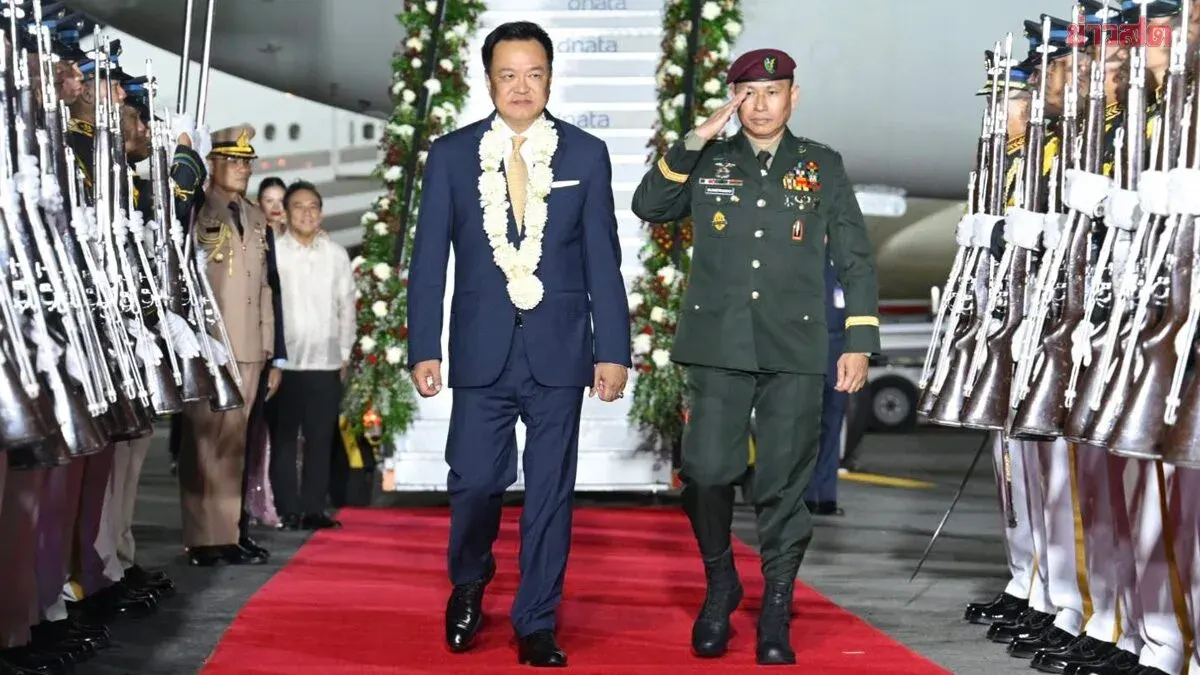
Deputy Prime Minister and Interior Minister Anutin Charnvirakul arrived in Manila to attend the 49th ASEAN Summit, aiming to drive ASEAN cooperation and address regional challenges. At 8:35 p.m. local time on November 14, 2026 (one hour ahead of Thailand), Anutin, accompanied by his spouse and delegation, landed at Ninoy Aquino International Airport in Manila, Philippines, for the 49th ASEAN Summit and related meetings scheduled November 14-18. Philippine Justice Secretary Fredderick A. Vida welcomed them at the airport.
The delegation includes Deputy Prime Minister and Foreign Minister Sihasak Phuangketkeow, Deputy Prime Minister and Commerce Minister Supachai Suthamphan, and Deputy Prime Minister and Higher Education, Science, Research and Innovation Minister Yoschanan Wongsawat.
On November 15, 2026, Anutin's schedule begins with the opening ceremony of the 49th ASEAN Summit at the Philippine International Convention Center (PICC), followed by the plenary session to discuss directions for the ASEAN Community and key regional issues. He will then join the informal retreat for strategic discussions among ASEAN leaders. In the afternoon, he is slated for bilateral talks with Lao Prime Minister Sonexay Siphandone, followed by meetings with the ASEAN Inter-Parliamentary Assembly (AIPA) and ASEAN Youth representatives to promote multi-sectoral participation in ASEAN development.
"This participation is a crucial opportunity for Thailand to help shape ASEAN's cooperation direction and strengthen ties with member states and dialogue partners, emphasizing economic resilience, regional connectivity, and peace and stability to create economic opportunities and improve Thai people's quality of life," a government spokesperson said.