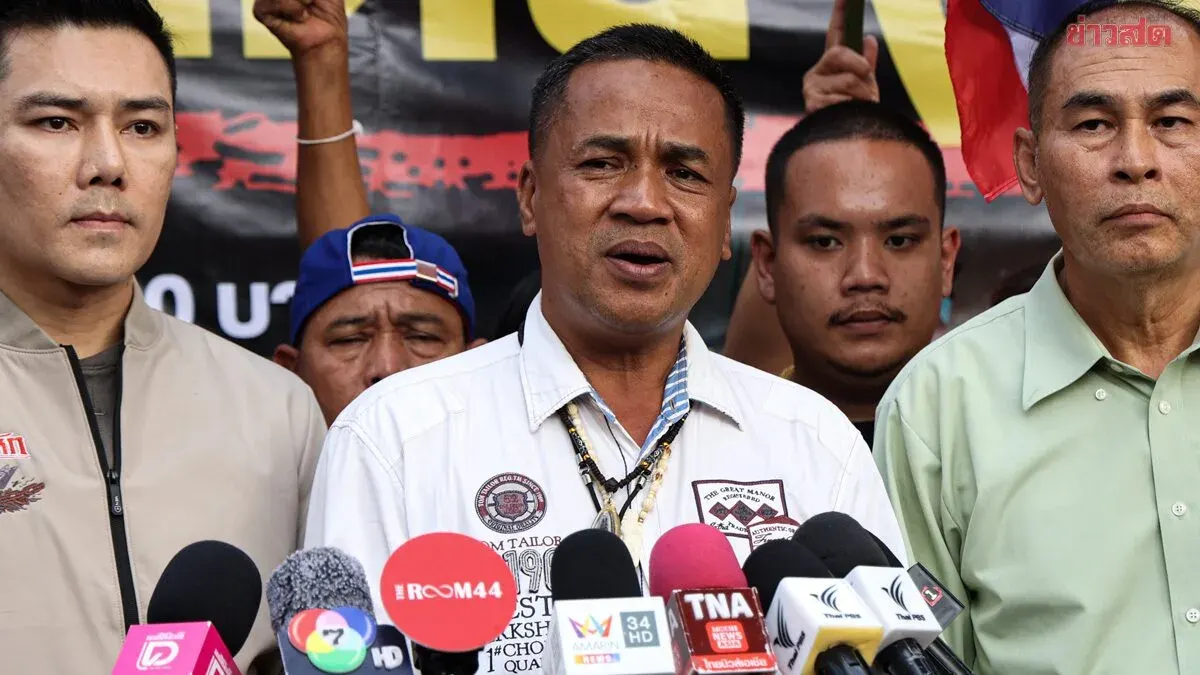
Prachachat Leader Tawee Unveils 6-Point Policy, Demands Drug Crackdown
Prachachat Party leader Pol. Lt. Gen. Tawee Sodsong visited Nakhon Si Thammarat to install new provincial leadership and address a worsening drug crisis. He demanded a nationwide "war on drugs" with rehabilitation centers in every village and the removal of dealers from communities. Tawee also launched the party's six-point policy platform, headlined by raising the elderly pension to 3,000 baht, securing farmers' land rights, and reforming the student loan system.

Pol. Lt. Gen. Tawee Sodsong, Prachachat Party leader and former Minister of Justice, traveled to Nakhon Si Thammarat on November 14 to preside over the selection of new provincial party representatives at the Mr. Kawan restaurant in Na Kian subdistrict. The event, attended by Deputy Party Leader Tun Lojai, party executives, members, and locals, resulted in Pichet Daraphai being chosen as the new provincial representative.
A special lecture on "Islamic Ethics for Political Leaders" was delivered by Ajarn Jenwit Kongkalihmin of the Al-Salam Foundation for Education and Social Welfare. A subsequent forum on strengthening civil society networks featured representatives from Na Kian subdistrict, including SAO member Aris Rapthong, Village Health Volunteer network head Yada Kamwisit, and Muslim women's group head Narikan Wadwongpat.
Participants voiced deep alarm over the rampant spread of drug addiction in the province, which has led to a surge in mental health patients creating fear and danger for residents. Tawee acknowledged the crisis, declaring that drug and mental health issues require a genuine "war" strategy, not just integration. He emphasized that addiction destroys families, spares no authority, but fears the love and warmth of family. The government must act decisively, establishing rehabilitation centers in every village and removing dealers from communities.
Tawee reiterated Prachachat's people-centered ideology, rejecting "big house" patronage politics, and unveiled a six-point policy platform to tackle inequality and improve quality of life: 1) Food security and poverty reduction, including raising the elderly allowance from 600 to 3,000 baht; 2) Healthcare upgrades with a focus on drug suppression; 3) Occupational reform to secure farmers' land rights and prevent exploitation by capitalists, citing southern oil palm land lease cases; 4) Education reform; 5) Land justice and amnesty; 6) Anti-corruption measures, exposing the Student Loan Fund's flawed system where universities receive billions while burdening graduates with debt.