Prachachat Leader Says Decentralization Only Path to Southern Peace
Prachachat Party leader Pol.Lt.Gen. Tawee Sodsong told a youth forum in Yala that decentralizing power is the only solution to the decades-old conflict in Thailand's deep south. He criticized the central government's justice system, education neglect in Narathiwat, and top-down development projects that ignore local identity and self-governance. Tawee proposed adopting Bangkok's elected-governor model for the three southern border provinces and reforming local courts to build trust.
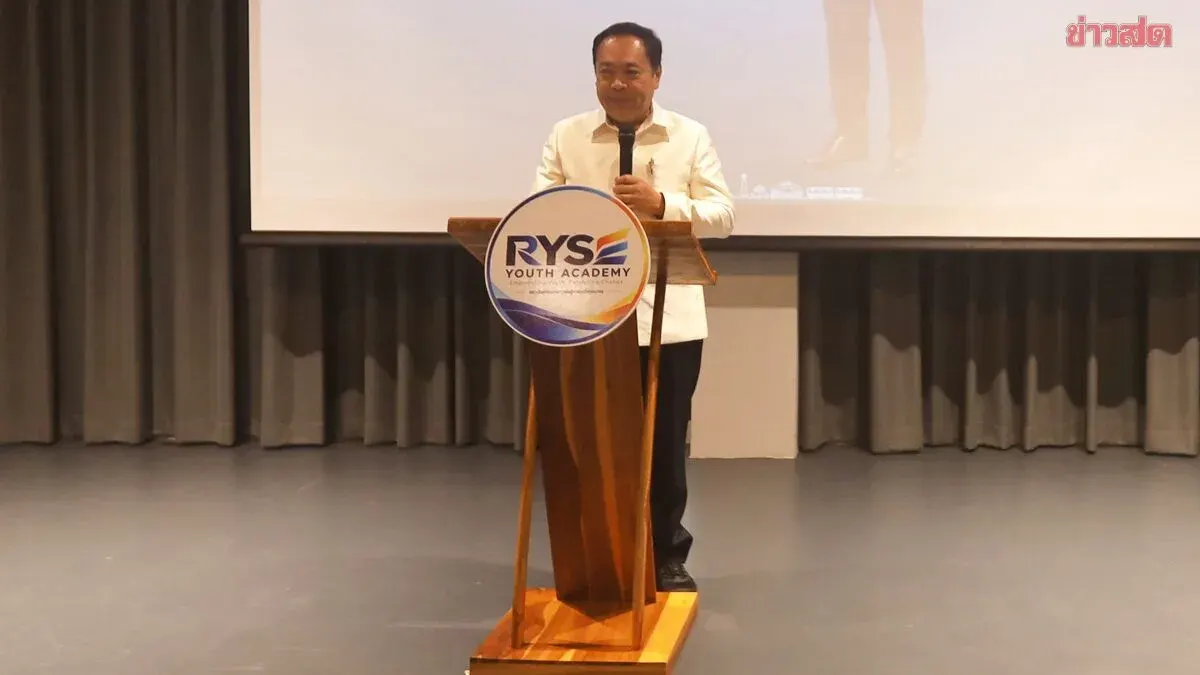
Extinguishing the southern conflict requires decentralization, declares Pol.Lt.Gen. Tawee Sodsong, party-list MP and Prachachat Party leader, who champions the Bangkok governance model and insists his party focuses on building people, not infrastructure.
On November 8, 2026, Pol.Lt.Gen. Tawee Sodsong, in his capacity as chair of the House Committee on Law, Justice, and Human Rights and former justice minister, delivered closing remarks at the "Youth Community Challenge Lab: Designing Solutions and Developing Projects by Youth" at the Yala City Museum. He reflected on structural problems in public administration, the judicial process, and the failure of development that focuses solely on physical infrastructure, pointing to "decentralization" as the sole path to peace.
The forum brought together youth networks and civil society to brainstorm on "local governance and community development issues," with political party representatives sharing visions, including Sulaiman Bueanaepae (Prachachat MP), lawyer Adilan Alee-esoh (Kla Tham Party representative), and Dr. Suphat Hasuwankit (Prachachon Party representative for Songkhla).
On stage, Pol.Lt.Gen. Tawee stated that Thai society yearns for principles of governance and rule of law, but the state appears unwilling. When measured against international rule-of-law standards, Thailand's worst aspect is its "criminal justice process," particularly the prosecution system, which scores only 0.25 out of 1. This reflects a mindset that treats prisoners as exiles sent to another society.
On education, Tawee noted that Narathiwat has the country's highest rate of children dropping out of the education system, at 50%, forcing many youths to pursue studies abroad in countries like Egypt, Malaysia, and Indonesia, where they face severe housing difficulties.
"Before the Prayut Chan-o-cha era, the Cabinet approved a budget of around 80 million baht to build dormitories for Thai students abroad, especially female students in distress. But after the coup, that money was diverted elsewhere entirely. Today, when foreign dignitaries visit, we dare not discuss this because they have donated land for construction. This is the inequality and the mindset of the state," Tawee said.
Pol.Lt.Gen. Tawee also addressed the assassination attempt on Malisak Liwamae, the Prachachat MP for Narathiwat, stating this is not the first time a Muslim entering politics has faced violence. He cited the historical case of Haji Sulong, who presented a 7-point demand but was forcibly disappeared, and the late Fakhruddin Botor, a Muslim scholar who founded Daroon Sassana School and was assassinated after entering politics. These events underscore that without governance and rule of law in the area, conflict will only deepen.
The Prachachat leader emphasized that solving the southern problem cannot escape the issue of "administration and governance." While poverty and drugs exist nationwide, what makes the deep south distinct is identity, belief, and the right to self-governance.
"Today, the only way to bring peace to the south is decentralization. Think anew: apply the Bangkok model of electing a governor to the three border provinces, to avoid accusations of separatism. Or restructure the Local Administrative Courts so that the court secretary is someone locals feel is 'one of us,' not 'one of the state' sent from Bangkok."
Pol.Lt.Gen. Tawee criticized past state development projects for failing because they did not put people at the center, citing as an example a project to build 60 houses in an industrial estate.