Dialog Key to Ending South Border Violence, Officials Say
A deadly attack on a Narathiwat checkpoint killed five rangers, prompting martial law as officials stress dialogue alongside law enforcement as key to ending violence in Thailand's troubled southern border provinces.
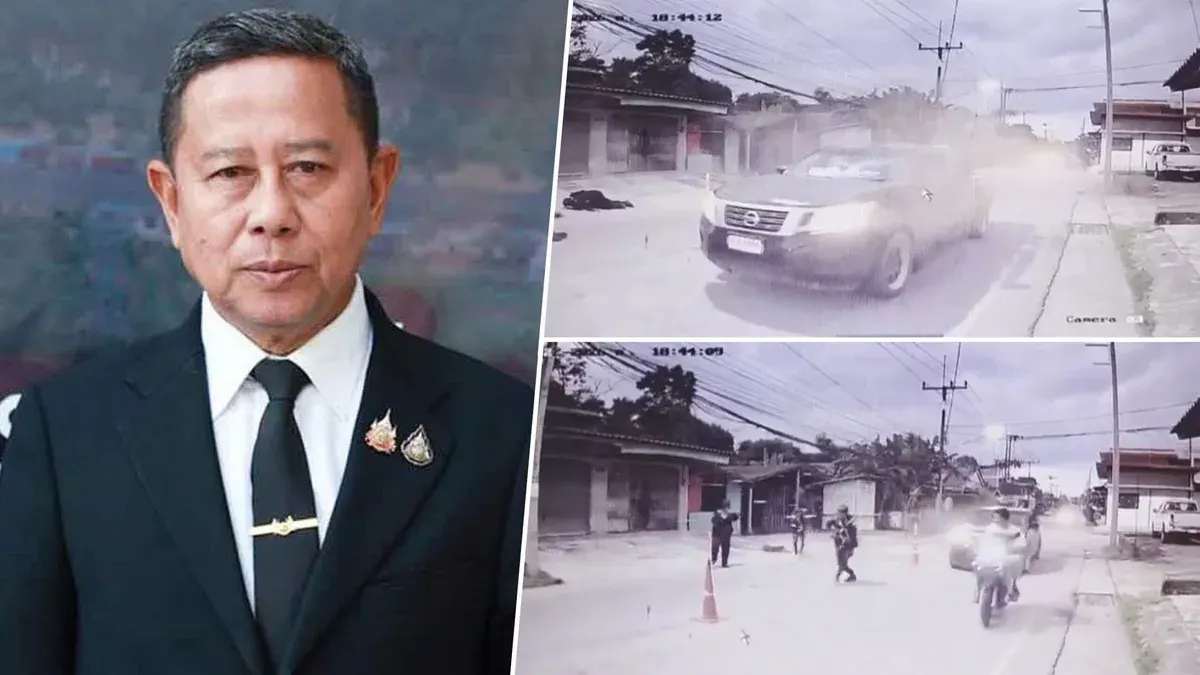
The southern border region has escalated in violence again, claiming the lives of officials and affecting many civilians. A particularly severe attack on a checkpoint in Tan Yong Mas subdistrict, Rangae district, Narathiwat province, killed five rangers and wounded civilians. The attack prompted the government to impose martial law across Narathiwat, expanding authorities' powers to search, arrest, detain, and use weapons.
While martial law aims to apprehend those responsible, it must be enforced carefully to avoid harming innocent people. Defense Minister General Adul Bunthumdej discussed prevention measures and vowed to capture the perpetrators, while also emphasizing long-term solutions through dialogue among Thai citizens with differing views. In his capacity as defense minister, he stressed the importance of not escalating tensions or fueling conflict.
National Security Council Secretary-General Chatrchai Bangchad similarly emphasized that dialogue with dissidents must continue alongside strict law enforcement against those using violence. This measured approach from senior officials reflects thoughtful consideration of the southern border crisis.
The problems in Pattani, Yala, Narathiwat, and parts of Songkhla provinces have deep historical roots, intensifying dramatically since the 2004 military arsenal robbery on January 4 and continuing to the present day. The region has suffered massive loss of life and consumed enormous government resources. Most government and civil society observers have concluded that permanent solutions require dialogue rather than repression alone, and significant progress was nearly achieved before the 2014 coup interrupted the process.
The current government has expressed commitment to resolving the crisis through dialogue initiatives, claiming considerable progress. However, the recent escalation in violence raises questions about what obstacles dialogue faces and whether authorities have adequately understood the region's diversity and distinct identity.