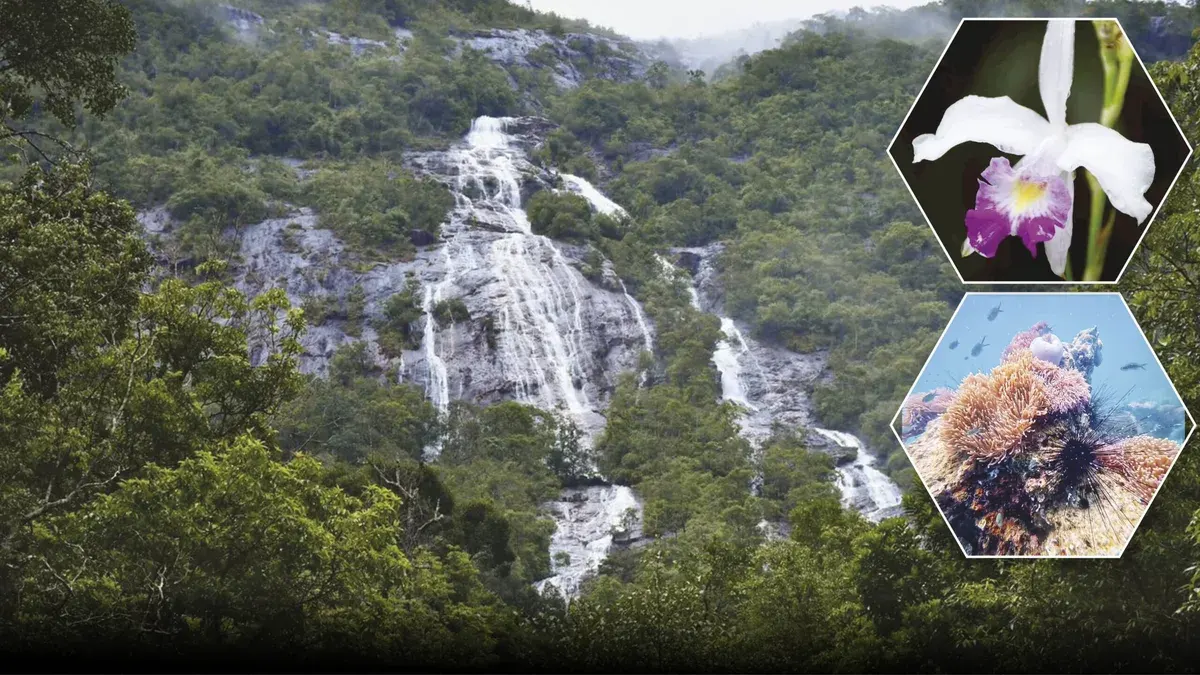
Four national parks in Ranong and Chumphon showcase pristine forests, hot springs, and marine ecosystems along Southern Thailand's coasts. A media campaign from June 29 to July 1 promotes ecological tourism while highlighting unique biodive
Ranong and Chumphon are popular destinations showcasing the charm of both the Andaman Sea and Gulf of Thailand coasts, seamlessly blending lush mountains, natural hot springs, and beautiful ocean views. These natural features are maintained by the Department of National Parks, Wildlife and Plant Conservation.
Department director Arthapol Charoen Chansat stated that the forests and seas within national park areas in Ranong and Chumphon represent highly biodiverse ecotourism zones. "We have forests, woodlands, mangrove forests, natural hot springs, and seas perfect for coral diving," he said. "The department balances conservation and tourism to stimulate the local economy while ensuring sustainable environmental stewardship."
This initiative led to a traveling media awareness campaign promoting ecological tourism in Chumphon and Ranong national parks from June 29 to July 1, 2025. The campaign began in Ranong, known as the "natural spa city" for its abundant rainfall nurturing lush forests year-round and its reputation for health and natural wellness tourism.
Official Challit Sinrojanakorn, head of Haew Suwat National Park, guided media to Phraeng Hot Spring, one of Thailand's finest mineral hot spring destinations. The spring maintains temperatures of 40-44°C, is crystal clear with no sulfur odor, and offers 17 natural pools for private and shared bathing with full amenities.
Challit noted the park has continuously improved tourism infrastructure to serve all visitor groups equitably. The facility won the 2024 Friendly Design Award for "Tourism for All" and the Green National Park award at the Gold/Green Plus level for environmental management, among numerous other honors.
Assistant park director Arunlak Niyom explained that Haew Suwat National Park covers 417,500 rai across Ranong and Chumphon provinces. Its signature feature is the spectacular Haew Suwat waterfall, visible from the main road before park entry, and serves as a crucial watershed for Ranong Province.
The area exhibits exceptional biodiversity, including the discovery of "Phu Chao Fah" crab, a new freshwater species found nowhere else on Earth. The crab features pure white carapace and claws with distinctive purple-black eye sockets and mouth, inhabiting rocky crevices with flowing water.
New plant species include "Dara Pilas," a world-new flower resembling a sparkling star with six or seven petals, plus rare wild orchids and "Gomassum" flowers—Ranong's provincial flower, which bloom in early year.
The campaign continued to Ranong Archipelago National Park, headed by Suwanna Saad, covering 356.70 square kilometers along the Andaman coast with extensive mangrove forests.