Facebook Post Identifies Long-Tailed Lizard, Experts Debunk Myths
The user wants a short summary of the article about the long-tailed lizard identification and myth debunking. Let me extract the key points: 1. Facebook user posted photo for identification 2. Experts identified it as Long-tailed Grass Liza
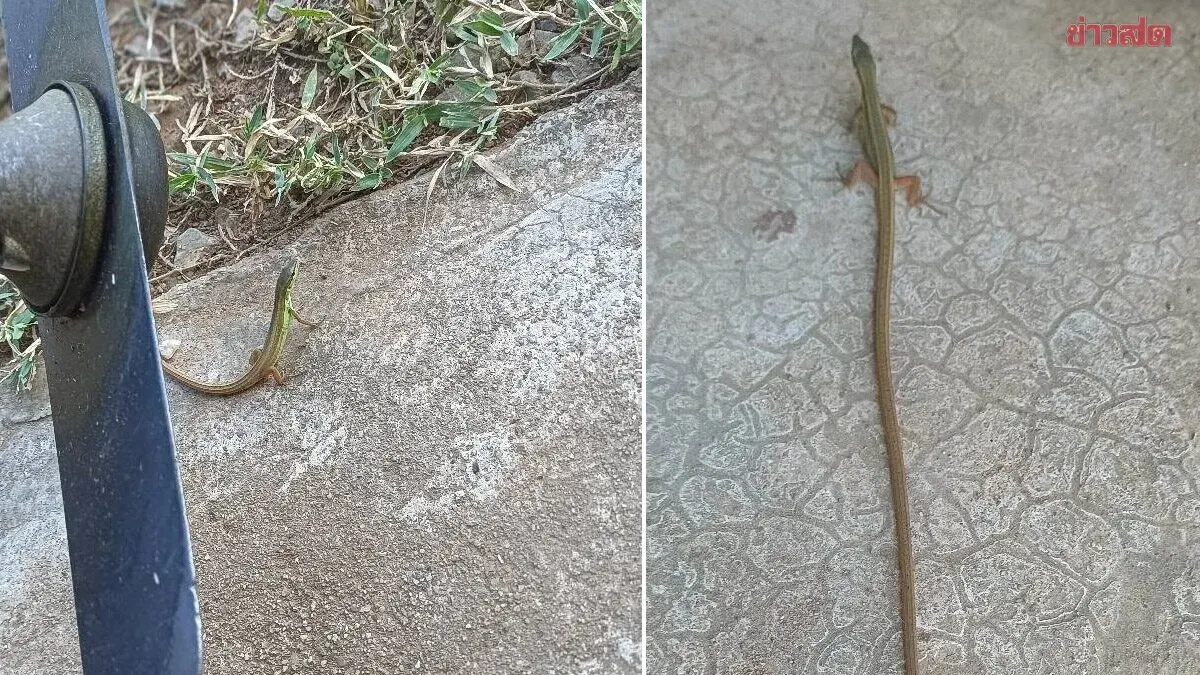
A Facebook user posted a photo of an animal with an exceptionally long tail in a group called "What Animal Is This?" asking for identification. Experts later identified the creature as the Long-tailed Grass Lizard, also known as Sang Ha, Nguek Ka, or Kheng Ka (Takydromus sexlineatus). It is non-venomous. Although its Thai name includes "lizard," it actually belongs to the lizard family Lacertidae, the same order (Squamata) as snakes and lizards. It resembles skinks but has a slimmer, longer body with a distinctive tail roughly five times its body length. The species is widespread across Asia — India, southern China, Hainan, and Southeast Asia — and found in every region of Thailand, even Bangkok.
Regarding folklore, people in Isan believe Sang Ha is highly venomous, living near water or caves, and that its tail lash causes burning wounds that can kill. The Central region considers it a small, legged snake that moves when grass withers. Some locales think it is a wild toad that howls like a dog. In reality, Sang Ha is non-venomous and harmless to humans. These myths led to its reference in the literary work "Phet Phra Uma" by Panom Thian as a mythical creature or naga offspring. The lizard is also known by other names such as "Nguek Ka," "Long-tailed Lizard," or "Krahng."