Famous Ratchaburi Monk Luang Pho Sali Remembered on New Coin
The article is a biographical overview of Luang Pho Sali, a famous Ratchaburi monk. Key points: he was a monk who studied in Bangkok, left to care for parents, re-ordained, practiced forest meditation, settled at Khao Wang in Ratchaburi aro
Luang Pho Sali continued his studies in Pali at Wat Mahathat Yuwaratrangsarit in Bangkok under the patronage of Somdet Wanrat (Heng Khomjari). After his parents fell ill, he returned to Uthai Thani to care for them, temporarily leaving the monkhood for eleven months to manage family lands and property. Once their affairs were settled, he sought re‑ordination from his former preceptor and was ordained a second time in November 1903 at Wat Nong Khun Chat, receiving the monastic name ‘Thammasaro’. He then embarked on a period of austere forest dwelling, practicing meditation wherever he found suitable conditions, returning to strict monastic centers only for the rainy‑season retreat.
In the eighth rainy season of 1924 BE (1921 CE) he wandered with companions to Ratchaburi, taking shelter in the abandoned royal palace on Khao Wang. Local villagers, hearing of his presence, began to make offerings and listen to his teachings. They urged him to remain for the rainy season at Khao Wang and offered to petition the king to grant the site as a monastery. He agreed to lead the effort together with the people of Ratchaburi to build a temple on the hill.
In 1929 BE (1926 CE) a royal decree granted Khao Wang as monastic land, and the same year the provincial ecclesiastical council appointed him abbot. By 1934 BE (1931 CE) the main structures of Wat Khao Wang were completed, yet Luang Pho Sali, devoted to meditation and the ascetic dhutaṅga practice, continued to travel on wandering pilgrimages, returning to spend the rainy season at his temple.
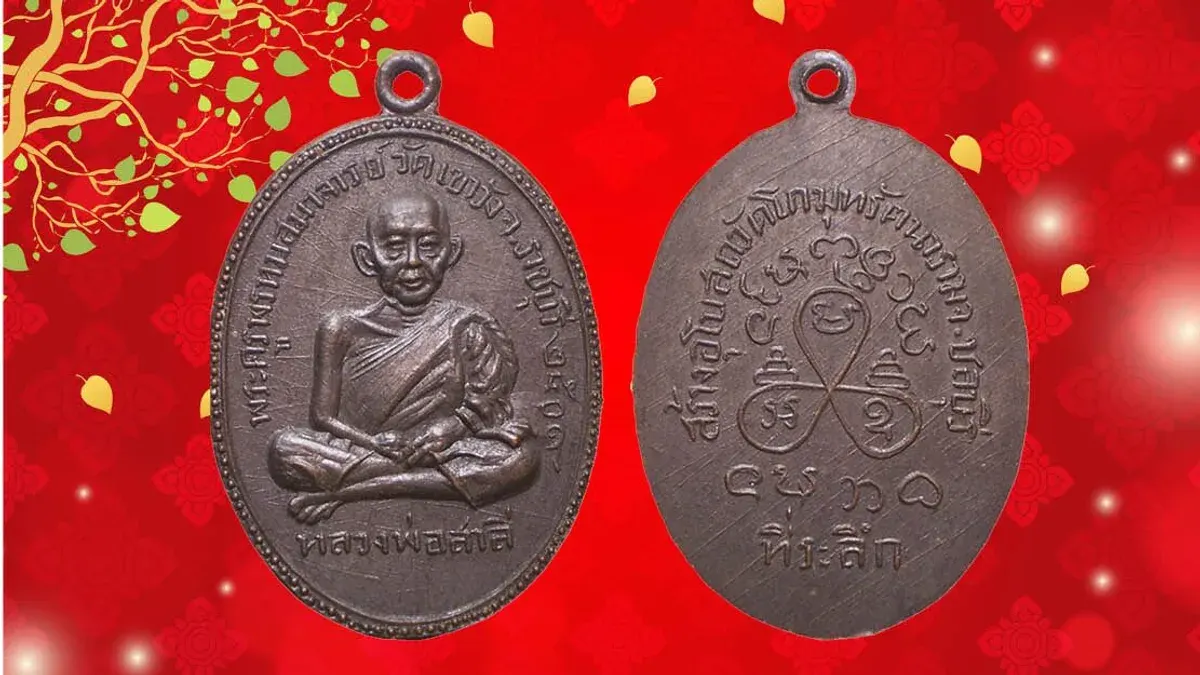
He fell ill in 1951 BE (1955 CE) and was admitted to Ratchaburi Hospital, where he passed away peacefully on 12 November 1955 at the age of 82, having completed 61 rainy seasons. His amulets, especially the second‑issue likeness medal, have become legendary among collectors of Ratchaburi‑area sacred objects.