Feature Profiles Thailand's Most Revered Buddhist Amulets
The article profiles several revered Thai Buddhist amulets: Luang Por Ngok's tiger fang amulets with khom script, Luang Por Lae's 1996 Phat Yot coins, Somdet Wat Maha That amulets from 1919, and Luang Por Bot Noi coins from 1945. Need a sho
"Those who bear the name Buddhist but do not follow the Buddha's teachings are not truly Buddhists," teaches Luang Por Cha Suphattho of Wat Nong Pa Phong, Ubon Ratchathani.
Luang Por Ngok Thammachoti, former abbot of Wat Nak Racha (Wat Sangkhasi) in Bang Bo, Samut Prakan, was a disciple of Luang Por Pan Akkhapanyo of Wat Bang Hia, who transmitted the art of crafting tiger amulets. Luang Por Pan marvelled at his disciple's endurance and skill, praising his work as truly masterful. Among the many sacred objects Luang Por Ngok created, his tiger fang amulets — fully carved with khom script along the entire length — are the most sought after. He would take the carved fangs to the ordination hall for empowerment; legend says he chanted until the fangs spun inside his alms bowl, signalling the rite's completion. Today, authentic Luang Por Ngok tiger fangs are extremely rare.
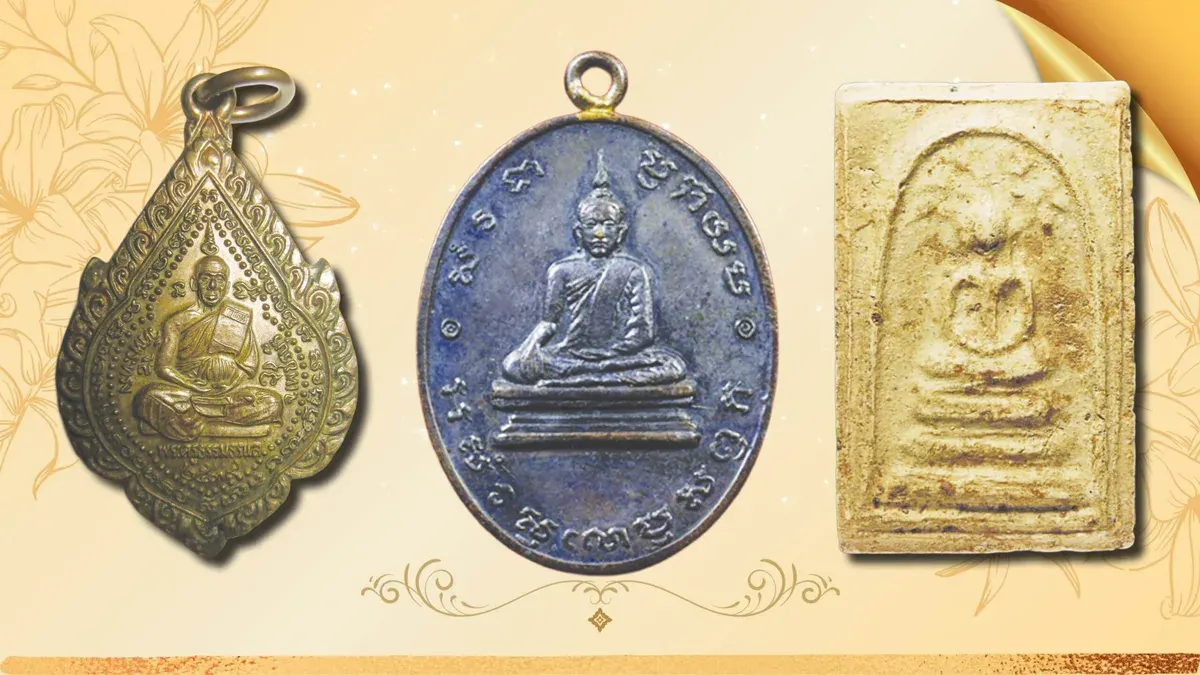
Luang Por Lae Thitthappo of Wat Phra Song, Mueang Phetchaburi, a renowned former ecclesiastical governor, created another highly prized series: the 1996 'Phat Yot' coins. Cast in teardrop-shaped metal with a bail, the obverse depicts Luang Por Lae in full-lotus meditation, inscribed with his monastic title 'Phra Khru Thammathon Lae' and the year 2539. The left flank reads 'Wat Phra Song', the right 'Phetchaburi Province'. Borders feature garuda motifs, khom script, and egg-and-dart bands, while a Rama heart yantra — Luang Por Lae's personal yantra — encircles his image. The reverse mirrors the border design, centring a tray with scriptures flanked by twin nagas, marked with the code letter 'L' at lower right.
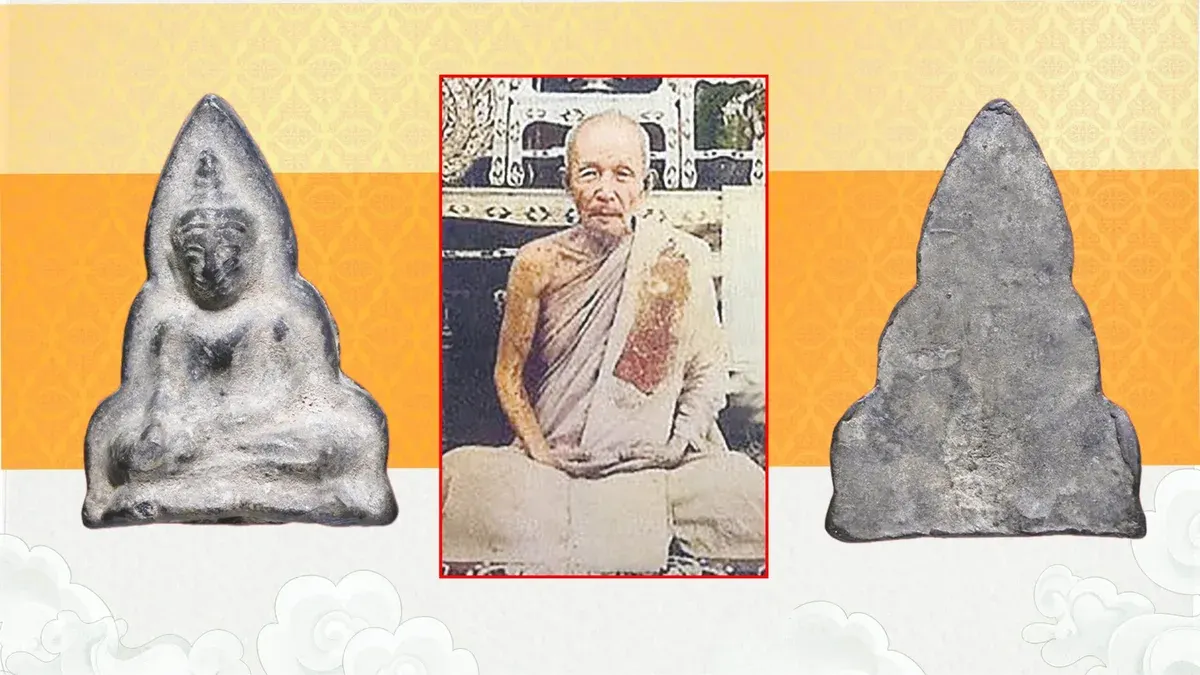
Somdet Wat Maha That amulets originated circa 1919 when King Rama VI commanded Luang Pu Nak to oversee their creation for royal officials and locals during a royal residence stay at Phaya Thai Palace. The powder amulets, rectangular like the famed Somdet Wat Rakang Pim Prong Pho of Somdet Phra Phutthachan (To Phromrangsi), were cast in over 20 distinct moulds, each with unique traits. The obverse mould shows the principal Buddha in meditation on a throne; the reverse features a Bodhi throne within a crystal pavilion. The rear mould bears the Trinisinghe yantra, making these among the most exquisite Somdet amulets.
Luang Por Bot Noi is a sacred Sukhothai-era Buddha image in the Mara-vijaya posture, enshrined in the small ordination hall of Wat Amarinthraram Worawihan, Bangkok Noi. During World War II (1941–1945), Allied bombing damaged the ordination hall. After the war ended in 1945, the temple restored the hall and issued Luang Por Bot Noi coins dated 1945. These oval coins with attached bails and raised wire rims bear a central replica of Luang Por Bot Noi surrounded by khom script between two concentric circles on the obverse. The reverse centres the 'Yant Thot Samathi' within Thai letters divided by a circle; the upper arc reads 'Luang Por Bot Noi', the lower 'Wat Amarinthraram (Bang Wa)'. These coins are celebrated as among the most popular Buddha amulets.
By Ariya Phettham chatchyros@hotmail